

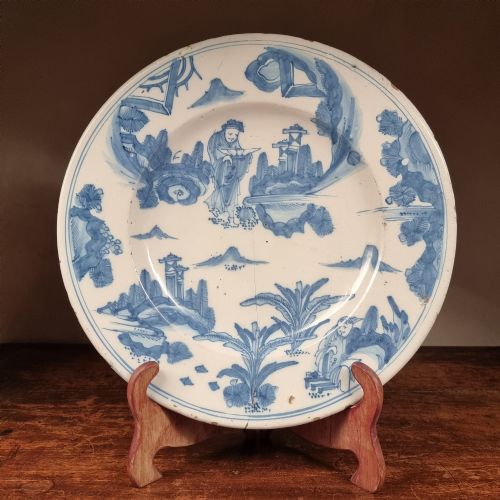
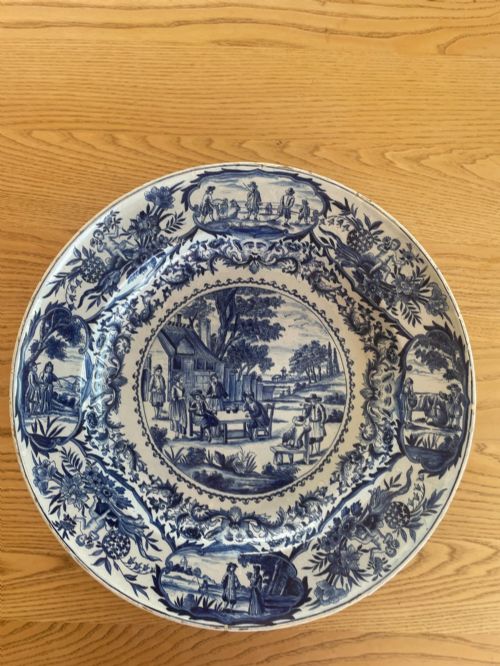
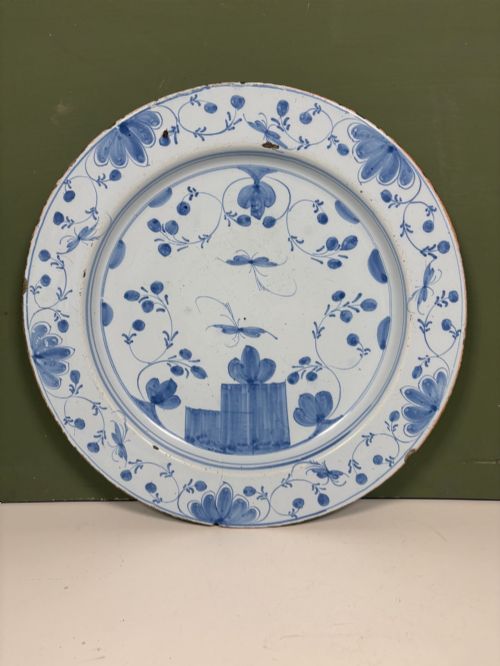


Dutch Pottery Display Plate
These dutch pottery display plate selections bring centuries of tin-glazed earthenware into modern rooms through painted chargers and plates.

Dutch Pottery Display Plate
A dutch pottery display plate is typically formed as a large charger or smaller decorative plate, shaped to hang on a wall or rest on a dresser. The selection includes seventeenth-century examples up to nineteenth-century interpretations, showing significant breadth in age.
Most pieces on this page emerge from eighteenth-century production centres, encompassing traditional blue and white painting alongside polychrome and manganese palettes. Buyers encounter standard circular forms as well as lobed dishes and large chargers intended purely for visual impact.
The decorative vocabulary draws heavily from European traditions and Chinese inspired motifs, reflecting global trade patterns of the period. These items function as historic artworks that carry the distinct visual weight of early ceramic manufacture.
Materials and construction methods
Makers shaped local clay into earthenware bodies, which were subsequently fired to create a porous ceramic foundation suitable for glazing. This body provides the stable base necessary to support heavy tin glaze layers.
A tin glaze containing cobalt pigment or cobalt oxide was applied directly to the surface, creating the characteristic opaque white ground for hand-painted decoration. Artisans then utilised grand feu techniques or lower temperature firings to fix the pigments into the wet glaze.
Distinctions in quality and execution
Quality rests primarily on the crispness of the hand-painted brushwork and the stability of the tin glaze over the earthenware body. Superior pieces display confident cobalt pigment application and balanced composition across the surface of the charger.
The ambition of the decorative scheme also separates standard items from exceptional ones, particularly where complex polychrome or manganese tones intersect with lobed or oversized formats.
De Witte Ster
The Dutch Pottery Display Plate Glossary
- Charger
- A large decorative plate traditionally utilised for display on walls or sideboards rather than dining. These oversized vessels provide a wider canvas for intricate hand-painted narratives.
- Tin-Glazed Earthenware
- Earthenware pottery coated with a white tin oxide glaze that becomes opaque during firing. This surface accepts cobalt pigment and other metal oxides directly before glazing.
- Grand Feu
- A high-temperature ceramic firing technique that bonds pigments directly into the raw glaze layer. This method produces vibrant cobalt blue and manganese tones without a secondary kiln stage.
- Polychrome
- A multi-coloured decorative scheme employing various pigments alongside standard blue. Such palettes often include manganese, yellow and green accents.
- Chinoiserie
- European artistic styles reflecting Chinese aesthetic influences through adapted landscapes and figures. These motifs appear frequently on eighteenth-century plates.
Dutch Pottery Display Plate: Frequently Asked Questions
How do I hang a heavy charger?
Large chargers require specialised wall fixings that distribute weight evenly across the entire foot ring rather than relying on wire pressure alone. Professional picture framers can supply secure brass brackets designed specifically for historic earthenware.
Ensure the wall anchor fixes directly into structural brick or timber studwork to support the substantial weight of seventeenth and eighteenth-century ceramic pieces safely.
Were these plates used for dining?
Most large examples functioned primarily as decorative chargers for display on sideboards or walls during their period of origin. Their generous scale and soft earthenware bodies made them impractical for daily table service.
Smaller plates occasionally served functional dining roles, but surviving specimens generally exhibit the minimal wear associated with visual appreciation.
How do I date a delft plate?
Dating relies on analysing the tin glaze characteristics, pigment depth, and stylistic markers such as floral borders or Chinese inspired motifs. Seventeenth-century pieces typically display heavier bodies and distinct cobalt tones compared to later iterations.
Reference markers like documented workshop names or recorded firing techniques help narrow the production window within the broader eighteenth-century span.
What is manganese decoration?
Manganese involves the use of a metallic oxide pigment that fires to a rich purple, brown, or plum tone instead of standard cobalt blue. This colourway appears frequently on grand feu plates alongside polychrome highlights.
Potters utilised manganese to introduce warmer hues into the traditional blue and white tin-glazed palette.