
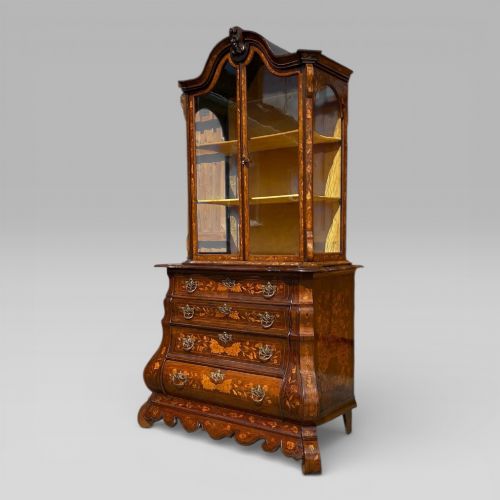


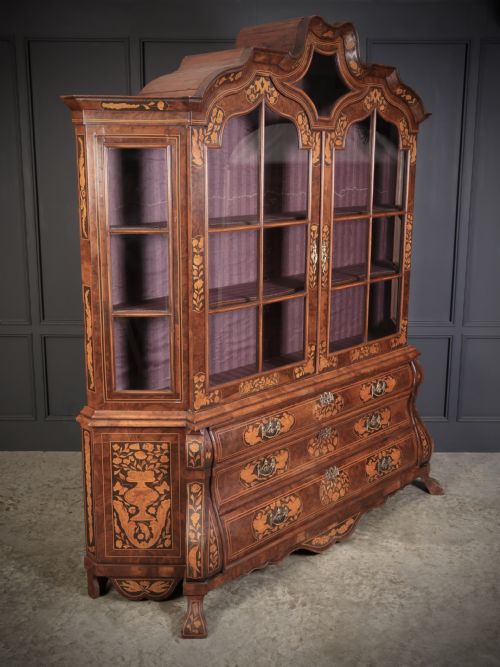


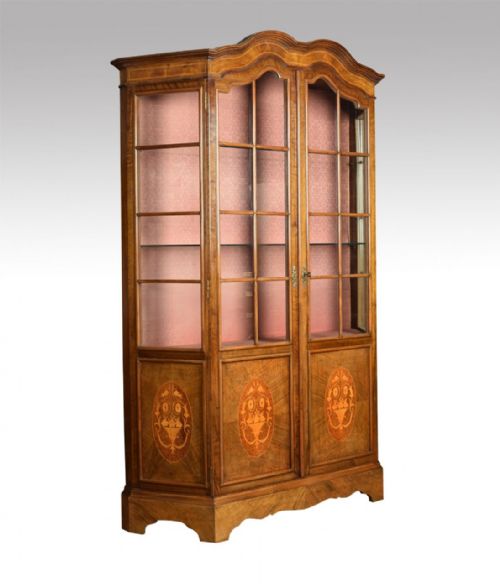


Dutch Marquetry China Cabinet
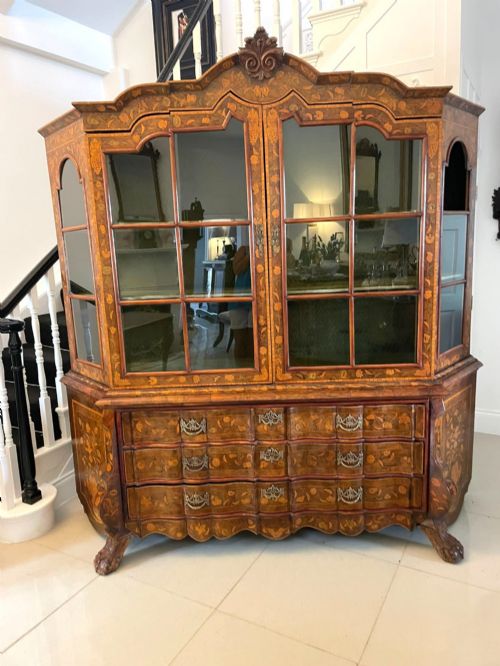
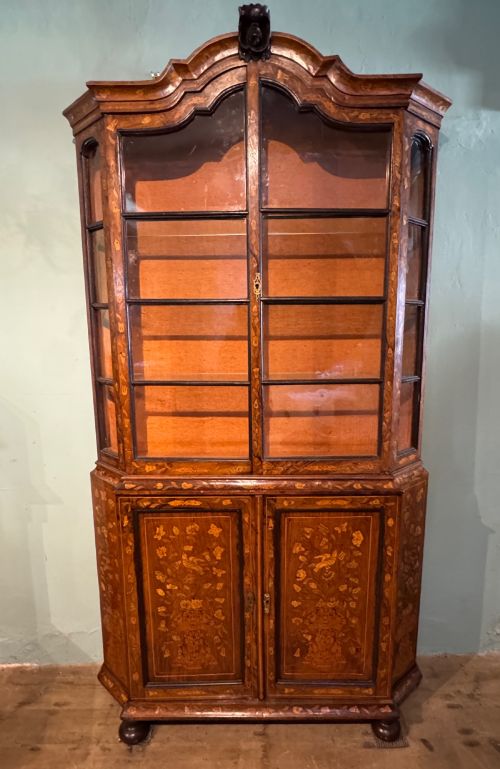
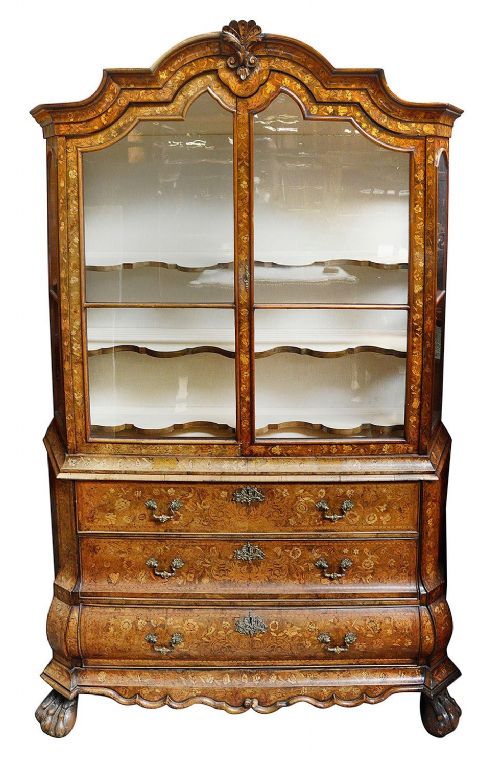
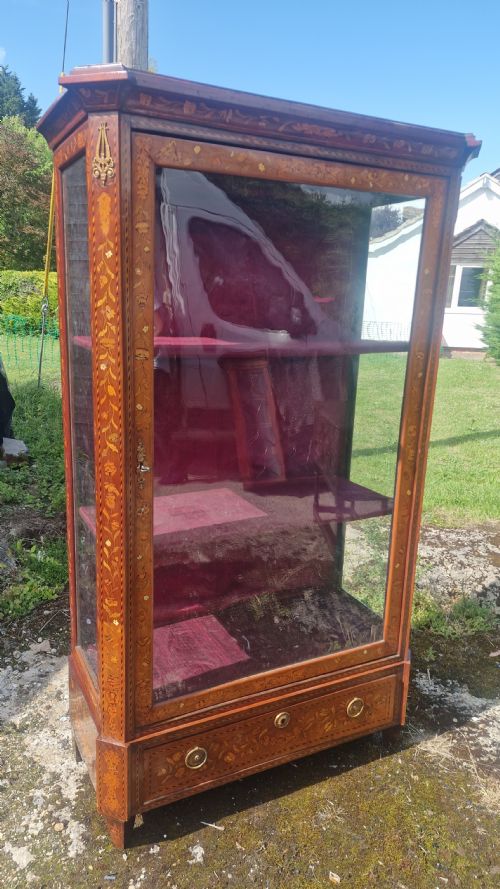
These dutch marquetry china cabinet examples combine complex floral inlay with generous display space, offering a striking focal point for any room.
Dutch Marquetry China Cabinet
A dutch marquetry china cabinet is a grand display piece designed to showcase prized ceramics and glass behind glazed doors. The selection ranges from tall freestanding vitrines and glazed cupboards to stately display cabinets on chests and bombé shapes.
Most examples originate from the eighteenth and nineteenth centuries, spanning periods such as Dutch Baroque, Dutch Rococo, and Queen Anne style. Buyers will frequently encounter walnut and fruitwood carcasses adorned with elaborate floral designs.
The form adapts to various interior layouts through options like corner cabinets and expansive bookcase combinations. These pieces serve both practical storage and decorative display functions within a traditional interior.
How they were made
Cabinet makers constructed the foundational carcass using timbers such as walnut, oak, and mahogany to ensure structural stability. These sturdy frames received intricate surface decoration through meticulous veneer work and timber selection.
Elaborate floral marquetry patterns utilise contrasting woods including fruitwood and satinwood, inlaid with great precision into the primary surface. Glass panes, brass hardware, and occasional velvet linings complete the construction of the glazed upper display sections.
Listings feature walnut, satinwood, fruitwood, and oak timbers across eighteenth and nineteenth century periods.
What varies in quality
The sophistication of the marquetry design dictates much of the visual appeal, separating simple geometric borders from sweeping, naturalistic floral arrangements that span entire doors and drawer fronts. Cabinet proportions also play a vital role, where bombé curvatures and complex bombé shapes demand exceptional woodworking skill.
Timber selection and secondary wood usage reveal the underlying standard of the piece, with richly figured burr walnut and varied fruitwood veneers marking out superior examples. The crispness of carved details and the integration of glazed doors with the main carcass further distinguish finer cabinets.
Edwards & Roberts
The Dutch Marquetry China Cabinet Glossary
- Marquetry
- Decorative veneer work arranged in intricate patterns or pictures using various coloured woods. This technique covers the entire visible surface of the cabinet facade.
- Bombé
- An outward-swelling curved shape found on the lower sections of certain cabinets. This undulating contour requires advanced carpentry and veneer manipulation.
- Vitrine
- A glass-fronted display cabinet or showcase designed specifically for exhibiting porcelain and curiosities. The term is often used interchangeably with display cabinet.
- Satinwood
- A pale, lustrous timber native to India and Ceylon, prized for its golden sheen and smooth grain. It provides striking contrast in floral inlay work.
- Display cabinet on chest
- A tall form combining a glazed upper vitrine with a lower chest of drawers. This configuration offers both vertical display height and enclosed storage.
Dutch Marquetry China Cabinet: Frequently Asked Questions
How do I date a marquetry cabinet?
Dating relies on examining the structural timbers, the complexity of the veneer work, and the overarching style. Eighteenth century pieces often display deep walnut tones and refined floral motifs, while later nineteenth century revivals incorporate satinwood and heavier proportions.
Hardware styles, joint construction, and the type of glass used in the doors also offer reliable clues to the period of origin.
Where were these cabinets placed?
These large display pieces typically occupied principal reception rooms, parlours, or dining spaces where hosts could exhibit their finest ceramics and glass. Corner cabinets served to utilise awkward wall junctions while providing the same glazed display capacity.
Tall vitrines and cabinets on chests stood against prominent walls, anchoring the room's decorative scheme.
What wood is beneath the marquetry?
The structural carcass beneath the decorative veneer is usually built from sturdy timbers such as oak, pine, or walnut. These foundational woods provide the necessary strength to support heavy glazed doors and numerous internal shelves.
Finer fruitwoods, satinwood, and walnut veneers are then applied over this solid base to create the elaborate floral marquetry.