
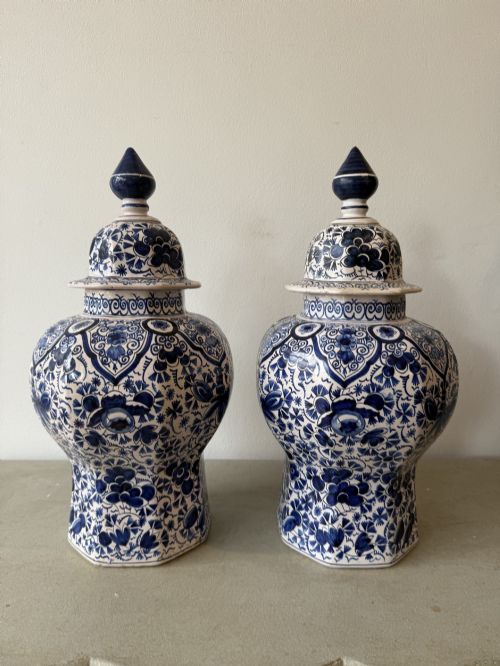


Dutch Floral Pottery
Dutch floral pottery brings blue and white tin-glazed earthenware into interiors through chargers, plates, and vases decorated with botanical motifs.
Dutch Floral Pottery
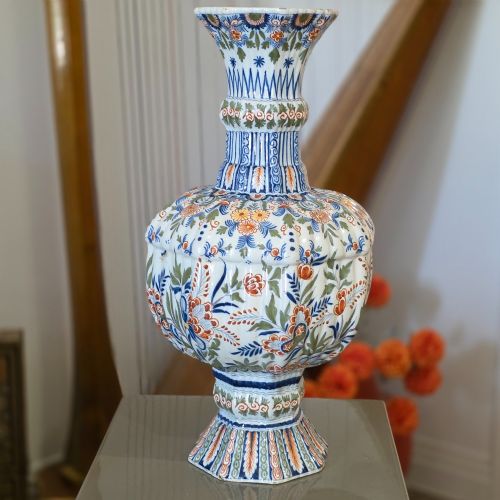
Dutch floral pottery comprises tin-glazed earthenware objects created primarily in the eighteenth and nineteenth centuries, spanning domestic plates and large decorative chargers. These vessels display botanical decoration rendered in cobalt pigment upon a white ground, alongside occasional polychrome and manganese examples.
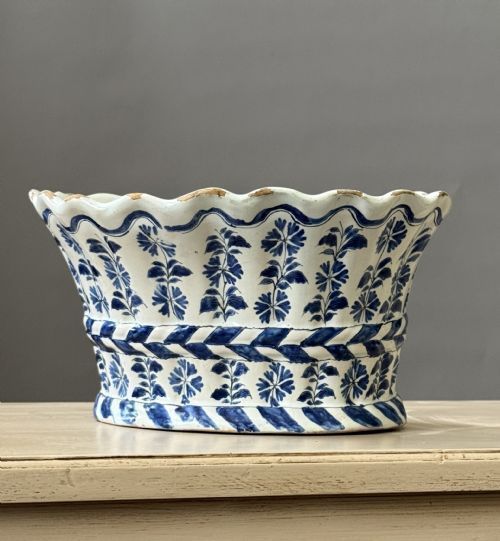
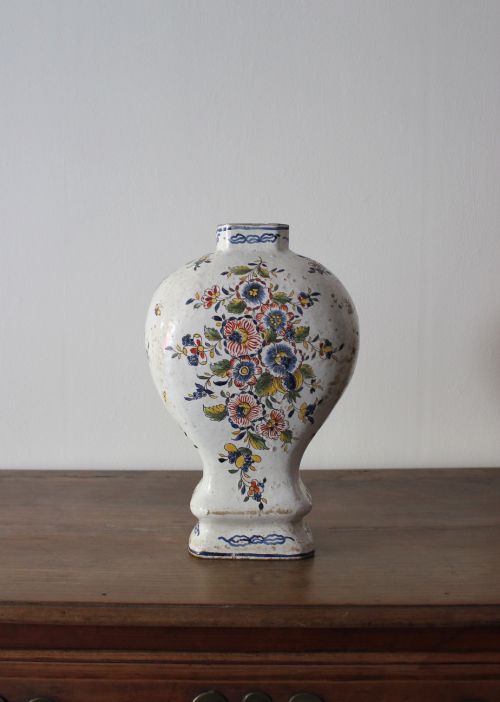
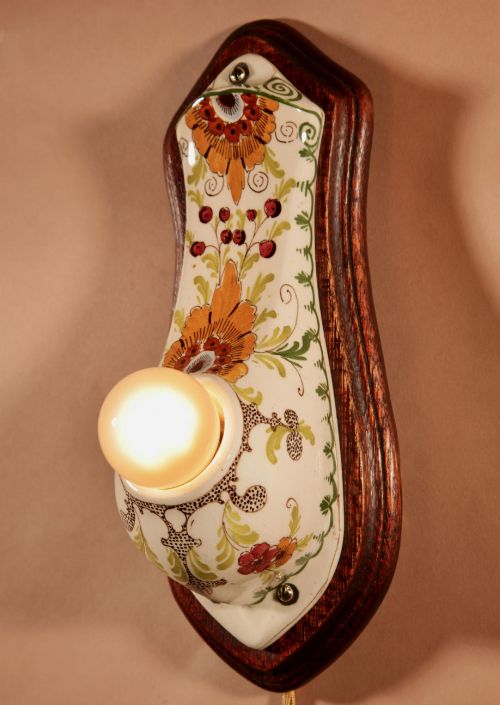
Vessels take forms ranging from bough pots and baluster vases to jardinieres and wall lights. Eighteenth-century examples sit alongside nineteenth-century interpretations, showing how makers continued floral themes across generations.
The category encompasses both single display pieces and matched pairs, often featuring traditional blue and white painting schemes derived from broader Delftware traditions.
Materials and construction
Potters shaped local clay into earthenware bodies before applying an opaque tin glaze that created the characteristic white surface required for painting. Cobalt pigment and manganese were brushed directly onto this unfired or absorbent glaze before the final firing.
Grand feu techniques allowed pigments to fuse into the glaze at high temperatures, producing durable decoration. Some later pieces incorporated secondary materials such as oak mounts or fittings depending on the object type.
Some night lights feature tiny pierced openings that cast floral shadows across the room when lit from within.
Quality and execution
Quality rests in the crispness of the cobalt brushwork and the consistency of the tin glaze across the surface of the charger or vase. Strong definition in floral motifs separates master painting from simpler, hurried workshop production.
The proportional balance of large baluster vases and chargers dictates visual success, alongside the stability of the earthenware body during the firing process.
The Dutch Floral Pottery Glossary
- Tin-Glazed Earthenware
- Pottery covered in a glaze made opaque with oxide of tin, providing a white background for painted decoration. This technique forms the foundation of traditional Delftware production.
- Grand Feu
- A high-temperature firing method that fuses pigments directly into the tin glaze. This process allows colours such as manganese and cobalt to settle permanently.
- Charger
- A large decorative plate intended for display on walls or sideboards rather than dining use. These pieces often feature elaborate floral compositions across the central well.
- Bough Pot
- A specialised vessel designed to hold cut branches or flowers for interior decoration. They typically feature perforated lids to keep stems upright.
Dutch Floral Pottery: Frequently Asked Questions
Are these plates meant for food?
Historical chargers and plates were manufactured for display rather than modern dining use. The softer earthenware bodies and historic glazes remain vulnerable to cutlery marks and staining.
Display these items on plate stands or wall mounts to preserve their decorative surfaces. Modern culinary use risks damaging the tin glaze.
What does manganese mean on these pieces?
Manganese refers to a purple-brown metallic pigment utilised in place of or alongside cobalt blue. It creates warm, earthy tones within floral decoration.
Pieces utilising manganese alongside polychrome colours often indicate grand feu firing techniques. This variation adds distinct warmth to eighteenth-century chargers.
How can I date an eighteenth-century charger?
Dating relies upon stylistic markers, rim shapes, and the thickness of the earthenware body. Earlier pieces often display heavier potting techniques and distinct tin-glaze characteristics.
Documentation and recorded workshop titles help anchor specific pieces within the broader eighteenth-century timeline. Comparing foot rings and glaze pooling provides further clues.