


Vintage Delftware Vase
These vintage delftware vase examples bring blue and white earthenware into domestic spaces through tin-glazed ceramic forms.
Vintage Delftware Vase
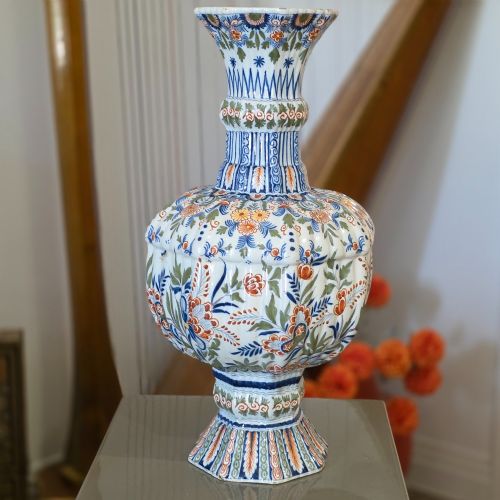
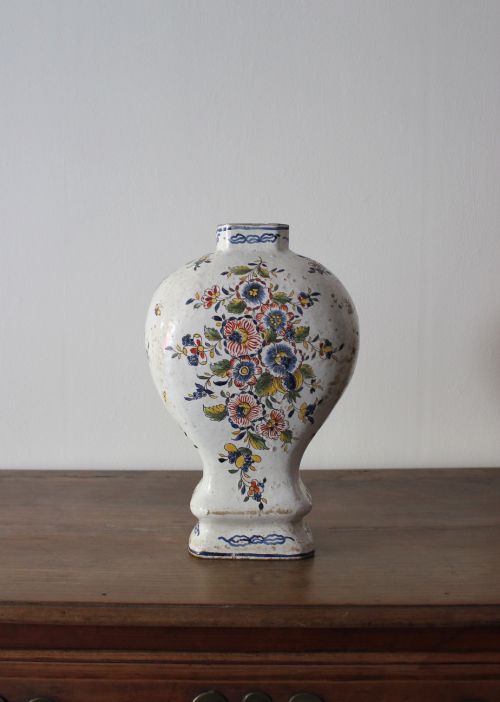
When buyers search for a vintage delftware vase, they encounter earthenware pieces shaped as vessels, jugs, lamps, and lidded jars spanning several centuries of production. These items display distinctive blue and white decorative schemes originating from ceramic traditions in both Dutch and English workshops.
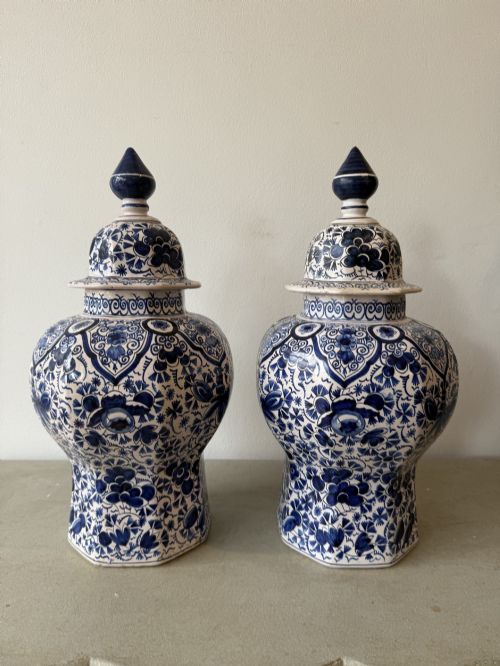
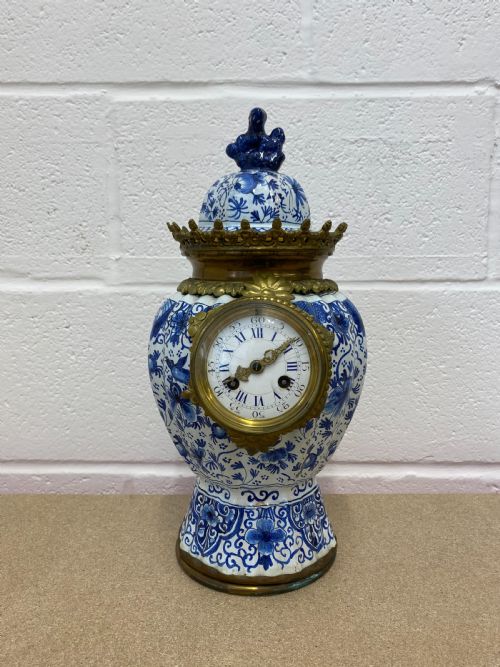
The versions most commonly met on this page range from early seventeenth-century examples up to nineteenth-century interpretations. Forms include large beaker vases, ribbed pairs, and household objects later converted into table lamps or fitted with clock mechanisms.
Makers utilised earthenware bodies coated in a white tin glaze before painting cobalt pigment motifs across the surface. These designs frequently draw upon Chinoiserie aesthetics alongside traditional European motifs, resulting in contrasting blue decoration against an opaque white background.
How they were made
Potters formed the core structure using earthenware clay, shaping vessels on the wheel or moulding them into specific decorative silhouettes such as ribbed beakers and lidded jars. Once formed, the dried clay body received a tin-glazed coating that dried to an opaque white finish ready for hand painting.
Painters applied cobalt pigment directly onto the unfired or lightly fired tin glaze, allowing the colour to absorb into the white surface during the final kiln firing. Certain pieces incorporated brass hardware components or later modifications when objects like jugs and vases were adapted into lamps.
Listings feature earthenware vessels utilising tin glaze and cobalt pigment across the seventeenth, eighteenth, and nineteenth centuries.
What varies in quality
The refinement of the cobalt painting distinguishes finer examples from simpler production wares, with hand-painted Chinoiserie details showing greater brushwork control and compositional depth. Early pieces often display distinct potting characteristics and glaze thickness that reflect historical kiln temperatures and regional techniques.
The physical scale and structural complexity of the form also shape the object, particularly in large pairs of lidded vases or ribbed beaker shapes requiring precise throwing and firing skills. Adaptations such as conversions into table lamps or clocks introduce secondary elements like wiring or mechanical housings that alter the original context of the ceramic body.
The Vintage Delftware Vase Glossary
- Tin Glaze
- An opaque white lead glaze containing tin oxide used to coat earthenware bodies before painting. This surface provided a smooth white ground for cobalt pigment decoration.
- Cobalt Pigment
- A metallic oxide colourant producing deep blue hues when fired onto ceramic glazes. It remains the defining pigment for traditional blue and white delftware ornamentation.
- Chinoiserie
- European artistic interpretations of Chinese and East Asian decorative styles. This aesthetic frequently appears in landscape and floral motifs on seventeenth and eighteenth-century pieces.
- Earthenware
- Porous pottery fired at lower temperatures than stoneware or porcelain. It requires a glaze layer, such as tin glaze, to hold liquids and create a finished decorative surface.
- Beaker Vase
- An open-mouthed vessel widening toward the rim without a constricted neck. These forms often appear in matched pairs for decorative display on mantelpieces.
Vintage Delftware Vase: Frequently Asked Questions
How do I date a delftware vase?
Dating relies upon stylistic markers, potting techniques, and the composition of the tin glaze across different centuries of production. Earlier seventeenth and eighteenth-century examples display distinct hand-painted brushwork and glaze characteristics compared to nineteenth-century items.
Examining the base and the weight of the earthenware body helps connect individual vessels to recorded historical periods. Changes in Chinoiserie motifs and blue pigment tones also provide clues regarding when a workshop manufactured the piece.
Were these vases used for flowers?
Many large vessels and lidded jars functioned primarily as ornamental items or garniture sets displayed on mantelpieces rather than everyday flower holders. The porous nature of earthenware meant that holding water often required specific interior glazing or metal liners.
Over time, some surviving vessels were adapted for alternative household purposes, including conversion into table lamps or housing clock movements. These changes reflect how owners integrated older ceramic forms into contemporary domestic interiors.
What is the difference between Dutch and English delftware?
Dutch production centres, particularly around Delft, developed sophisticated tin-glazing techniques influenced heavily by imported Asian porcelain and local earthenware traditions. English potteries later adopted similar methods, producing domestic jugs and vases with distinct regional palettes and glaze textures.
Both traditions utilised cobalt pigment over a white tin-glazed earthenware body, but subtle variations in the clay body and painting style help separate the two origins. Surviving pieces often share similar Chinoiserie and floral subject matter despite their different manufacturing locations.
How should I clean a antique delft vase?
Cleaning requires gentle dusting with a soft, dry brush to prevent the accumulation of particles on the tin-glazed surface. Moisture should be avoided where possible, especially around areas with historic repairs, metal lamp fittings, or exposed earthenware bodies.
Harsh chemical cleaners or abrasive cloths will damage the delicate cobalt pigment and the historic glaze layer. Professional conservation advice is recommended if deeper cleaning becomes necessary for structural stability.