




Dutch Floral Marquetry Vitrine
A Dutch floral marquetry vitrine brings together walnut, fruitwood, and glass in a display cabinet designed to show off treasured collections.
Dutch Floral Marquetry Vitrine
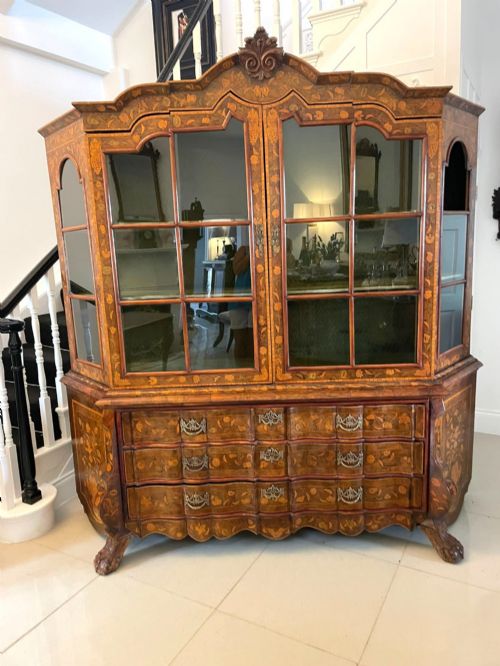
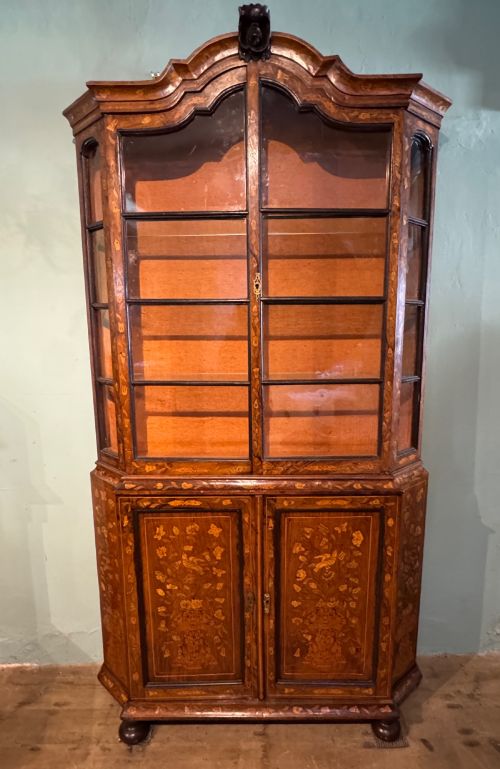
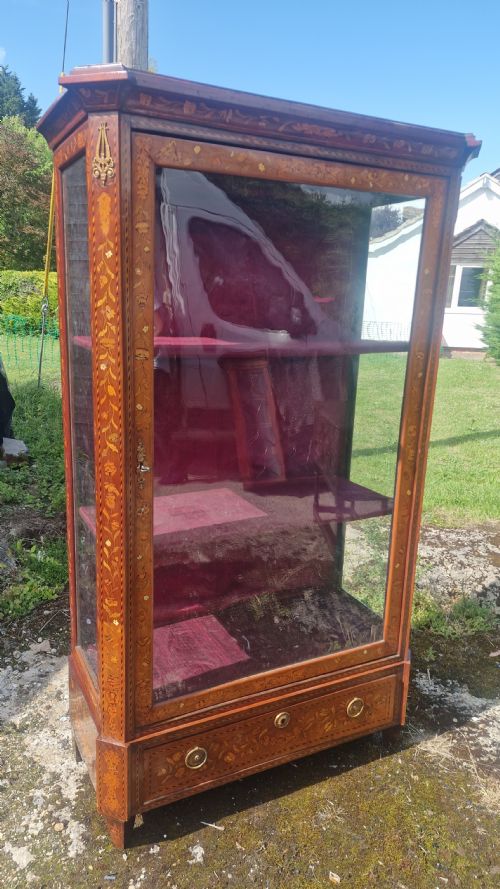
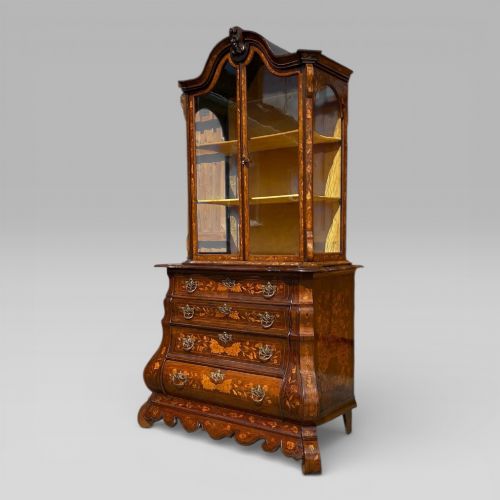
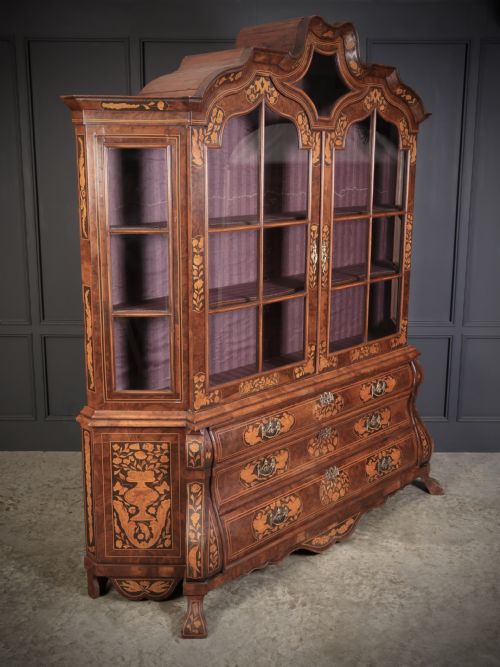
A dutch floral marquetry vitrine is a cabinet built for display, featuring glass panels alongside timber surfaces decorated with elaborate floral inlay. These pieces serve as focal points in a room while providing protected space for porcelain, glass, or small objects.
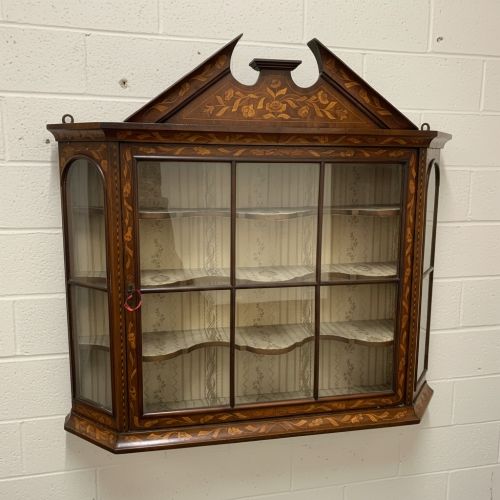
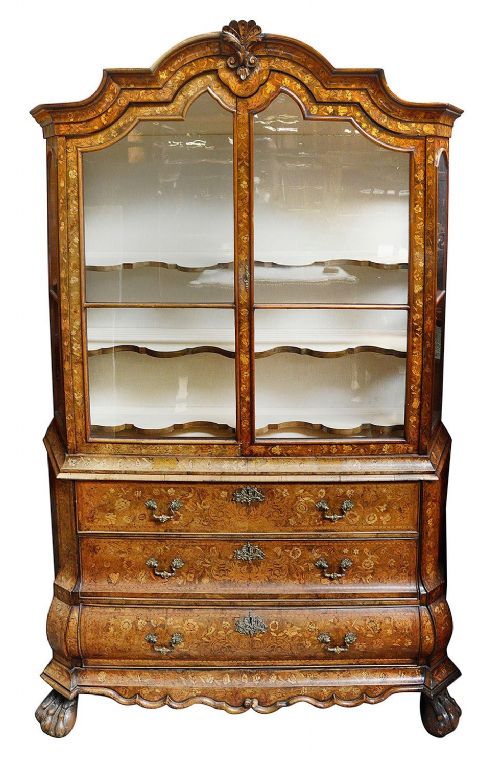
The selections encountered here span wall cabinets, corner cupboards, and large display cabinets on chests. Many adopt the distinctive bombé shape, curving outward at the lower section with substantial proportions.
Makers fashioned these pieces across multiple eras, ranging from the eighteenth century into the nineteenth and twentieth centuries. Walnut and fruitwood form the primary carcass woods for these traditional European cabinet designs.
Materials and construction
Cabinetmakers constructed the main bodies of these pieces using walnut, oak, and mahogany, often applying burr walnut veneers to large surfaces. Fruitwood provides lighter contrasting tones for the intricate floral marquetry patterns inlaid across the doors and panels.
Glazing bars hold the glass panes within the display doors, while brass hardware secures the closures. Fabric and velvet linings frequently furnish the interior shelves and backboards of the cabinets.
Marquetry techniques involve cutting delicate floral motifs from thin veneers of various woods and fitting them together into a flush decorative surface. Cabinet structures range from straight-sided corner cupboards to complex bombé shaped chests.
Some cabinet drawers hide behind deeply curved bombé fronts, holding secrets known only to the original maker.
Factors of quality
The precision and complexity of the floral marquetry separate standard examples from exceptional ones. Finer pieces display crisp shading within the wood veneers, creating realistic depth in the leaf and petal motifs.
Timber selection dictates the visual weight of a cabinet, with burr walnut and carefully matched fruitwoods offering richer grain patterns. The integration of structural forms, such as bombé curves and glazed door proportions, reflects the maker's skill.
Edwards & Roberts
The Dutch Floral Marquetry Vitrine Glossary
- Marquetry
- Decorative veneer work forming pictures or patterns by assembling small pieces of various woods. This technique covers the exterior surfaces of the cabinets.
- Bombé
- A bulging, outward-curving swell on the lower portion of a piece of furniture. This contour is characteristic of certain display cabinets and chests.
- Vitrine
- A glass-fronted cabinet used for displaying fine objects or curiosities. These pieces incorporate glazed doors to keep dust away from the contents.
- Burr walnut
- Wood taken from a walnut tree growth, yielding swirling and mottled grain patterns. Cabinetmakers prize this material for high-status veneer work.
Dutch Floral Marquetry Vitrine: Frequently Asked Questions
How do I style a vitrine?
A vitrine works well as a focal point in a dining room or drawing room to display collections of porcelain or glassware.
The glass doors and internal shelving protect delicate items from dust while keeping them visible from across the space.
What woods are used?
Walnut and fruitwood serve as the primary timbers for these cabinets, often enhanced by burr walnut veneers.
Contrasting light and dark woods are cut to create the detailed floral marquetry patterns across the doors and panels.
Are these cabinets secure for collections?
These cabinets provide enclosed spaces with glazed doors and brass hardware to safeguard fragile objects.
Wall-mounted versions and corner cupboards offer alternative ways to utilise room space efficiently.