

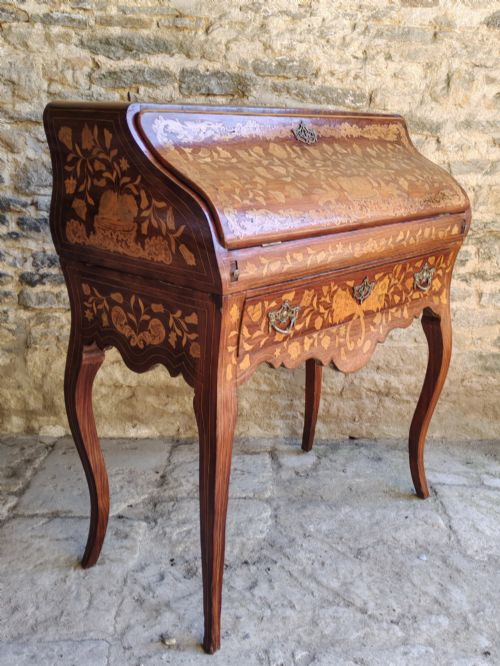
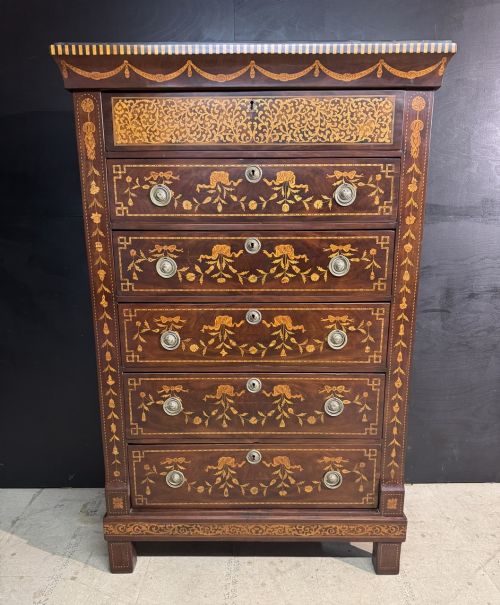
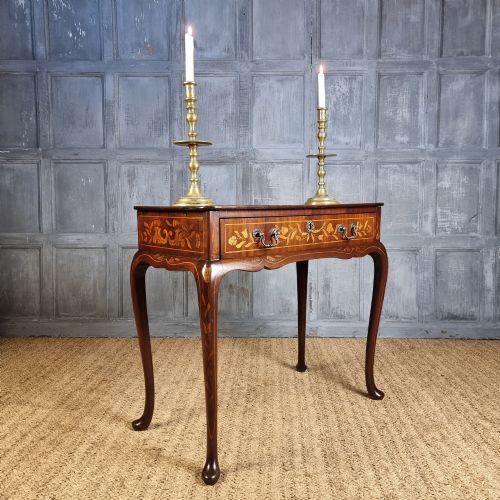
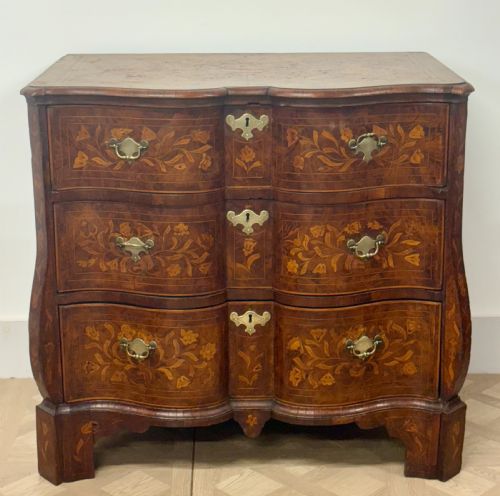
Dutch Floral Marquetry Furniture
Dutch floral marquetry furniture brings lively, intricate botanical craft into a room, spanning cabinets, chests and desks from the seventeenth century onward.
Dutch Floral Marquetry Furniture
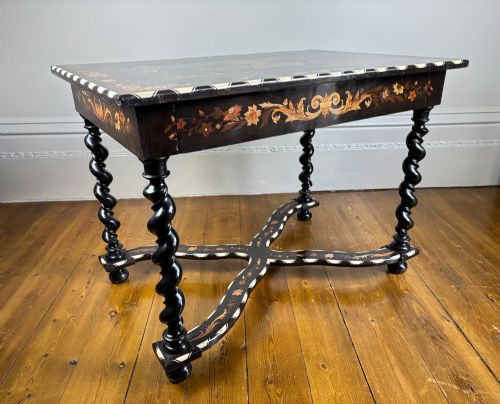
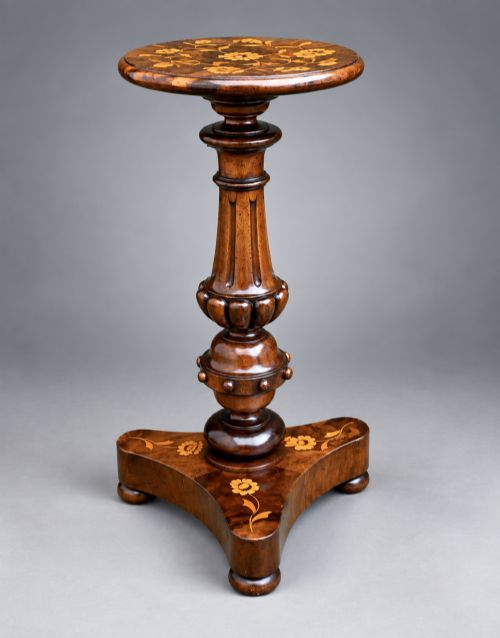
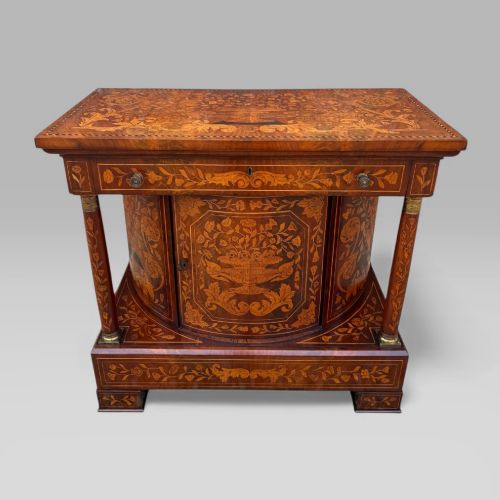
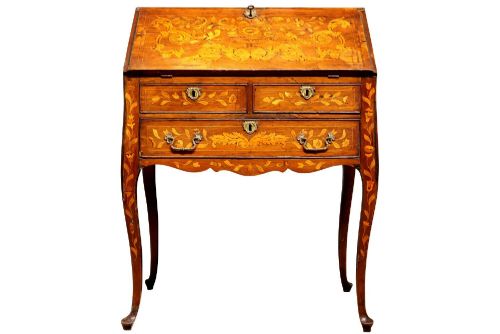
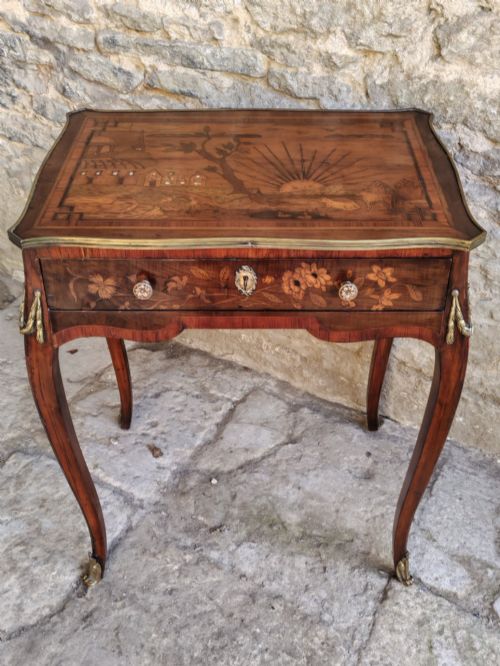
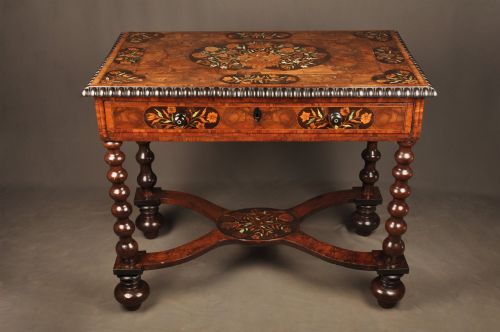
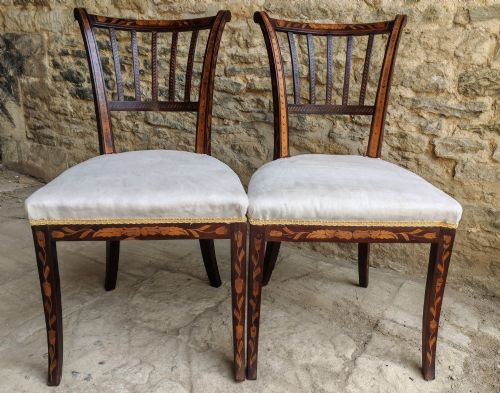
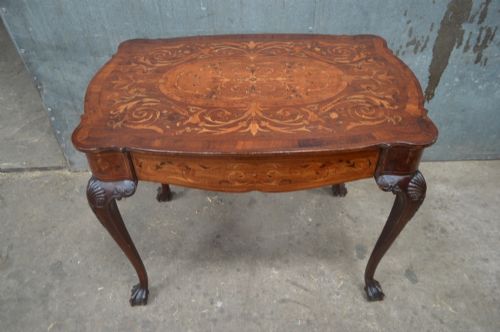
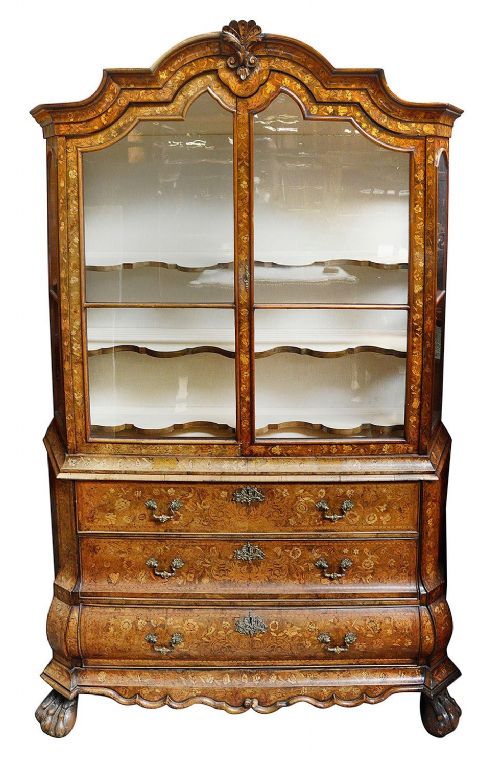
Dutch floral marquetry furniture encompasses a striking variety of practical household forms, from monumental bureaus and linen presses down to compact console tables and side chairs. Chests of drawers dominate the selection, often appearing with distinct bombe profiles or tallboy configurations that showcase elaborate floral arrangements across their drawer fronts.
Most examples hail from the eighteenth century, though pieces stretch from the seventeenth-century Baroque era into the nineteenth century. Walnut and mahogany serve as the primary carcase timbers for these larger cabinets and desks, providing a dark, stable foundation for intricate lighter wood veneers.
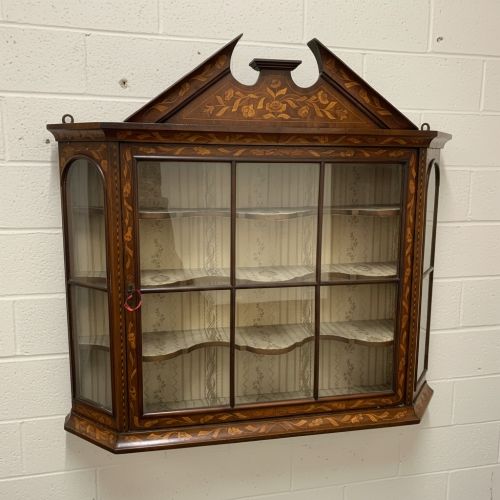
Buyers encounter specialised domestic items alongside standard storage, including games tables, corner cabinets, vitrines, and bedside cupboards. Each surviving piece demonstrates the enduring utility of these decorative domestic items within historic interiors.
Design and execution
The division between ordinary and exceptional marquetry lies in the naturalism of the botanical drawing and the precision of the timber fitting. Finer examples display subtle tonal gradations within individual petals, achieved by shading wood veneers in hot sand.
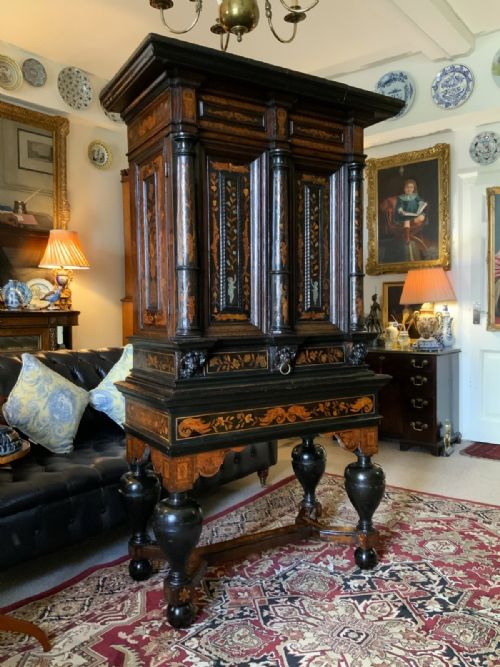
Structural ambition separates standard chests from masterwork bureau bookcases and bombe cabinets. The handling of curved drawer fronts and heavy architectural cornices demonstrates the cabinetmaker's underlying mastery of the carcase, well beyond the surface veneer.
Current selections feature walnut carcases predominantly, alongside mahogany and oak examples spanning the eighteenth and nineteenth centuries.
The Dutch Floral Marquetry Furniture Glossary
- Bombe
- A swelling, outward-curving furniture profile associated with continental European design. This bulging contour requires advanced woodworking skill to match the veneer grain successfully.
- Marquetry
- The art of forming decorative patterns by fitting together thin slices of wood veneer into a paper-thin pictorial sheet. Craftsmen assemble these complex botanical or geometric designs before gluing them to a solid carcase.
- Burr walnut
- Timber harvested from walnut tree growths or burls, yielding highly figured, swirling grain patterns. Cabinetmakers prize this wood for its decorative depth on grand bureau fronts and cabinet doors.
- Secretaire
- A desk fitted with a drop-front writing flap and internal small drawers and pigeonholes. These compartments remain concealed behind the main writing surface when closed.
- Vitrine
- A glass-fronted display cabinet designed for showing porcelain or small curiosities. The delicate framework often carries floral marquetry framing the glazed doors.
Dutch Floral Marquetry Furniture: Frequently Asked Questions
How do I clean floral marquetry surfaces?
Dust gently with a dry, soft cloth to prevent particulate accumulation in the veneer joins. Avoid harsh chemical polishes and keep surfaces away from direct sunlight.
Apply a traditional beeswax sparingly to nourish the timber and maintain a soft sheen. Excessive moisture damages historic glue underneath the delicate wood pieces.
Where should I place these cabinets at home?
Position these pieces away from radiators and fireplaces to prevent the timber carcase and delicate veneers from drying out and splitting. Stable indoor humidity keeps the old wood stable.
Allow enough surrounding clearance to appreciate the floral details on side panels and curved drawer fronts without constant physical contact from daily foot traffic.
How do I tell an eighteenth-century piece apart from a later copy?
Examine the secondary interior timbers, drawer linings, and backboards for tool marks and timber ageing consistent with early manufacturing methods. Hand-cut dovetails and older pine or oak framing indicate true period age.
Assess the marquetry design itself, as older botanical compositions tend to use natural fruitwoods with subtle fading rather than modern chemical dyes.
Were these decorated cabinets used daily?
Wealthy households utilised these sophisticated bureaus and games tables for writing correspondence, storing linens, and hosting evening card games. Fine surfaces were meant for active domestic life.
Despite their delicate floral appearance, the underlying walnut and oak construction served robust storage functions in historic drawing rooms and parlours.