


Dutch Earthenware Pitcher
A dutch earthenware pitcher brings centuries of Continental colour and form to a room, offering tactile historical character.
Dutch Earthenware Pitcher
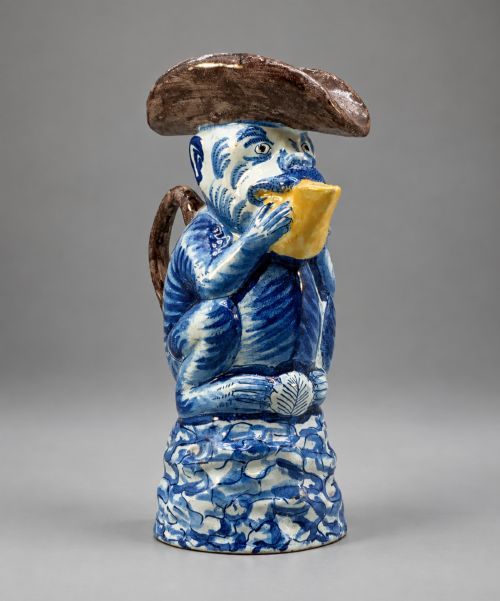
A dutch earthenware pitcher encompasses centuries of ceramic history, ranging from 17th-century slipware to tin-glazed delftware jugs and Toby jugs. These vessels appear in forms such as puzzle jugs, coffee pots, ewers, and decorative jugs.
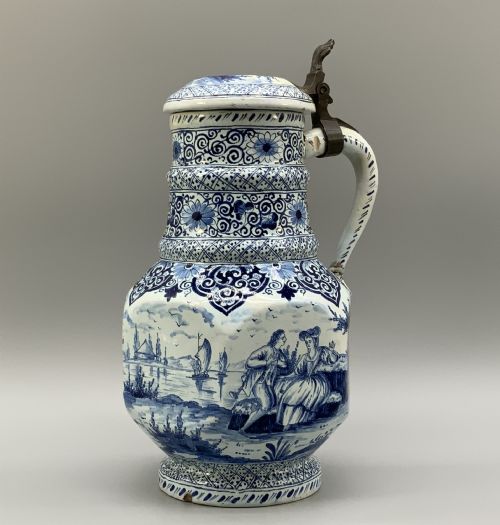
The pieces on this page lean heavily towards 18th-century dutch delft blue and white pottery, alongside earlier slipware and later 19th-century examples. Buyers will frequently encounter floral decoration, chinoiserie motifs, and polychrome palettes.
How they were made
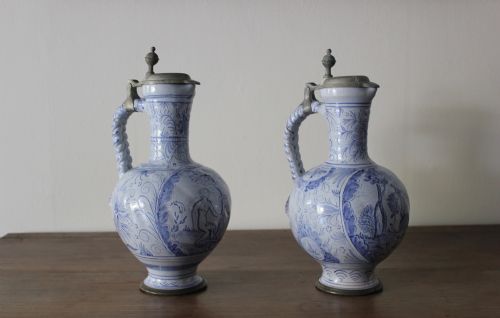
Potters shaped these vessels from earthenware and applied tin glazes to create smooth surfaces suitable for blue and white or polychrome painting. Some iterations incorporate lead glaze over slip, or feature fitted pewter lids.
The decoration relies on manual brushwork, rendering floral patterns, figures, and chinoiserie scenes directly onto the porous ceramic body before firing.
Some vessels hide secret liquid pathways in their rims just to catch out thirsty guests.
What varies in quality
Quality rests in the crispness of the hand-painted brushwork and the complexity of the form, distinguishing standard utilitarian vessels from elaborate puzzle jugs or figural tobies. The depth and clarity of the tin glaze also signal superior execution.
The presence of original mounts, such as pewter lids, adds distinction to a vessel. Well-preserved polychrome or manganese pigment application likewise elevates the standing of a piece.
Pieter Verburg
The Dutch Earthenware Pitcher Glossary
- Tin Glaze
- An opaque white glaze containing tin oxide that provides a smooth background for painted decoration. It defines traditional delftware production.
- Slipware
- Pottery decorated with a thin mixture of clay and water applied before firing. This technique creates earthy surfaces often seen on earlier domestic vessels.
- Puzzle Jug
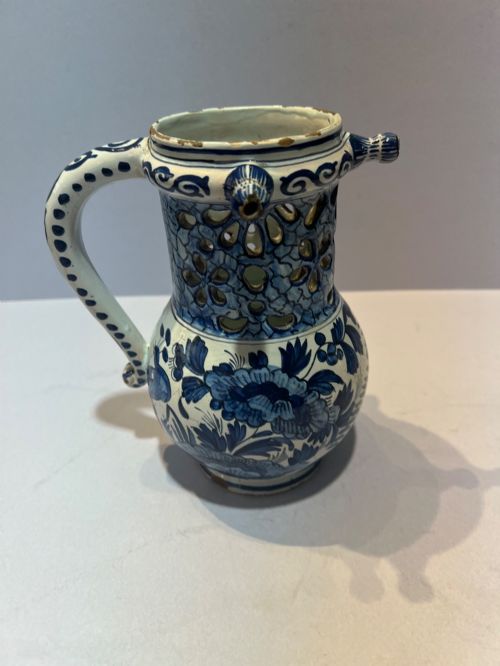
- A drinking vessel featuring a perforated neck that prevents normal drinking, requiring the user to sip through a specific spout. These interactive forms tested tavern wits.
- Chinoiserie
- European artistic interpretations of Chinese and East Asian motifs. It appears frequently on tin-glazed vessels in blue and white pigments.
- Toby Jug
- A pottery jug shaped as a seated person, typically a robust figure holding a mug and jug of beer. These figural pieces span the late 18th and 19th centuries.
Dutch Earthenware Pitcher: Frequently Asked Questions
What is a dutch earthenware pitcher?
A dutch earthenware pitcher is a historical pouring vessel made from clay, frequently finished with a tin glaze or slip. These items include domestic jugs, coffee pots, and decorative vessels.
Production spans multiple centuries, with notable examples originating from the 17th, 18th, and 19th centuries. They showcase various styles from traditional delftware to folk art slipware.
How were puzzle jugs used?
Puzzle jugs served as sociable tavern novelties designed to challenge drinkers. Users had to figure out how to drink from the vessel without spilling the contents through hidden perforations in the neck.
They rely on a hollow rim and interconnected spouts that require covering specific holes with fingers. This interactive design encouraged lively engagement among guests.
Where should I display a pitcher?
These pitchers suit placement on sturdy shelving, sideboards, or mantelpieces where their historical forms and painted surfaces remain visible. Natural light helps highlight the tin glaze and blue and white or polychrome pigments.
Keeping them away from high-traffic edges prevents accidental knocks. Pairing them with other ceramics creates an intentional historical display.