


Delft Tin Glazed Pitcher
A delft tin glazed pitcher brings centuries of earthenware tradition into your room, offering hand-painted blue and white or polychrome character that collectors prize for its historic glaze and form.
Delft Tin Glazed Pitcher
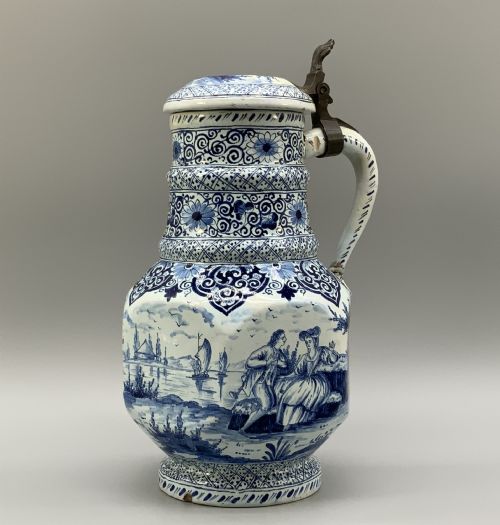
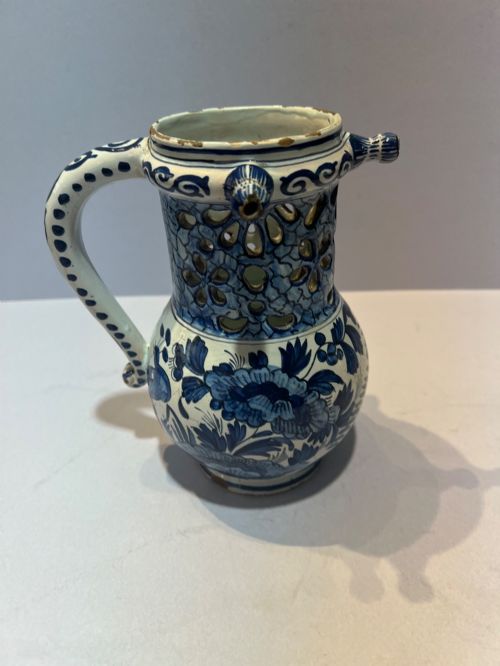
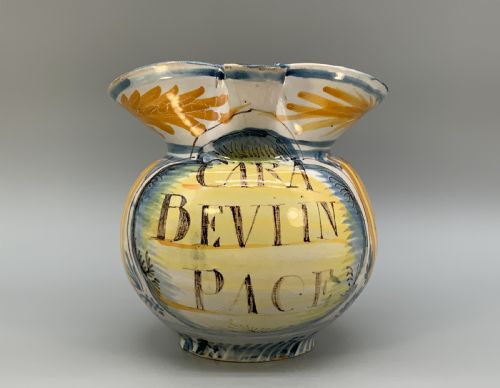
When you search for delft tin glazed pitcher, you encounter earthenware vessels shaped as jugs, ewers, pharmacy containers, and even figural Toby jugs spanning the seventeenth to the nineteenth centuries. These pieces originate primarily from Dutch workshops alongside Italian traditions, reflecting centuries of ceramic craftsmanship.
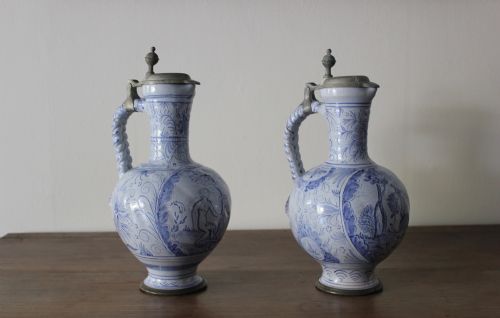
The version you are most likely to meet on this page is an eighteenth-century Dutch delft blue and white jug, often featuring floral or chinoiserie decoration. Examples range from matched pairs and puzzle jugs to lidded pieces mounted with pewter hardware.
How they were made
Makers formed these pieces from earthenware clay before applying an opaque tin glaze that created a smooth, white surface suitable for painting. Artisans then brushed cobalt blue, manganese, and polychrome pigments directly onto the unfired glaze.
Some utilitarian and decorative jugs incorporate fitted pewter lids, joining ceramic bodies with metalwork components typical of the period. Pigments absorbed into the tin glaze during firing, producing the characteristic soft-edged motifs seen across Dutch delftware and Italian maiolica.
Listings span the 17th Century, 18th Century, and 19th Century, utilising ceramic, earthenware, tin glaze, and pewter materials.
What varies in quality
The distinction between ordinary and superior pieces rests on the crispness of the hand-painted decoration and the depth of the tin glaze. Early seventeenth-century and finely executed eighteenth-century examples display intricate chinoiserie or botanical details painted with confident brushwork.
Proportion and form also dictate distinction, separating standard utility vessels from complex puzzle jugs, pharmacy apothecary jugs, and modelled Toby figures. The presence of period mounts, such as intact pewter lids, influences the overall character of the piece.
Pieter Verburg
The Delft Tin Glazed Pitcher Glossary
- Tin Glaze
- An earthenware glaze rendered opaque and white by the addition of tin oxide, providing the pale ground for painted decoration.
- Chinoiserie
- European decorative motifs inspired by Chinese art and porcelain, frequently rendered in blue and white on seventeenth and eighteenth-century ceramics.
- Majolica
- Italian tin-glazed earthenware related in technique to delftware, often characterised by rich polychrome palettes including manganese and yellow.
- Puzzle Jug
- A drinking vessel with a pierced neck designed to frustrate the drinker unless they discover the correct path of hidden channels.
- Toby Jug
- A pottery jug modelled in the shape of a seated person, often depicted drinking or holding a mug.
Delft Tin Glazed Pitcher: Frequently Asked Questions
What is a delft tin glazed pitcher?
A delft tin glazed pitcher is an earthenware vessel covered in an opaque white glaze and decorated with hand-painted pigments, typically originating from Dutch or Italian potteries.
These pieces include utilitarian jugs, pharmacy containers, coffee pots, and figural Toby jugs produced across the seventeenth, eighteenth, and nineteenth centuries.
How do I care for a tin glazed pitcher?
Care for these fragile earthenware pieces by keeping them away from direct sunlight, extreme temperature changes, and moisture.
Dust them gently with a soft, dry cloth rather than washing them with water, as the historic tin glaze can be sensitive to modern detergents.
How can I tell the age of a delft pitcher?
Dating relies on examining the style of the hand-painted decoration, such as seventeenth-century chinoiserie versus nineteenth-century polychrome Toby forms, alongside the characteristics of the earthenware body and tin glaze.
Material details like early pewter lidded mounts also help establish the historical period of production.
Were these pitchers used daily?
Many jugs served practical functions in households and apothecary shops for holding liquids, coffee, or medicinal preparations.
Others, such as puzzle jugs and decorative vessels, were made primarily for display or social amusement during gatherings.