

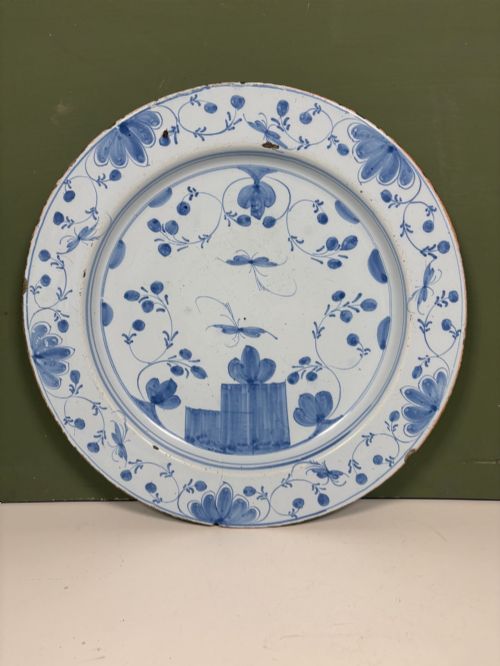


Dutch Faience Pottery
Dutch faience pottery comprises tin-glazed earthenware and ceramic pieces originating across the seventeenth, eighteenth, and nineteenth centuries.
Dutch Faience Pottery
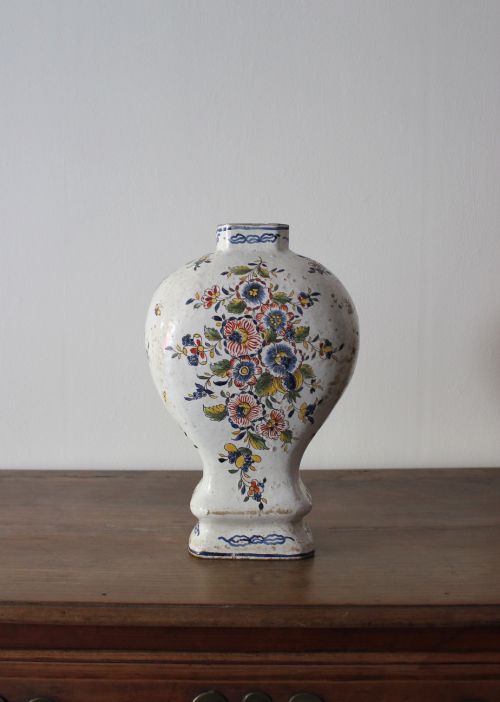
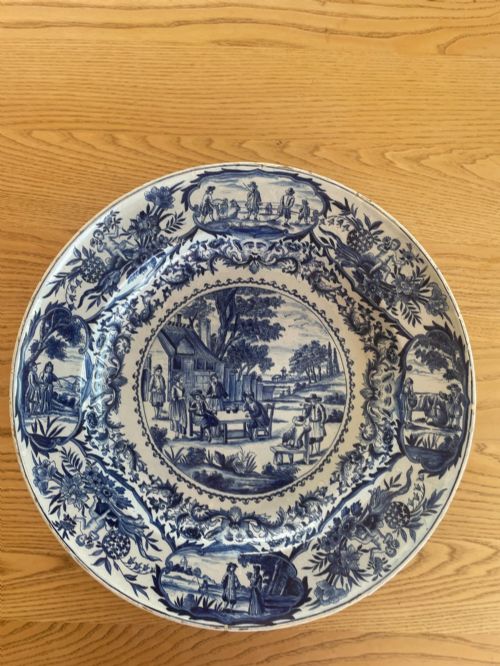
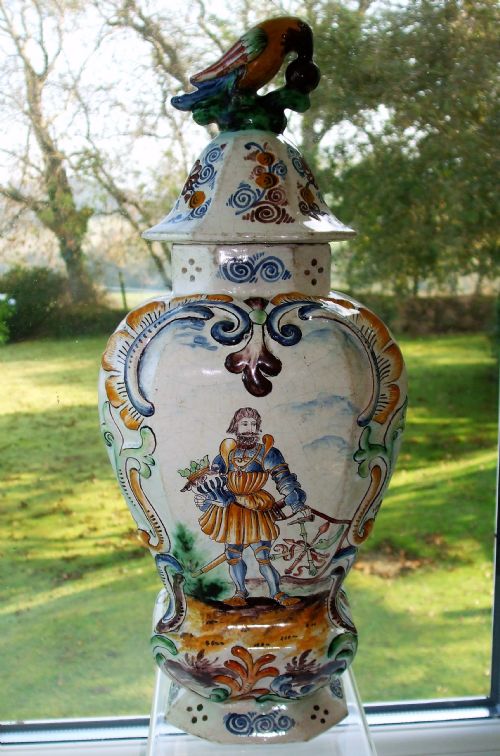
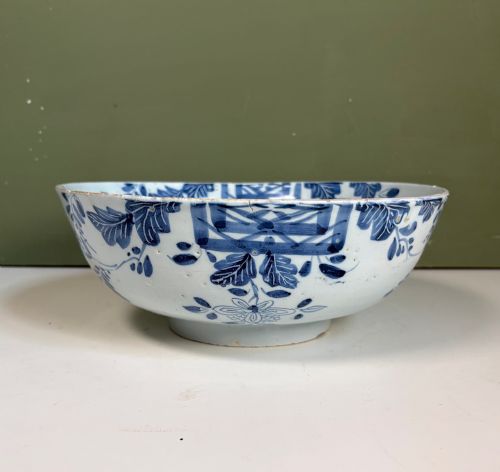
Dutch faience pottery encompasses decorative plates, chargers, vases, jugs, jars, inkstands, bowls, and figural items such as Toby jugs and pottery cows. These objects represent centuries of ceramic production shaped by distinct stylistic movements.
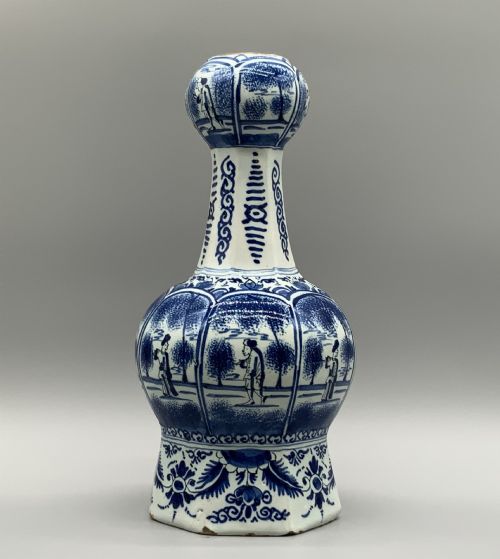
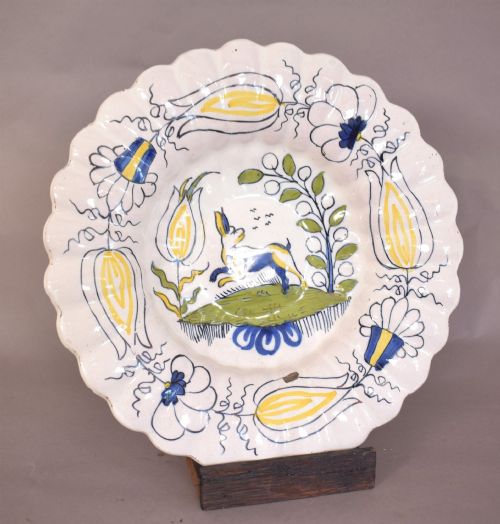
The most common forms on this page include eighteenth-century plates and chargers alongside seventeenth-century blue and white vases. Many pieces feature traditional chinoiserie motifs, floral decoration, or manganese blue pigments.
Originating primarily from the Netherlands, these items reflect historical domestic and export markets. Surviving examples range from utility vessels to ornamental mantel pieces.
How they were made
Potters shaped earthenware bodies and coated them in a white tin glaze to create an opaque canvas for painting. Cobalt pigment and other metallic oxides were then applied directly onto the unfired or biscuit-fired glaze.
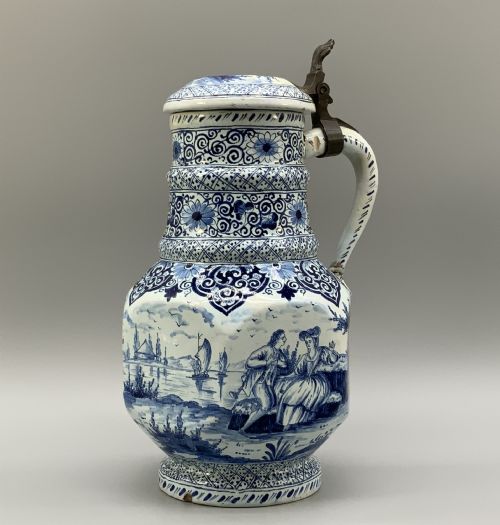
Kiln firing fused the pigment into the liquid glaze layer, producing deep blue and white contrasts or polychrome scenes. Pewter mounts were occasionally added to jugs and pitchers as functional or decorative borders.
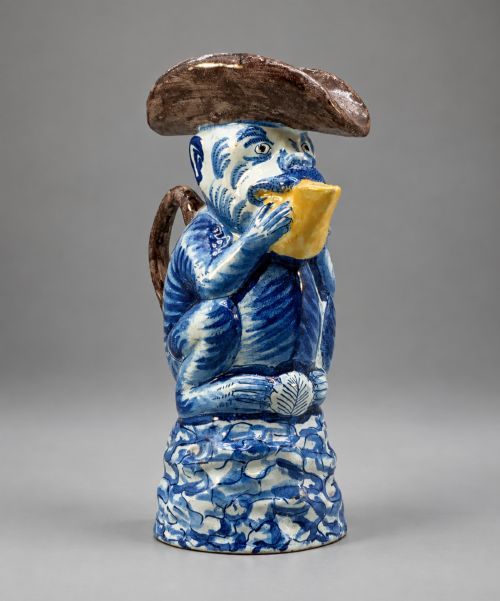
Among the chargers and vases, a monkey sits frozen in a Toby jug, watching the room with eighteenth-century amusement.
What varies in quality
Artistic execution dictates the distinction between standard production and superior craftsmanship, visible in the precision of brushwork and the complexity of chinoiserie or floral designs. Finer pieces demonstrate control over cobalt pigment gradients and detail.
Survival of the original form impacts evaluation, particularly with items altered into lamps or those retaining contemporary pewter lids. Condition of the tin glaze surface and completeness of form separate average utility wares from exceptional decorative objects.
Pieter Verburg
The Dutch Faience Pottery Glossary
- Faience
- Tin-glazed earthenware produced in Europe, characterised by a white opaque glaze painted with metallic oxides. This term is frequently used interchangeably with Dutch Delftware in historical contexts.
- Tin glaze
- An enamel glaze rendered white and opaque by the addition of tin oxide. It provides the smooth background layer characteristic of these ceramics.
- Charger
- A large decorative plate intended for display on a sideboard or wall rather than for dining. These substantial pieces often showcase complex painted narratives or floral arrangements.
- Chinoiserie
- European interpretations of Chinese artistic motifs, popular on seventeenth and eighteenth-century ceramics. These designs typically depict imaginary landscapes, birds, and figures.
- Polychrome
- Decoration employing multiple colours rather than a single pigment like blue. In this pottery, it usually involves a palette of several contrasting mineral colours.
Dutch Faience Pottery: Frequently Asked Questions
What is dutch faience pottery?
Dutch faience pottery consists of tin-glazed earthenware and ceramic items produced in the Netherlands from the seventeenth century onwards. These objects include plates, chargers, vases, and jugs decorated with blue and white or polychrome pigments.
Makers utilised tin glaze to create an opaque white surface suitable for detailed hand-painted designs. The category spans utilitarian vessels to decorative display pieces.
How were chargers used historically?
Chargers served primarily as large decorative plates for display on walls or sideboards in prosperous homes. Their substantial size offered artisans a wide canvas for elaborate chinoiserie scenes and floral compositions.
While technically plates, their functional use was secondary to their ornamental role in domestic interiors.
How do I identify seventeenth century pieces?
Seventeenth-century pieces often display characteristic blue and white chinoiserie motifs, including birds and floral arrangements influenced by imported Asian porcelain. The form and weight of the earthenware body also offer clues to their age.
Examining the tin glaze application and pigment depth helps distinguish these earlier works from later nineteenth-century revivals.
Can these items be used daily?
Most antique faience pieces function best as decorative objects rather than for daily use. The porous earthenware body and historic tin glaze require careful handling to prevent damage.
Displaying them safely away from heavy traffic areas preserves the glaze and painted decoration for the future.