

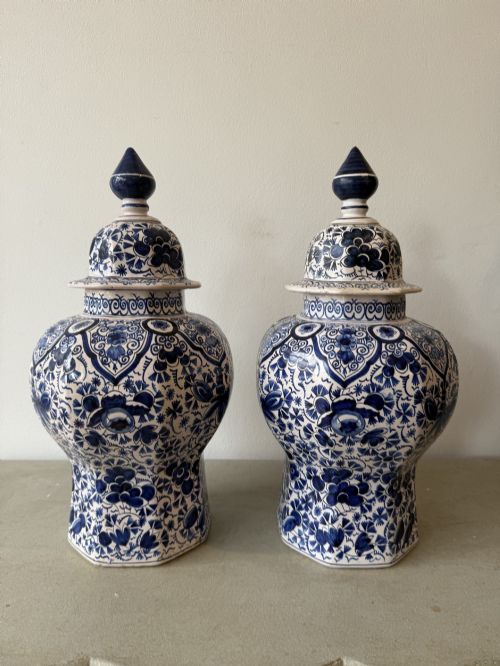


Dutch Chinoiserie Ceramics
Dutch chinoiserie ceramics are tin-glazed earthenware objects painted with imaginative Eastern scenes that bring centuries of European maritime trade history into a modern room.
Dutch Chinoiserie Ceramics
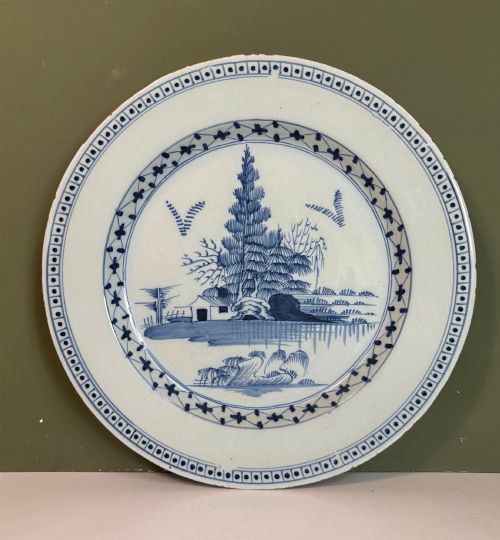
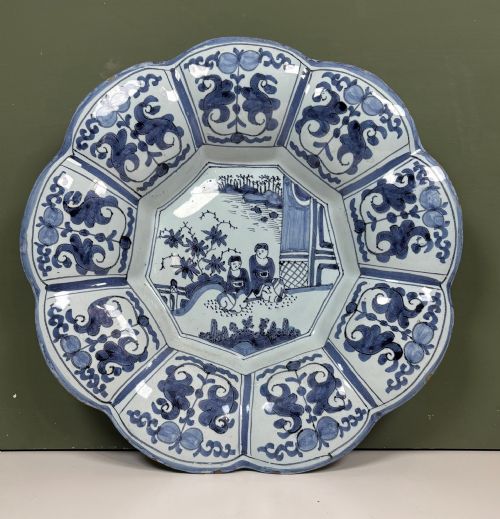
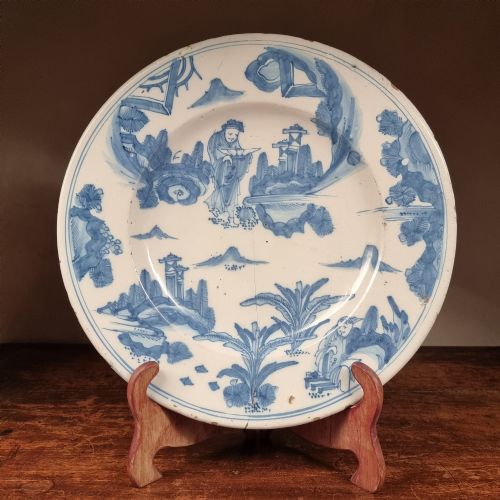
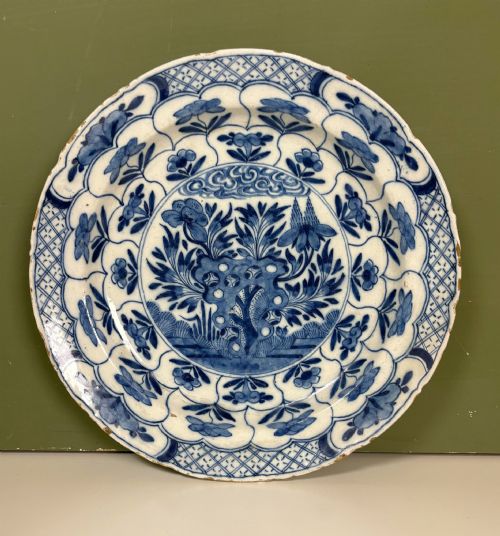
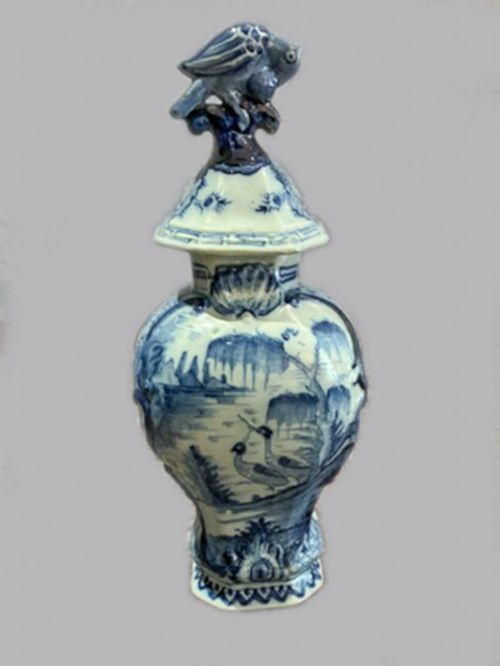
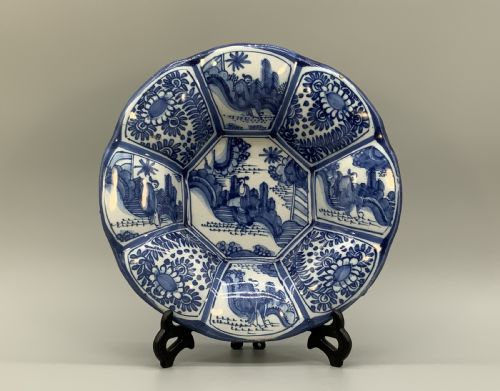
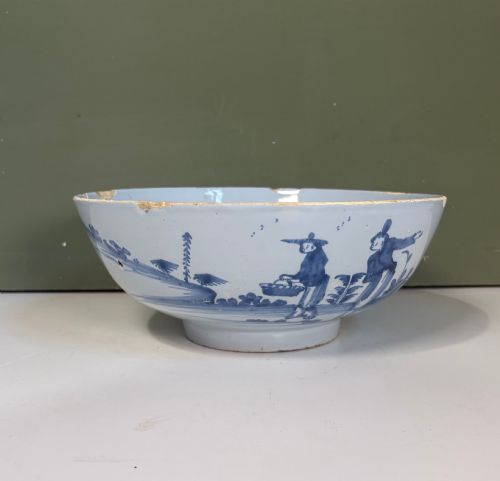
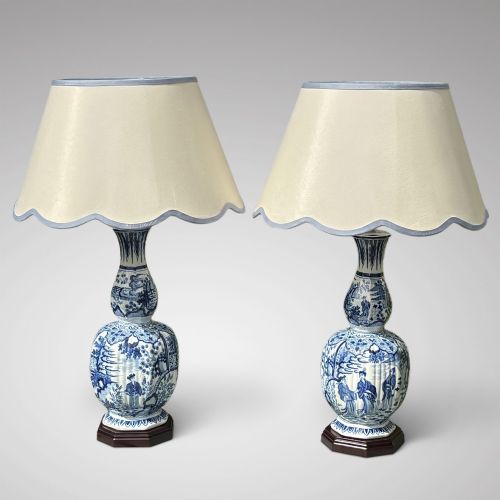
Dutch chinoiserie ceramics span the seventeenth, eighteenth, and nineteenth centuries, taking the form of chargers, plates, vases, bowls, and table lamps. These pieces reflect European fascination with Asian design during the height of the Dutch East India Company trade.
The objects appearing most frequently on this page are chargers and plates from the eighteenth century, alongside seventeenth-century blue and white vases and lidded vessels. Table lamps adapted from older vases also appear among the selections.
Makers drew on Kraak porcelain motifs, populating their tin-glazed surfaces with stylised birds, flowers, and figures in landscapes. The resulting works capture a distinct European interpretation of Chinese porcelain.
Markers of Quality
Quality rests in the precision and fluidity of the cobalt brushwork, separating hurried workshop production from master painting. Sharp details in birds, flowers, and figures indicate a skilled hand.
The uniformity of the white tin glaze and the stability of the earthenware body during firing determine the integrity of the surviving piece. Well-balanced forms and crisp moulding set superior vessels apart.
Listings feature earthenware materials spanning three centuries, dominated by tin-glazed finishes and cobalt pigment painting.
The Dutch Chinoiserie Ceramics Glossary
- Charger
- A large ornamental plate intended for display on a wall or dresser rather than dining use. These broad surfaces often carry the most ambitious painted scenes.
- Tin-Glazed Earthenware
- Pottery coated with a white, opaque glaze containing tin oxide. This technique provides the characteristic smooth background for blue and white painting.
- Kraak Style
- A Dutch imitation of Chinese porcelain export wares characterised by panelled borders and central landscape motifs. The style heavily influenced seventeenth-century production.
- Polychrome
- Decoration employing multiple colours rather than a single pigment. In these ceramics, it describes designs painted in hues beyond standard blue and white.
- Baluster Vase
- A vessel with a rounded body tapering toward the neck, standing on a circular base. This classical shape frequently receives chinoiserie landscape painting.
Dutch Chinoiserie Ceramics: Frequently Asked Questions
How were these ceramic chargers used historically?
Chargers served primarily as decorative wall hangings or table centrepieces in wealthy European households during the seventeenth and eighteenth centuries. Their broad painted surfaces allowed makers to display elaborate scenes to visiting guests.
Over time, many transitioned from dining rooms to display cabinets as tastes shifted toward porcelain. Today, surviving examples retain hanging holes or mounting hardware from these historical display methods.
How do I tell seventeenth-century pieces from eighteenth-century ones?
Seventeenth-century pieces often lean heavily on Kraak styles with segmented borders and dense floral or avian motifs. The blue pigment on earlier examples can exhibit a deeper, more varied saturation.
Eighteenth-century items frequently feature lighter palettes and more naturalistic landscape elements influenced by changing trade patterns. Glaze thickness and body weight also shift as pottery techniques evolved across the decades.
Can I safely use converted vase lamps in a modern home?
Many antique vases have been fitted as table lamps to suit contemporary lighting needs while preserving the ceramic body. Rewired fixtures allow these pieces to function safely in domestic settings.
Care should be taken to support the ceramic base when moving the lamp and to use appropriate bulb wattages. Professional re-wiring ensures older metal fittings meet current electrical standards.
What is the difference between blue and white and polychrome pieces?
Blue and white pieces rely exclusively on cobalt oxide painted beneath or within the glaze, mirroring imported Chinese porcelain. This monochromatic palette dominates the surviving selection.
Polychrome ceramics introduce iron red, yellow, and green pigments to create multicoloured scenes. These coloured items required additional firings and represent a distinct decorative branch of the pottery tradition.