



Drop Front Secretaire Drawer
A drop front secretaire drawer conceals a fitted writing surface inside a practical chest of drawers or bookcase.
Drop Front Secretaire Drawer
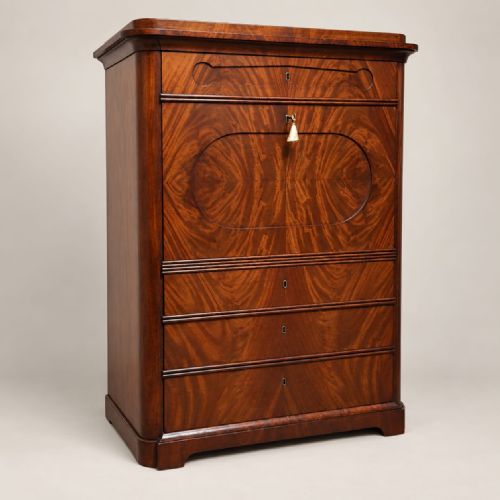
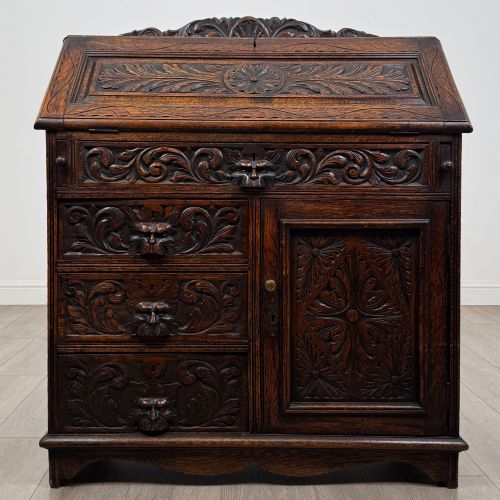
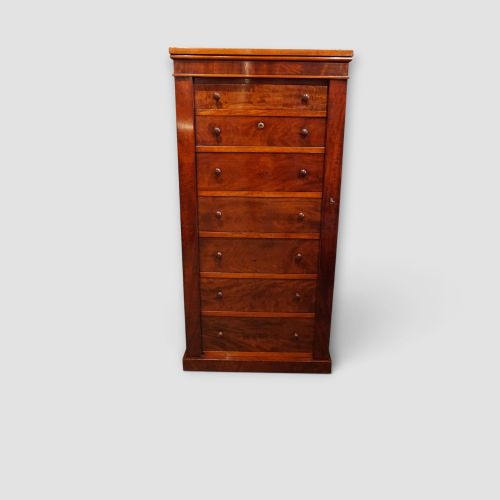
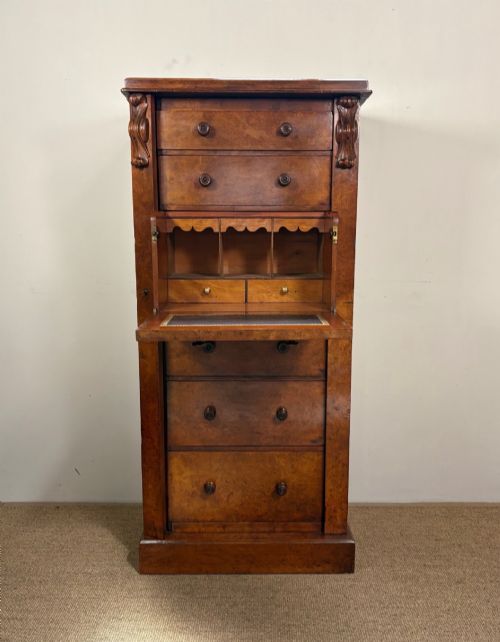
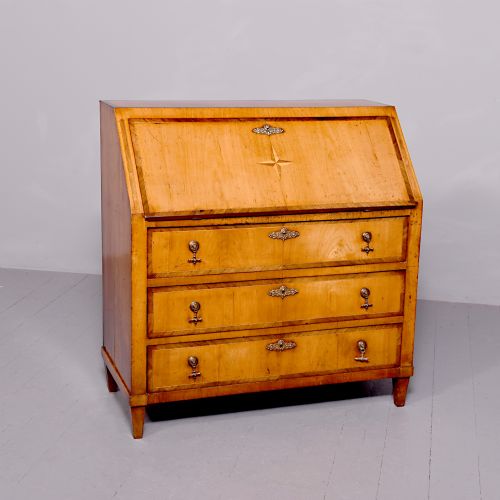
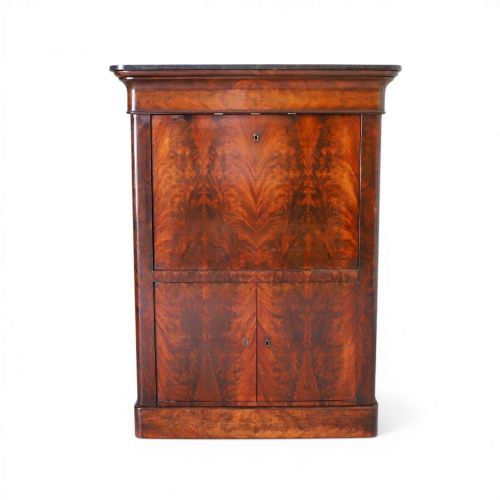
A drop front secretaire drawer combines the external appearance of a conventional chest of drawers or bookcase with a pull-down writing compartment. When you search for a drop front secretaire drawer, you encounter forms ranging from compact Wellington chests and tall cabinets to large Georgian bookcases and French abattants.
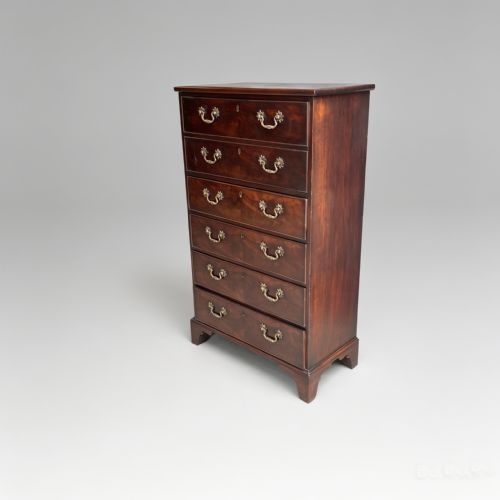
The pieces on this page span the eighteenth, nineteenth and early twentieth centuries, originating from English, French, Swedish and wider continental workshops. Common domestic formats include mahogany secretaire chests and tall cabinets equipped with hidden compartments alongside standard storage drawers.
Materials and Construction
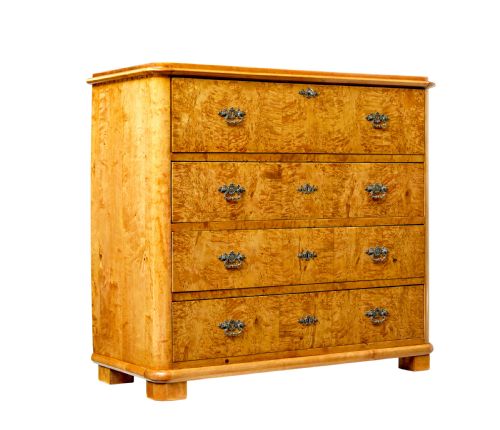
Cabinet makers utilised structural timbers such as oak and pine for carcasses, overlaying primary surfaces in rich veneers including mahogany, flame mahogany, walnut, burr birch, rosewood and kingwood. Drawers often feature oak linings and hand-cut dovetail joints.
Surface ornamentation incorporates brass hardware, leather writing inserts, inlaid stringing, and marble tops found on continental secretaire cabinets. Secret drawers and internal pigeonholes rely on intricate concealed sliding mechanisms operated within the drop front compartment.
Assessing Quality
Quality rests upon the selection of timber veneers and the precision of internal joinery within the drop front writing section. Superior examples display symmetrical grain patterns, tightly fitted pigeonholes, and robust locking mechanisms that secure both the fall front and the surrounding drawers.
Proportion and execution distinguish finer pieces from standard utility furniture. Refined items maintain balanced drawer heights, crisp inlay work, and original brass fittings without compromise to structural stability.
Gregory and Co of London·Gillows of Lancaster
The Drop Front Secretaire Drawer Glossary
- Secretaire
- A piece of furniture containing a drawer or compartment configured for writing. It typically includes small drawers and pigeonholes behind a hinged writing surface.
- Fall front
- A hinged writing flap that drops down into a horizontal position for writing. It conceals internal compartments when closed.
- Wellington chest
- A tall, narrow chest of drawers secured by a hinged vertical locking flap on one side. This design originates from the nineteenth century.
- Escritoire
- A writing cabinet or desk, often fitted with drawers and a drop-down flap. The term frequently applies to continental forms.
- Ormolu
- Gilded bronze ornamentation applied to furniture. This technique appears predominantly on nineteenth-century French pieces.
Drop Front Secretaire Drawer: Frequently Asked Questions
What is a drop front secretaire drawer?
A drop front secretaire drawer is a piece of furniture that looks like a standard chest of drawers or bookcase from the outside. The top drawer pulls out and folds down to reveal a fitted writing desk complete with small drawers and pigeonholes.
These pieces were designed for correspondence and household administration in periods before dedicated home offices existed. They combine everyday clothes or book storage with a functional writing surface.
How do I use a secretaire daily?
To use the writing surface, you unlock the fall front flap and lower it gently into a horizontal position, often supported by integrated wooden brackets or side arms. This opens access to the internal stationery compartments.
When writing is finished, you return your papers to the internal drawers, lift the flap back into its vertical position, and secure the lock. This keeps the room tidy and conceals the workspace entirely.
Where were these pieces placed?
Secretaires were traditionally kept in private parlours, bedrooms, or libraries where letters were written and household accounts managed. Their dual purpose made them especially useful in rooms with limited floor space.
Tall bookcases with secretaire drawers suited libraries and drawing rooms, while compact Wellington chests or continental abattants fit neatly into bedroom spaces for morning correspondence.
How do I date a secretaire chest?
Dating relies on timber choices, construction methods, and stylistic details. Eighteenth-century Georgian examples often feature solid mahogany and simple bracket feet, while nineteenth-century pieces introduce flame mahogany veneers, rosewood, or elaborate marble tops.
Examing drawer linings, handle types, and secondary woods like oak or pine helps narrow the period of manufacture. Cabinetmakers frequently incorporated evolving locking mechanisms that reflect specific nineteenth-century decades.