


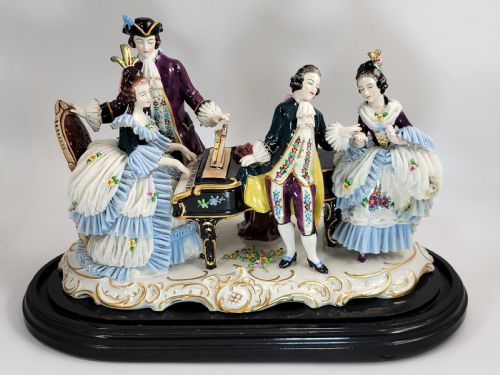


Dresden Style Porcelain Figurine
These dresden style porcelain figurine pieces capture 19th-century romantic exuberance, offering intricate sculptural detail that draws collectors to display them centrally.
Dresden Style Porcelain Figurine
A dresden style porcelain figurine brings elaborate rococo revival aesthetics into domestic spaces, drawing heavily on 18th-century forms and German manufacturing traditions. When you search for this phrase, you encounter sculptural groups, pastoral figures, and figural candlesticks produced across the nineteenth and early twentieth centuries.
The most common examples on this page date from the nineteenth century, reflecting Victorian tastes for continental porcelain. These pieces frequently depict romantic couples, children in gardens, and classical or allegorical subjects modelled with great complexity.
Makers and decorators in German porcelain centres utilised historical models, echoing earlier Meissen or Chelsea styles while applying their own distinct decorative palette. The resulting figures range from single decorative subjects to large centrepiece bowls and candelabra.
Materials and Techniques
Hard-paste porcelain forms the structural body of these figures, fired at high temperatures to yield a durable, vitrified ceramic base. Artisans then applied colourful enamel paints and gold leaf accents by hand before secondary low-temperature firings.
Detailed moulding allowed for the creation of elaborate folds, flowers, and applied elements, sometimes incorporating delicate ceramic lace traditions. Gilding and enamel work completed the surface decoration, adding depth and contrast to the glazed porcelain bodies.
Grape pickers and romantic couples populate these scenes, occasionally accompanied by bewildered porcelain sheep.
Distinctions in Quality
The fineness of the modelling dictates the visual success of any piece, separating stiffly cast examples from those with fluid drapery and expressive faces. Skilled modellers achieved realistic textures in hair, foliage, and garments that weaker copies lack.
The precision and richness of the hand-painting also determine value, as carefully shaded enamels and crisp gold gilding require superior artistry. Pieces retaining delicate applied elements and crisp floral details without excessive restoration represent the higher end of the range.
Ernst Bohne Söhne·Helena Wolfsohn·Carl Thieme·Sitzendorf·Meissen
The Dresden Style Porcelain Figurine Glossary
- Hard-paste porcelain
- A dense, durable ceramic composed of kaolin and petuntse, fired at high temperatures. It provides the smooth, impervious white body typical of continental figures.
- Enamel
- A vitreous composition applied to the fired porcelain surface to add colour. Subsequent firing fuses the pigments permanently to the glaze.
- Gilt
- A thin layer of gold or gold leaf applied to highlights on the porcelain. It accentuates moulded details such as rococo scrolls and garment trims.
- Rococo Revival
- A nineteenth-century design movement resurrecting the asymmetrical curves, C-scrolls, and ornamental exuberance of the mid-eighteenth century. This style dominates the modelling of these figures and bases.
- Candelabra
- A branched candlestick designed to hold multiple candles, often incorporated into larger sculptural porcelain groups. They combine functional lighting with elaborate figural decoration.
Dresden Style Porcelain Figurine: Frequently Asked Questions
What periods do these figures come from?
The pieces span the nineteenth and early twentieth centuries, with a strong concentration of items produced around the Victorian era. Many adopt eighteenth-century aesthetics while retaining nineteenth-century manufacturing methods.
Dates range from mid-century romantic models through to later revival pieces from German workshops.
How were these figures displayed originally?
Owners placed these decorative objects on mantelpieces, side tables, and as centrepieces for dining tables during formal gatherings. Their detailed modelling invited close inspection by guests in a domestic interior.
Figural candlesticks and candelabra also provided functional ambient lighting alongside their decorative sculptural presence.
Are these pieces fragile?
Hard-paste porcelain is structurally robust, but the complex, outstretched limbs, applied flowers, and lace elements make these figures susceptible to impact damage. Careful handling and stable placement away from high-traffic areas are essential.
Dusting should be performed gently with a soft brush to protect delicate protruding details.