






Rococo Pastoral Figure
These rococo pastoral figure pieces capture idyllic rural themes through porcelain figurines and oil paintings.
Rococo Pastoral Figure
A rococo pastoral figure brings rustic charm indoors through porcelain figurines, oil paintings on canvas, and bronze sculptures depicting shepherds, gardeners, and musicians. These works draw heavily on 18th-century French aesthetics, portraying idealised rural life in gardens and meadows.
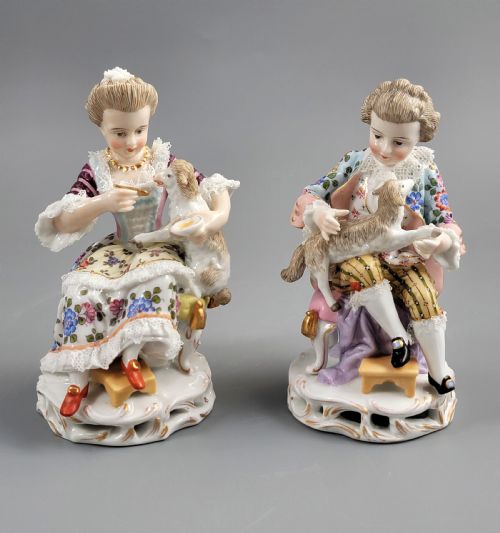
The selections available here span from authentic 18th-century Georgian pieces to later 19th-century revivals produced by German and French factories. Porcelain figurines dominate the listings, often featuring sheep, children, and romanticised couples in playful poses.
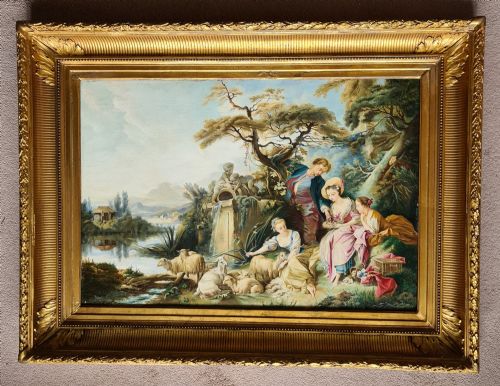
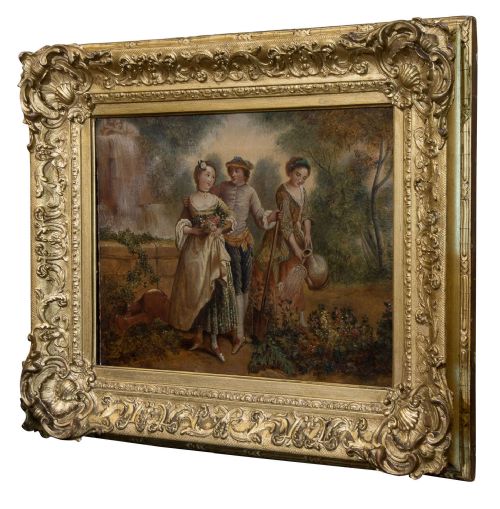
Oil paintings after masters like Francois Boucher and Jean-Antoine Watteau complement the sculptural works, sharing the same light-hearted theatricality. Buyers will encounter both individual figures and balanced pairs designed for mantelpieces and decorative displays.
Materials and construction
Hard-paste porcelain forms the foundation of the sculptural works, shaped in moulds and finished with intricate hand-painting and gilding. Factories across Germany, France, and Britain utilised detailed enamel work to render the soft pastel clothing and rosy complexions characteristic of the style.
Canvas and oil paint constitute the flat works, executed with fine brushwork to mimic the luminous skies and lush foliage of the period. Gesso and gold leaf frequently enhance the frames accompanying these canvases, adding rich texture to the presentation.
Ceramic sheep frequently outnumber humans in these pastoral scenes, often sporting remarkably coiffed wool and remarkably calm expressions.
Distinctions in craftsmanship
The ambition of the composition also separates standard decorative items from superior examples, with multi-figure groups and nuanced pastoral scenes demanding greater technical skill from the modeller or painter. Authenticity of period, whether an original 18th-century Georgian creation or a later revival by factories like Samson or Sitzendorf, influences the character of the work.
Meissen·Derby·Samson·Vion et Baury·Sitzendorf·Carl Thieme Dresden·Ludwigsburg
The Rococo Pastoral Figure Glossary
- Hard-paste porcelain
- A dense, durable ceramic material fired at high temperatures, composed of kaolin and petuntse. It provides a crisp, bright white body ideal for detailed figurine moulding.
- Rococo revival
- A 19th-century stylistic movement that resurrected the asymmetrical curves, playful motifs, and ornate flourishes of the mid-18th century. This aesthetic heavily influenced Victorian decorative arts and European porcelain production.
- Bisque porcelain
- Unglazed ceramic fired to a matte, porous finish that resembles marble. It was frequently utilised for large sculptural figures to highlight subtle anatomical contours.
- Gesso
- A plaster-like mixture applied to canvas or wood surfaces to prepare them for oil painting or gilding. It creates a smooth base that holds fine relief detail.
Rococo Pastoral Figure: Frequently Asked Questions
What is a rococo pastoral figure?
A rococo pastoral figure is a decorative artwork depicting romanticised rural subjects, such as shepherds, shepherdesses, and gardeners. These pieces emerged from 18th-century artistic traditions celebrating leisurely country life.
Today, collectors find these subjects rendered primarily as porcelain figurines, sculptural groups, and oil paintings on canvas. The style emphasises graceful poses, pastel colours, and idyllic natural settings.
How do I display porcelain figures?
Porcelain figures require stable placement away from high-traffic areas where accidental knocks might occur. Displaying them on mantelpieces or inside glass-fronted cabinets protects them from dust and physical damage.
Pairing matching figures together creates a balanced visual display, echoing how these decorative objects were originally arranged in period interiors.
How do I tell original pieces from later revivals?
Distinguishing original pieces from later revivals involves examining factory marks, paste composition, and painting style. 18th-century pieces often exhibit distinct weight, wear patterns, and hand-mixed enamel colours.
Later 19th-century revival pieces from makers like Samson or Sitzendorf frequently emulate earlier styles with different paste textures and registration marks. Comparing specific modelling details against documented factory archives helps clarify the period of production.