




Dresden Style Porcelain Figures
These dresden style porcelain figures bring elaborate continental charm and ornate pastis-rococo modelling straight to the room.
Dresden Style Porcelain Figures
Most examples date from the nineteenth century into the early twentieth century, reflecting a strong revival of historic Rococo and Victorian tastes. Buyers encounter both marked factory pieces and unmarked Continental ornamental works sharing identical stylistic traits.
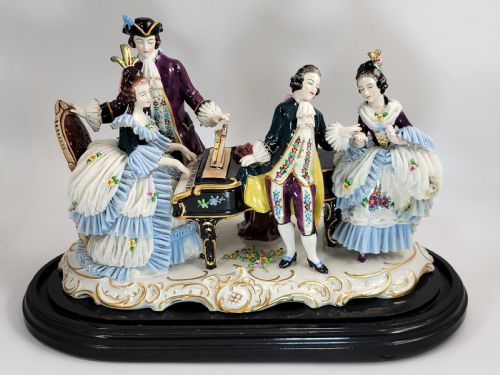
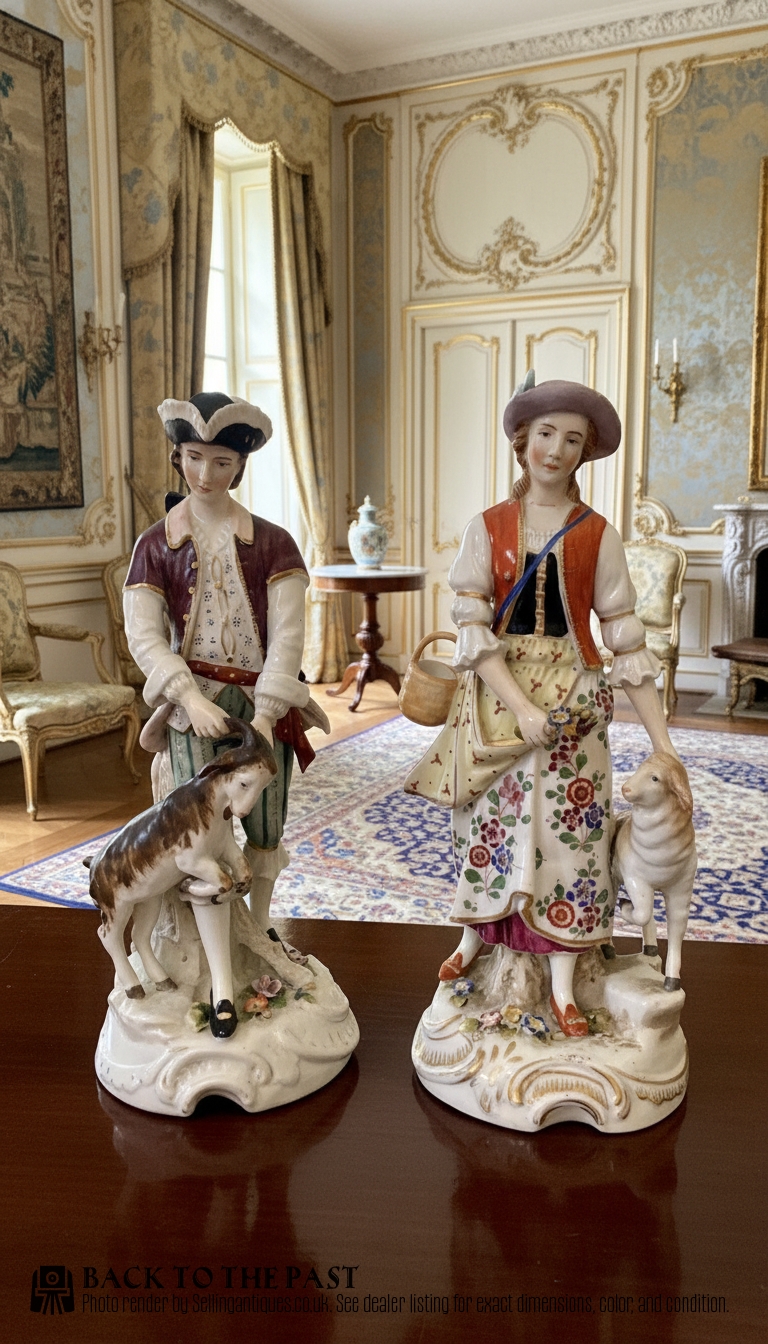
The objects serve primarily as decorative mantel ornaments and table centrepiece arrangements. Their intricate forms typically showcase detailed historical costume, floral encrustations, and pastoral narratives.
How they were made
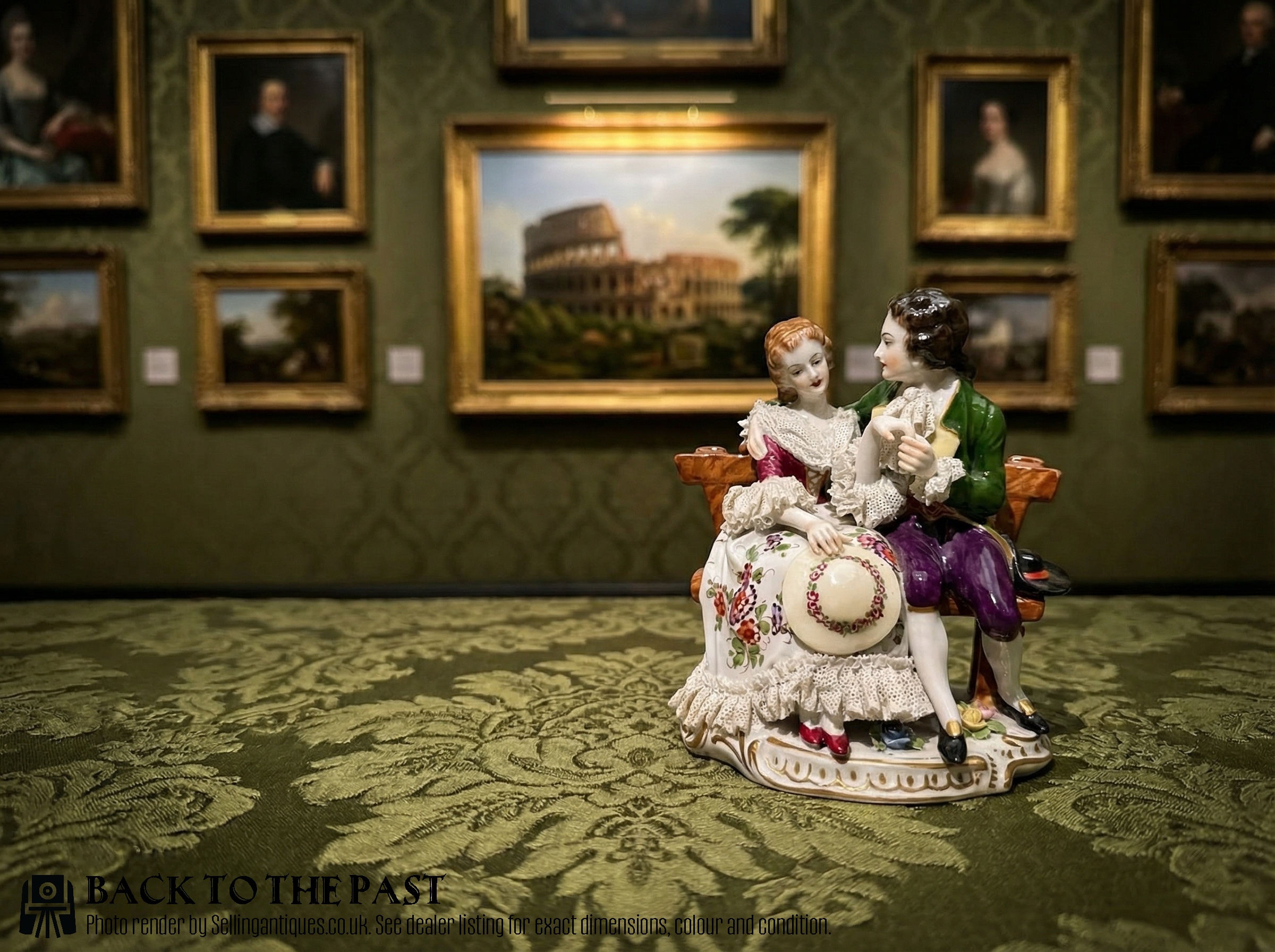
Production relies on hard-paste porcelain shaped through detailed moulding and hand-modelling techniques. Artisans apply fine enamel colours alongside applied lace effects and delicate floral encrustations to build up the surface texture.
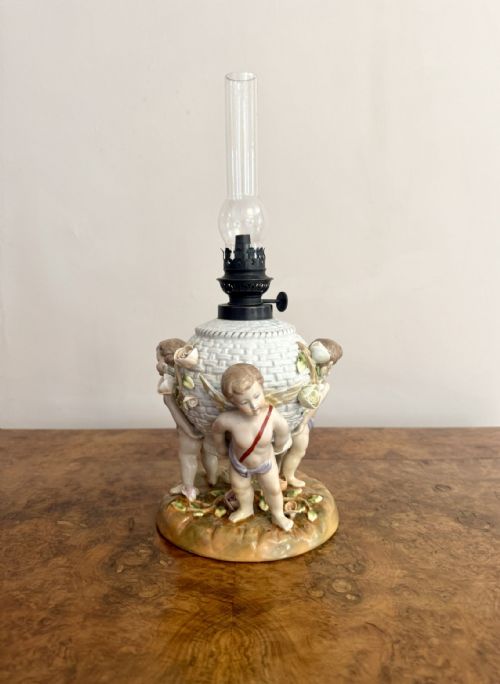
Gilding and gold leaf accents are frequently added to highlight raised scrolls and panel borders, particularly on rococo revival bases. Brass and glass components occasionally appear where combined with oil lamps and candelabra hardware.
Pastoral children and romantic couples occasionally share display space with allegorical figures representing the changing seasons.
What varies in quality
The fineness of hand-modelling in the facial expressions and hands separates ambitious sculptural work from simpler factory output. Crispness in the application of enamel paint and the delicacy of applied porcelain lace dictate the overall visual success.
Complexity of composition, such as multi-figure pastoral groups and substantial candelabra structures, distinguishes major decorative statements from straightforward single figurines.

Sitzendorf·Volkstedt·Meissen·Ernst Bohne Söhne·Helena Wolfsohn·Carl Thieme
The Dresden Style Porcelain Figures Glossary
- Hard-paste porcelain
- A durable ceramic material fired at high temperatures using kaolin and petuntse. It forms the solid body for most nineteenth-century German figures.
- Enamel
- Vitreous pigments fused to the porcelain surface during firing. These colours create the detailed costumes and floral motifs.
- Gilt
- A thin layer of gold applied to surface details and borders. It provides metallic contrast against the white porcelain body.
- Rococo Revival
- A nineteenth-century artistic movement imitating eighteenth-century scrollwork, asymmetry, and ornamental excess. This style dominates the modelling of these bases and figures.
- Candelabra
- Branched lighting fixtures designed to hold multiple candles. They often incorporate figural stems and floral arms.
Dresden Style Porcelain Figures: Frequently Asked Questions
What periods do these porcelain figures come from?
The listings span primarily from the nineteenth century through the early twentieth century, with occasional eighteenth-century examples. Most pieces reflect nineteenth-century revivals of earlier styles.
Production dates cluster around the Victorian era and the decades leading up to nineteen-thirty, capturing historic European ceramic traditions.
How were these decorative items used originally?
They functioned as ornamental centrepieces for dining tables, mantel displays, and grand drawing rooms. Elaborate versions incorporated functional lighting through oil lamps and candelabra.
Figurative groups often told moral, allegorical, or pastoral stories meant to display the owner's cultural sophistication.
How do I distinguish different German factories?
Identification relies on factory marks, painter numbers, and stylistic nuances in the modelling of bases and hands. Researching historical blue underglaze marks helps attribute pieces to specific towns like Meissen or Sitzendorf.
Many unmarked items are classified broadly by their adherence to nineteenth-century revival styles and factory traditions.