

Draw Leaf Extension Table
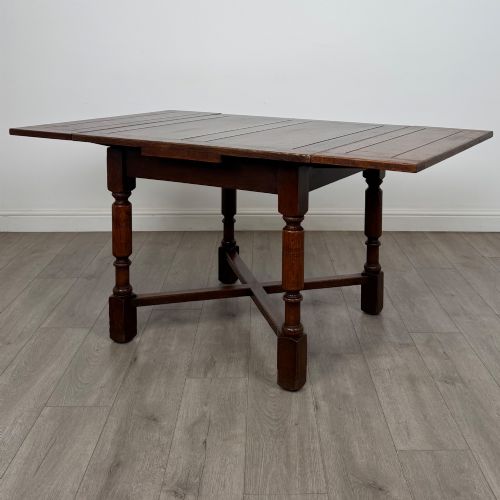
These draw leaf extension table examples are clever clever timber dining pieces designed to expand smoothly for guests.
Draw Leaf Extension Table
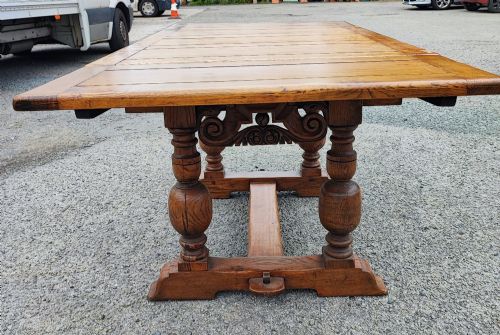
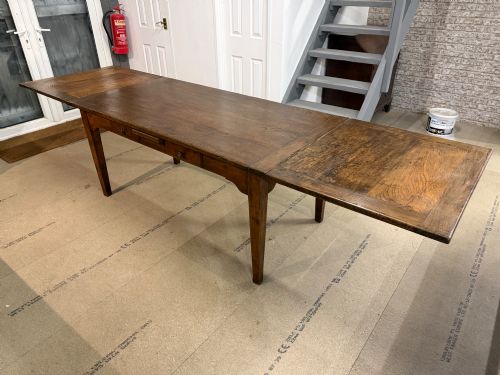
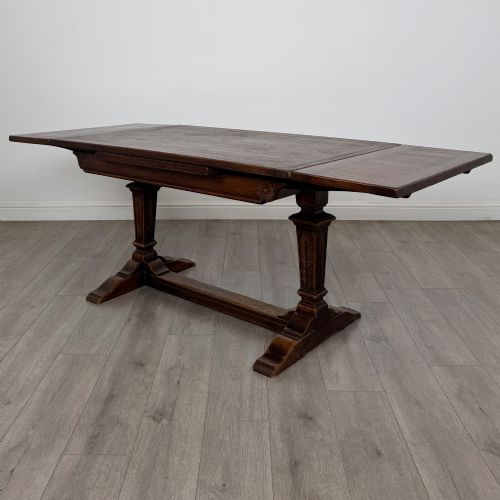
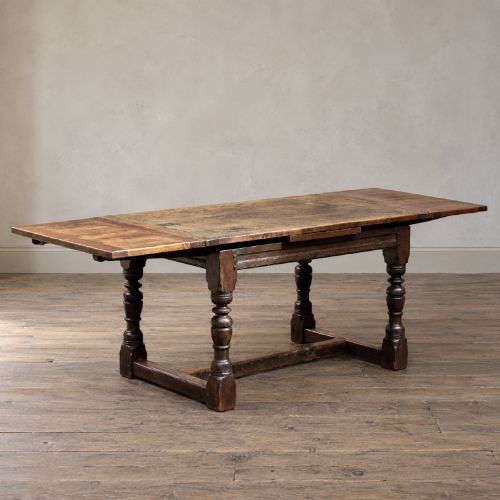
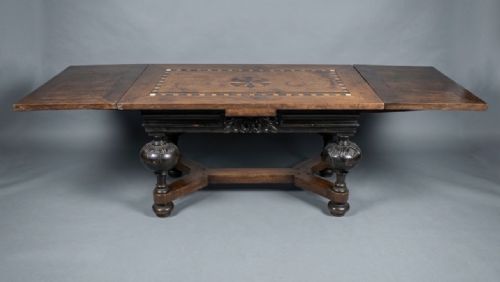
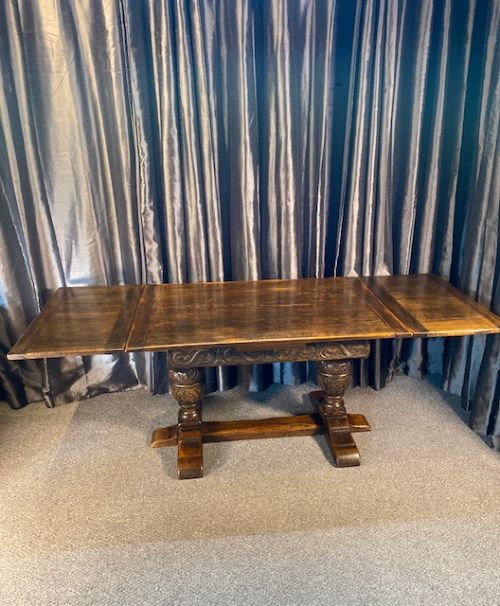
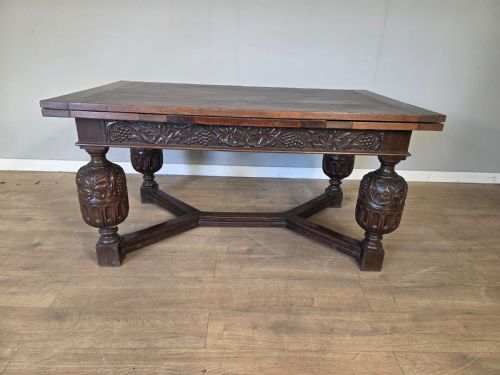
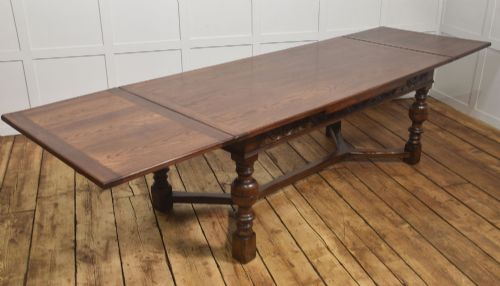
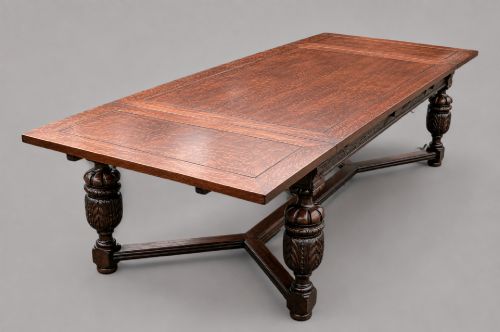
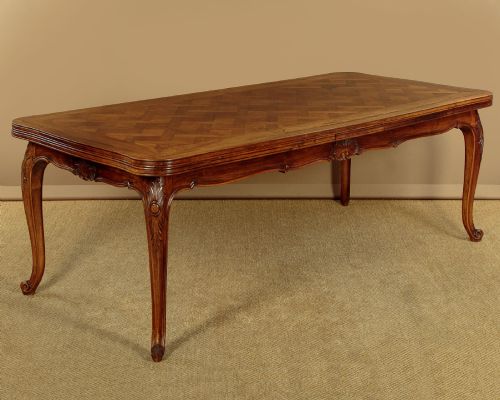
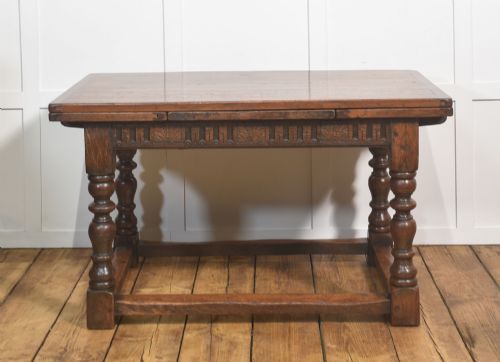
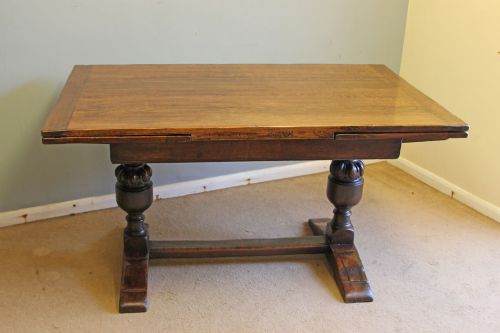
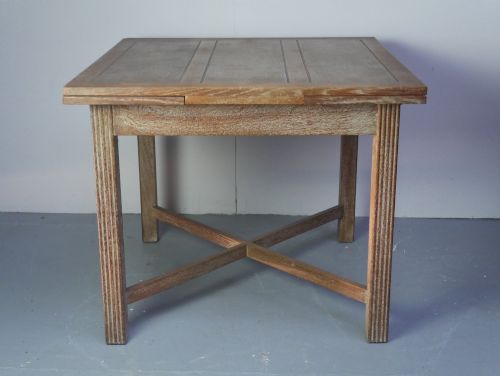
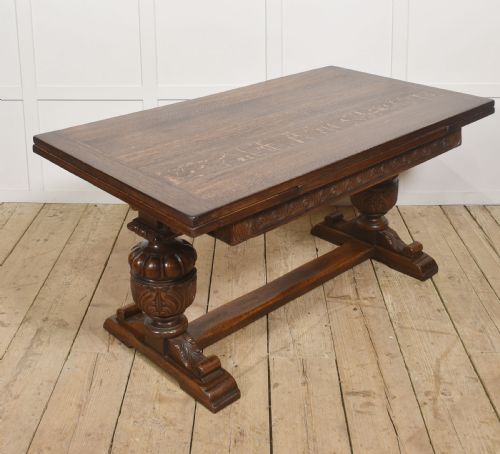
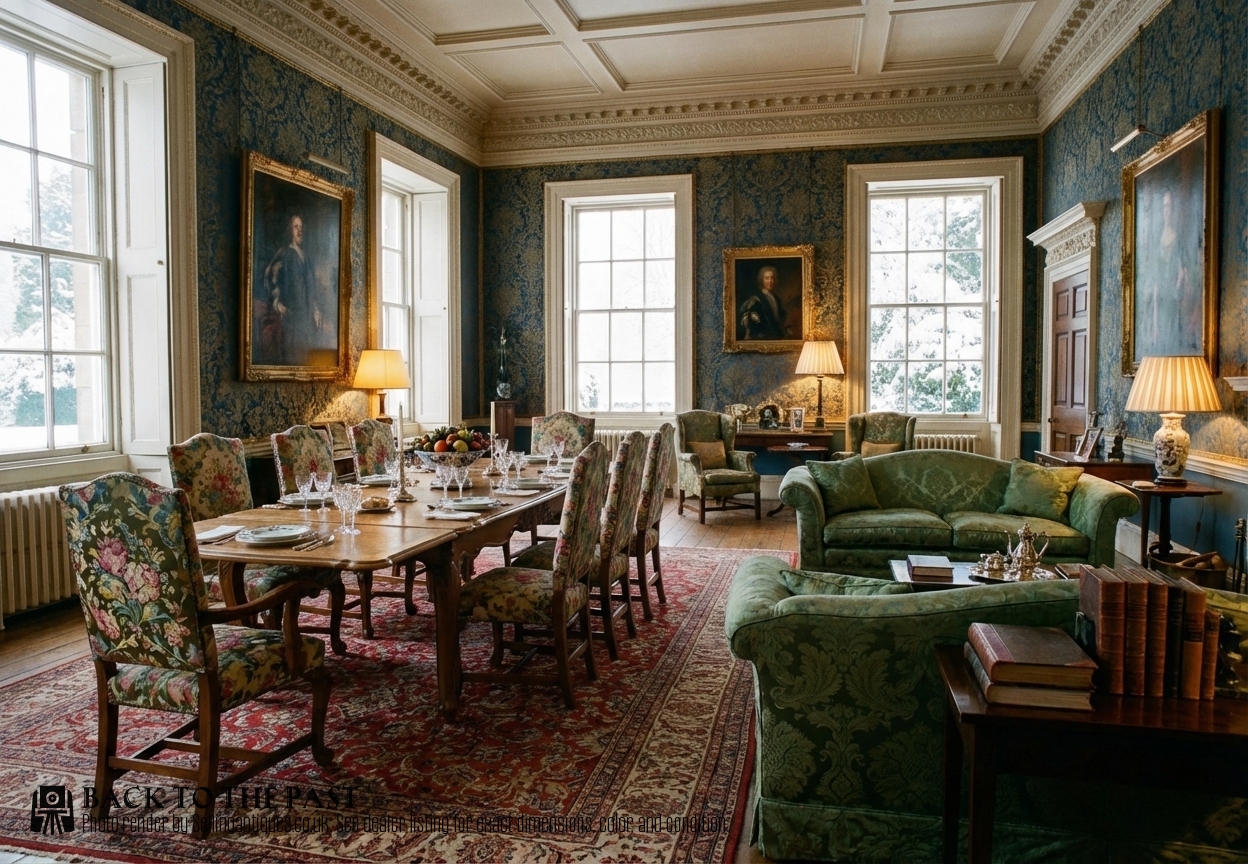
When you examine a draw leaf extension table, you find a dining surface built with concealed leaves that slide out from beneath the main top. The pieces appearing here span centuries from the seventeenth century through the Edwardian era up to the nineteen thirties, taking forms such as refectory tables, farmhouse kitchen tables, and French provincial designs.
The oak versions dominate the selection, often finished in Jacobean or Elizabethan revival styles with heavy carved bases. You will also encounter walnut pieces featuring parquetry tops, alongside cherry tables equipped with bread slides and cabriole legs.
How they were made
Joiners built these draw leaf extension table items primarily using solid oak, walnut, and cherry timbers. The mechanism relies on internal runners that allow the two extension leaves to tuck neatly beneath the centre board when not in use.
Surface decoration ranges from geometric wood inlay and parquetry patterns to limed oak finishes and deep relief carving on the legs and stretchers.
Some tables include a sneaky bread slide, perfect for hiding your toast from the cat.
What varies in quality
The calibre of a draw leaf extension table depends on the precision of the sliding mechanism and the choice of timber. Superior examples exhibit smooth operation of the extending leaves without sagging when fully opened.
Makers who selected finely figured walnut parquetry or dense solid oak produced pieces that maintain structural integrity and visual appeal across generations of dining use.
Heals
The Draw Leaf Extension Table Glossary
- Draw leaf
- A dining table construction where two leaves slide out from beneath the main top to increase the length. This clever mechanism allows rapid adjustment for larger gatherings.
- Parquetry
- Geometric wood inlay work arranged in patterns like herringbone or checkerboard. Craftsmen applied this technique to create decorative tabletops in walnut and oak.
- Refectory table
- A long, narrow dining table traditionally used in monasteries and large halls. Many examples in this style incorporate heavy timber legs joined by floor-level stretchers.
- Bread slide
- A pull-out wooden board integrated into the frame of certain antique tables. Originally used for cooling bread or resting dishes, it adds extra utility to the surface.
Draw Leaf Extension Table: Frequently Asked Questions
How do draw leaf tables work?
The main top remains fixed while two hidden leaves stored underneath slide outward on wooden runners. When pulled fully into place, the leaves rise slightly to meet the level of the central top.
This simple mechanical design permits one person to extend the surface length rapidly without removing or storing loose boards separately.
Are these tables suitable for daily dining?
Solid timber construction makes these pieces exceptionally robust for everyday meals and family gatherings. The extending mechanism is designed for frequent operation.
Regular use benefits from applying suitable wax polishes to protect the wood grain from moisture and daily wear.
How can I date an oak extension table?
Stylistic details provide the clearest indication of age, such as seventeenth-century twist turnings versus Edwardian or nineteen-thirties simpler lines. Examination of the underside and joint construction reveals hand-tool marks and traditional pegging methods.
Revival pieces often adopt earlier Elizabethan or Jacobean vocabulary while retaining twentieth-century hardware underneath.
What is parquetry on a table top?
Parquetry involves cutting small pieces of timber and fitting them together to form decorative geometric patterns across the surface. Walnut and oak are frequent choices for this detailed surface treatment.
This technique showcases the natural grain variations of the wood while providing a durable and ornate decorative finish.