

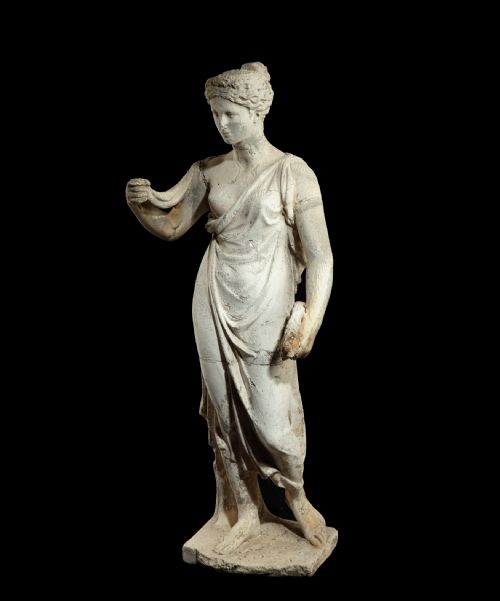
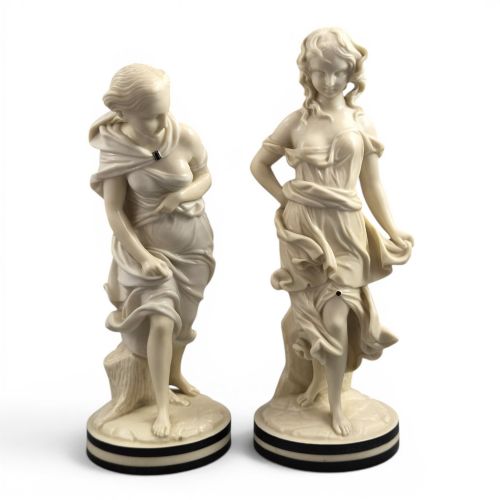
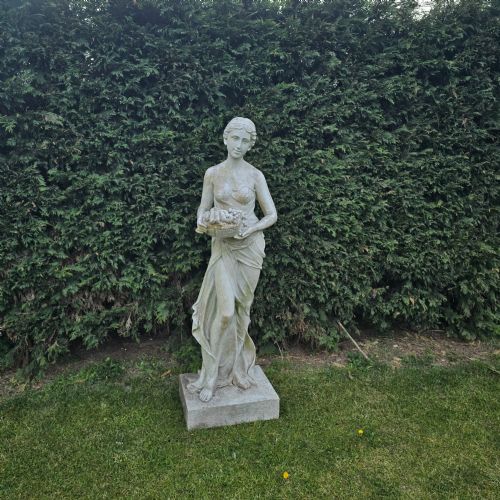


Draped Female Sculptures
These draped female sculptures bring classical drapery and timeless forms into interiors and gardens, spanning modest mantel figures to life-sized garden statues.

Draped Female Sculptures
When you search for draped female sculptures, you encounter figures shaped by classical antiquity, spanning 19th-century salon pieces to mid-century garden statues. The selection ranges from carved marble busts and cast bronze statuettes to porcelain figurines and robust stone garden figures.
Most pieces lean towards Neoclassical and Art Nouveau aesthetics, portraying allegorical figures, goddesses like Hebe, and draped ladies. You will frequently meet works drawing on French and Italian casting traditions alongside English porcelain and stone garden ornaments.
How they were made
Makers shaped these sculptures using materials such as cast bronze, carved marble, alabaster, plaster, and porcelain, alongside reconstructed and cast stone for larger outdoor statuary. Bronze works often utilised foundry casting techniques, while marble and alabaster pieces relied on skilled hand carving.
Porcelain figures received detailed glazing and bisque firing, whereas plaster and stuccos were cast from moulds to capture fine folds of cloth and facial expression. Wooden components appear occasionally, such as carved candlesticks mounted on socle bases.
Several figures carry romantic names like The Breezes and Nature Unveiling, capturing windswept drapery in solid stone and metal.
What varies in quality
Foundry reputation and signed bases distinguish notable bronze and marble works, while material density separates solid carved stone garden statues from simpler compositions.
James Hadley·Humphrey Hopper·Ernst Barrias·René Lalique·Pugi·Ernst Wahliss·Georges Van Der Straeten·Auguste Moreau·Antoine Coysevox·Barbedienne
The Draped Female Sculptures Glossary
- Bisque porcelain
- Unglazed porcelain that has a matte, tactile surface resembling marble. It was widely utilised in Victorian figures.
- Caryatid
- A sculptured female figure serving as an architectural support taking the place of a column or a pier. French examples often appear in plaster pairs.
- Torchere
- A tall stand or ornamental candlestick meant to hold a light source. They frequently incorporate carved figures holding sconces.
- Parian ware
- A type of fine white biscuit porcelain resembling Parian marble, developed in the 19th century. Royal Worcester produced notable examples in this medium.
- Socle base
- A short plinth or pedestal supporting a bust or statuette. This provides stability and elevates the sculpture visually.
Draped Female Sculptures: Frequently Asked Questions
Are these sculptures suitable for outdoor display?
Only pieces explicitly fashioned from stone, cast stone, or reconstituted stone belong outdoors. Plaster, porcelain, and alabaster pieces require indoor environments protected from moisture.
Garden statuary can withstand weather if placed on suitable plinths, while bronze needs sheltered placement to preserve patination.
How do I distinguish plaster from marble?
Plaster feels lighter, warmer to the touch, and often shows mould seams from casting. Marble offers greater weight, a cool surface temperature, and visible crystalline stone structure.
Alabaster shares some translucency with marble but yields more easily to carving and displays softer veining.
What periods do these pieces represent?
The pieces span the Regency era, the Victorian period, and the 20th century up through the 1950s. Art Nouveau styles emerge strongly in late 19th-century bronzes and porcelain.
Neoclassical revivals recur across multiple decades, drawing inspiration from ancient Greek and Roman forms.
How should I clean a bronze sculpture?
Dust bronze figures gently with a soft, dry cloth to remove surface particles. Avoid harsh chemical cleaners or abrasive pads that damage the original patina.
Consult a specialist before applying wax treatments to antique foundry surfaces.