



French Neoclassical Statues
French neoclassical statues capture the gravity and poise of antiquity, bringing classical figures and mythological subjects into nineteenth-century interiors.

French Neoclassical Statues
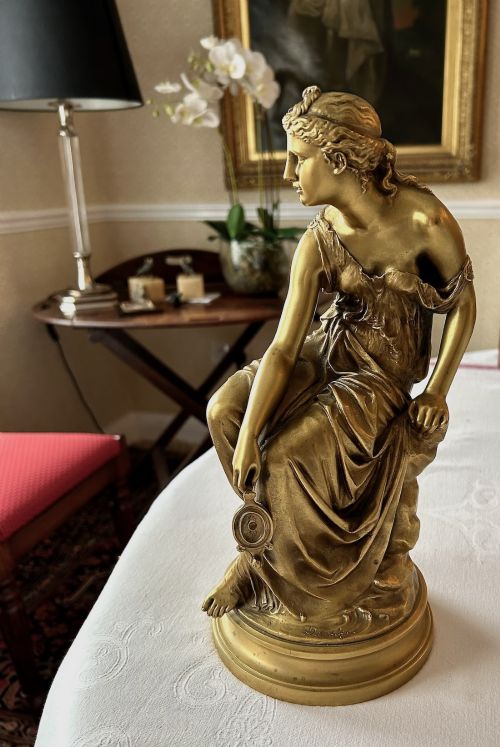
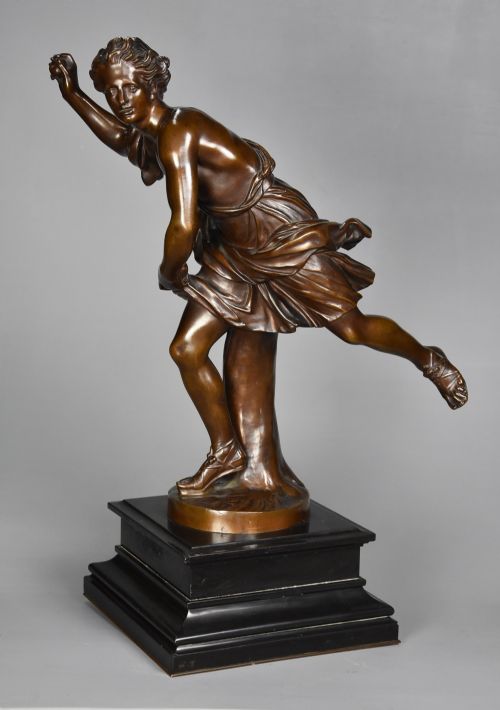
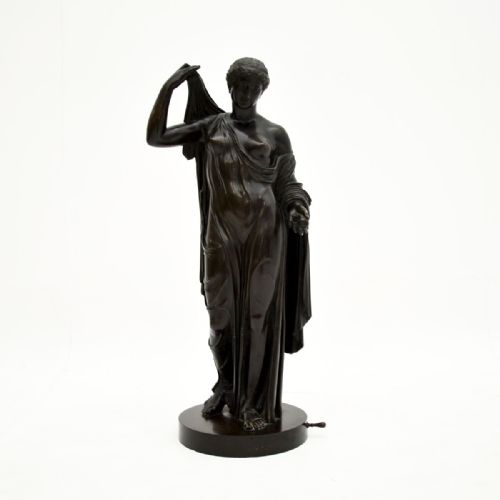
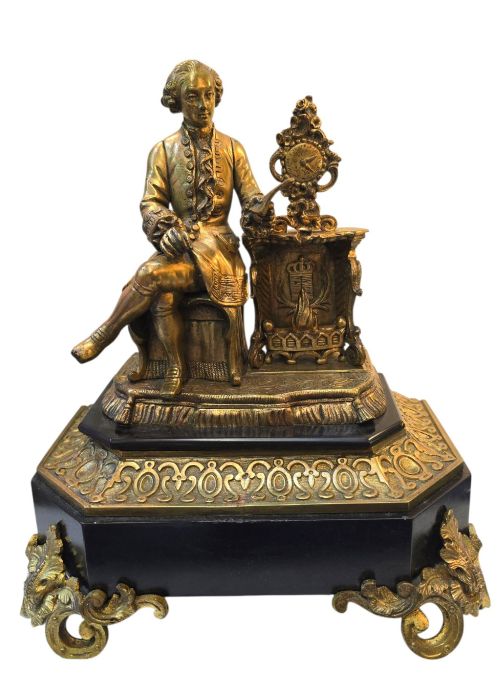
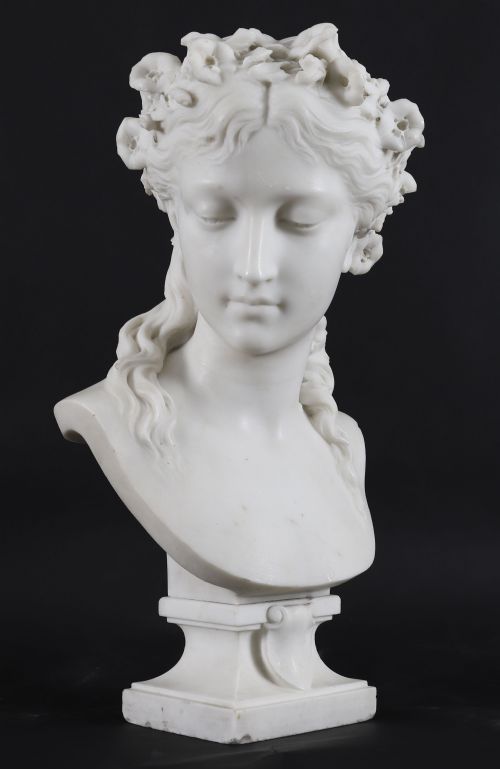
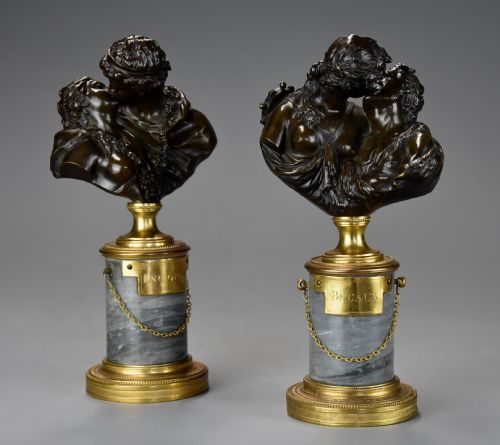
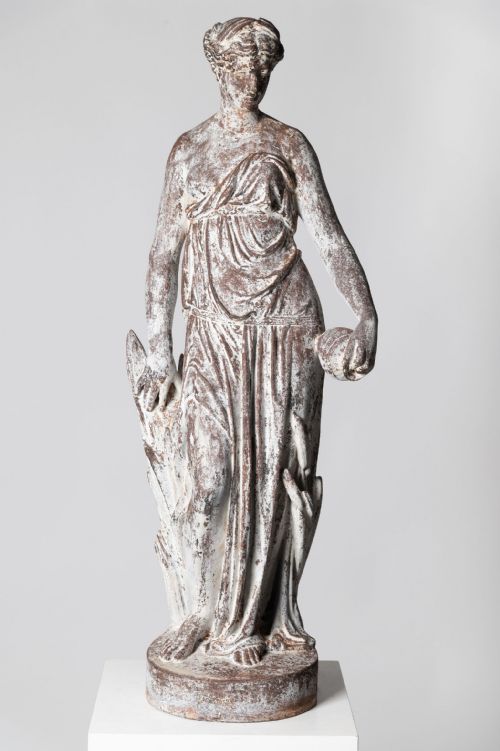
French neoclassical statues embody the enduring fascination with ancient Greece and Rome through sculpted representations of maidens, philosophers, mythological deities, and historical rulers. The selection on this page runs from cabinet bronzes and mantel clocks to large-scale busts and figures.
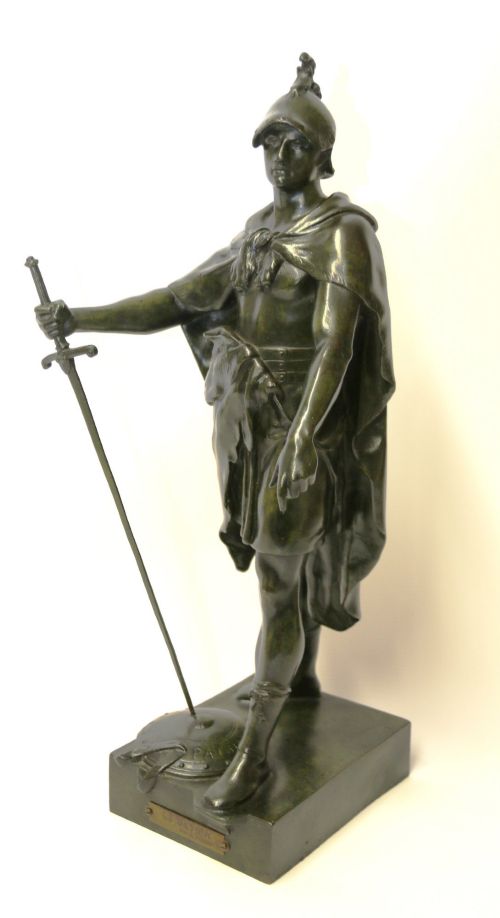
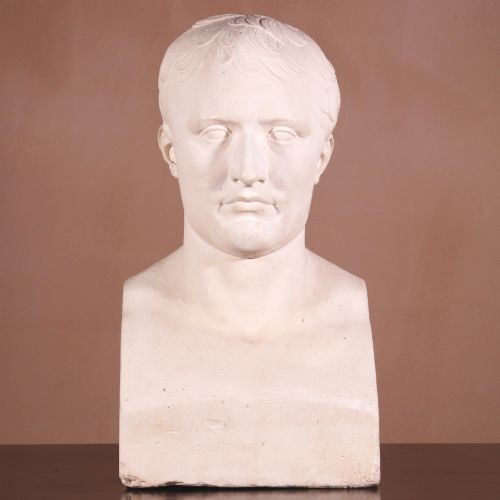
The materials span patinated and gilt bronze, smooth Carrara marble, terracotta, plaster, and occasional mixed media such as onyx and gilded brass. Forms range from seated classical goddesses and Roman soldiers to portrait busts of historical figures like Napoleon Bonaparte.
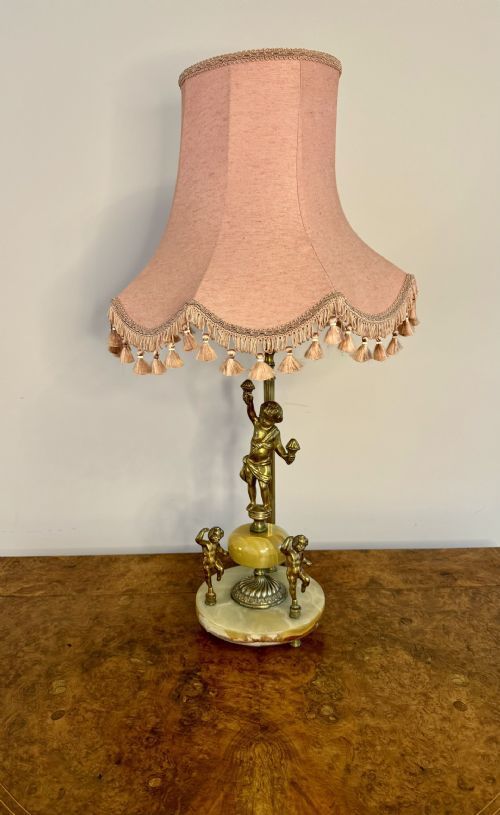
Originating largely from nineteenth-century France, these works include productions from celebrated foundries and reductions after antique marbles. Buyers encounter both figural sculptures intended purely for display and functional pieces adapted as table lamps.
How they were made
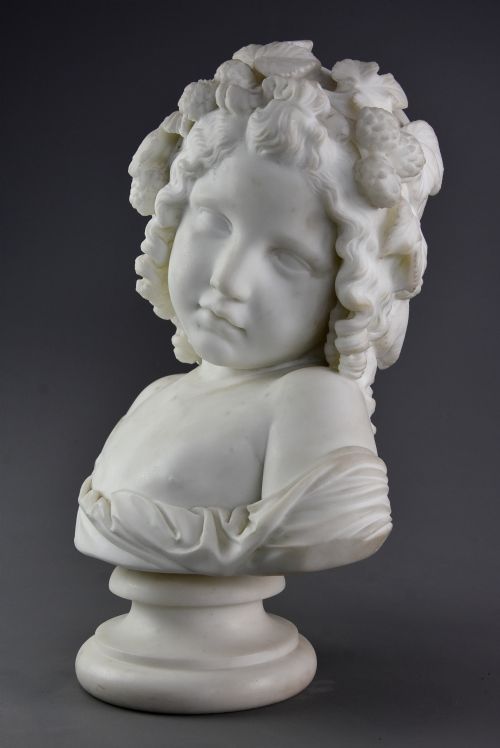
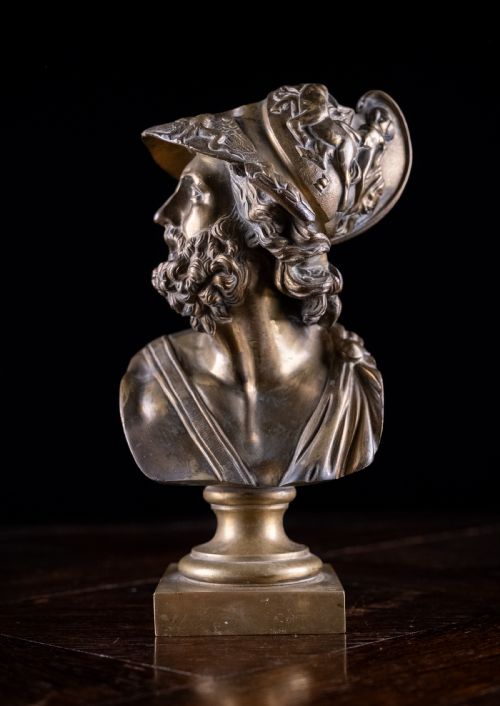
Marble and terracotta pieces involved hand-carving or moulding by skilled sculptors, often referencing classical antiquities or famous eighteenth-century models. Busts were frequently mounted onto contrasting marble plinths or pedestals to complete the classical presentation.
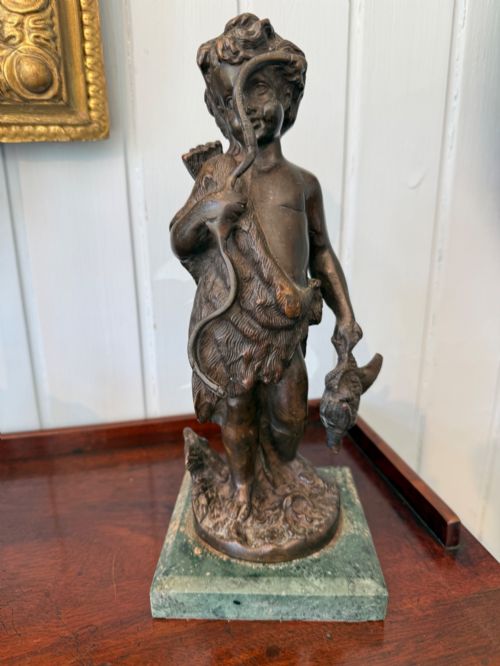
One cheerful bronze cherub arrives equipped with a bow, ready to disrupt the solemn dignity of the Roman emperors.
What varies in quality
Quality rests upon the crispness of the chasing and the subtlety of the bronze patination or marble carving. Superior examples exhibit fine anatomical definition, carefully articulated drapery, and clean casting without surface pitting.
The reputation of the foundry and the signature of the sculptor heavily influence the standing of a piece. Works carrying the marks of established workshops or known artists demonstrate a higher level of execution in their finish and proportions.
Etienne-Henri Dumaige·Ferdinand Barbedienne·Émile Louis Picault·Eugene Aizelin·Carrier-Belleuse·Mathurin Moreau·James Pradier·Jean-Jules Cambos
The French Neoclassical Statues Glossary
- Ormolu
- Gilded bronze, produced by applying a mixture of gold and mercury to a bronze base and heating it to drive off the mercury. This technique creates a rich, durable golden surface seen on many nineteenth-century mounts and figures.
- Carrara marble
- A type of white or blue-grey marble quarried in the city of Carrara in Tuscany, prized by sculptors for its fine grain and uniform texture. It was the preferred stone for classical portrait busts and carved figures.
- Patinated bronze
- Bronze that has been treated with chemical solutions to produce a controlled surface colour, usually shades of brown, green, or near-black. This layer protects the metal and accentuates the modelled details.
- Terracotta
- Fired unglazed clay used for preparatory models or finished sculptural works. Its warm reddish-brown tone allows for expressive modelling by the artist's hand.
- Directoire
- A transitional style in French art spanning the period of the Directory, preceding the Empire style. It retains classical restraint while introducing lighter, more linear proportions.
French Neoclassical Statues: Frequently Asked Questions
What subjects do these statues represent?
The subjects draw heavily from classical mythology, ancient history, and literary figures. Common representations include Greek and Roman deities, victorious soldiers, allegorical figures like peace or agriculture, and prominent historical leaders.
Portrait busts of notable figures such as Napoleon, Voltaire, and classical philosophers also appear frequently. These themes reflect the nineteenth-century revival of interest in antique art and philosophy.
How do I distinguish bronze from other metals?
Bronze has a distinctive weight, warmth, and sound compared to cast iron or modern alloys. Inspecting the underside or areas of wear often reveals the golden-brown hue of the copper alloy beneath the surface patination.
Unlike iron, bronze is non-magnetic and does not rust, though it can develop a natural green or dark oxidation over time. Many nineteenth-century French pieces also bear foundry stamps or signatures confirming the metal.
Where should I place a marble bust?
Marble busts require a sturdy surface such as a column, pedestal, or heavy sideboard to support their substantial weight. Placing them away from direct sunlight and sudden temperature changes protects the stone from discolouration or stress.
Positioning them at eye level allows the carved details of the hair, drapery, and facial expression to be appreciated properly. They pair well with traditional studies, libraries, or hallway entrances.