
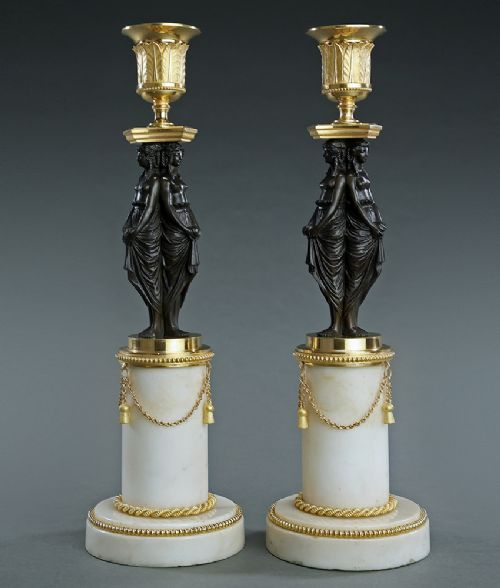


Pair Caryatids
Pair antique caryatids bring sculptural architectural support into domestic interiors through carved figures acting as columns, pilasters, or figural mounts.

Pair Caryatids
A buyer seeking pair antique caryatids encounters figural supports integrated into furniture, lighting, and architectural elements from the seventeenth to the twentieth century. These sculptural figures take the form of draped maidens, satyrs, and putti carrying weight in designs ranging from French Empire to Italian Renaissance Revival.
The versions most frequently met on this page include bronze and ormolu candlesticks, carved oak pilasters, and architectural panels. Furniture forms such as console tables, bookcases, and armchairs also incorporate these figural supports into their structural framework.
Origins span English, French, Flemish, and Italian workshops, reflecting shifts from early oak carvings to Regency and Victorian neoclassical bronze castings. Each piece adapts the classical architectural tradition of the human figure as a column for domestic display.
How they were made
Carvers shaped timber such as oak, walnut, chestnut, and mahogany using chisels and gouges to define the musculature and drapery of the figures. Timber examples often rely on hand carving directly into structural supports or applied pilasters.
Metalworkers utilised bronze casting, fire gilding, and ormolu techniques to create bright metallic mounts and figural candlesticks. Patinated bronze combined with polished ormolu provides contrast in French Empire and Regency pieces.
Marble and plaster construction appears in sculptural supports and lamp bases, often paired with gilt bronze mounts. Cabinetmakers joined these mixed media elements using traditional joinery and brass fixings suited to nineteenth-century production.
Materials span carved oak, mahogany, walnut, marble, bronze, ormolu, and plaster across multiple European centres.
What varies in quality
The integration of the figural support into the wider object separates cohesive design from additive decoration. Finely proportioned pieces treat the figure as an organic part of the load-bearing structure rather than a superficial appliqué.
The Pair Caryatids Glossary
- Caryatid
- A sculptured female figure used as a column or support instead of a pilaster. They appear supporting entablatures, furniture cornices, and lighting brackets.
- Ormolu
- Gilt bronze produced by applying a mercury-gilding amalgam to cast bronze. This technique creates a rich gold finish characteristic of French Empire and Regency decorative arts.
- Pilaster
- A rectangular architectural support projecting slightly from a wall or furniture carcass. Antique caryatids frequently take this flat-backed form when applied to bookcases and cabinetry.
- Herm
- A sculpted bust or figure atop a tapering pillar. These architectural supports derive from ancient boundary markers and feature frequently in neoclassical furniture designs.
- Patination
- The surface sheen and colour acquired by metal, wood, or stone through age and handling. Original patination indicates untouched historical surfaces.
Pair Caryatids: Frequently Asked Questions
What is a caryatid?
A caryatid is a sculpted human figure functioning as an architectural support. These figures replace traditional columns or pilasters on buildings and furniture.
In decorative arts, they appear on everything from small bronze candlesticks to large wooden console tables and bookcases.
How were they used in homes?
Historic interiors utilised these figural supports to frame doorways, fireplaces, and large pieces of furniture. They imparted a classical monumentality to domestic rooms.
Portable versions served as lighting devices, including candelabras, wall sconces, and table lamps.
How do I date an oak caryatid?
Dating relies upon examining the carving style, tool marks, and timber shrinkage. Seventeenth-century Flemish carvings display robust relief and darker patination.
Nineteenth-century revival pieces often exhibit machine-assisted preparation combined with hand finishing and denser hardwood construction.
How do I clean bronze mounts?
Maintenance requires only gentle dusting with a soft, dry brush to prevent the accumulation of grit in recessed areas. Moisture and chemical cleaning agents damage historic patination and gilding.
Preserving the original surface finish maintains the historical integrity of gilt bronze and ormolu details.