


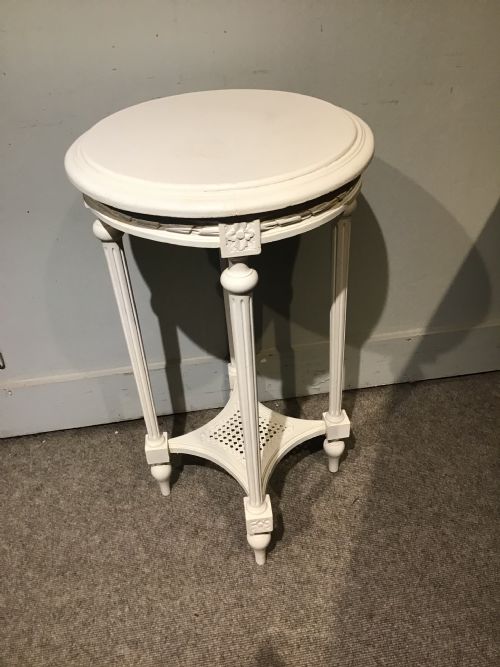


French Chateau Pedestals
French chateau pedestals bring stately architectural form and classical display height into a room, fashioned to elevate sculpture, urns or clocks.

French Chateau Pedestals
When you search for french chateau pedestals, you find grand display furniture designed to elevate decorative objects within domestic spaces. These pieces draw on classical revival, Neoclassical and Louis XVI styles, bringing the presence of grand European houses into interiors.
The versions most commonly met on this page range from nineteenth century marble top tables and brass jardinere stands to painted plaster pedestals from the nineteen twenties. Forms vary from rotating stands and plant stands to carved urns on plinths and paired caryatids.
Materials span across marble, paint, gesso, brass, kingwood, wood, plaster and gilt bronze. Their origins reflect French chateau aesthetics and Victorian interpretations, serving primarily as pedestals and plinths, side tables, pedestal tables and occasional tables.
How they were made
Construction relies upon traditional cabinetmaking and casting techniques utilising wood, kingwood and plaster as structural bases. Metal elements such as brass, gilt bronze and ormolu mounts are chiselled and fitted to enhance the architectural profiles.
Surfaces receive careful treatment through painted finishes, gesso work and marble tops. Carved details and gadrooned motifs on urns and plinths demonstrate the decorative handwork typical of these historic pieces.
Some pedestals come with built-in rotation, allowing your marble urn to spin on command like an aristocratic carousel.
What varies in quality
Quality separates through the crispness of the casting in bronze and brass mounts and the depth of carving in wood and plaster elements. Superior examples show refined proportions and harmonious integration between the decorative mounts and the primary structure.
The choice of materials dictates the standing of the piece, with genuine marble tops, fine kingwood veneers and fire gilt bronze mounts representing the upper tier. Lesser pieces rely on simpler painted surfaces and standard plaster mouldings without metal mounts.
The French Chateau Pedestals Glossary
- Ormolu
- Gilded bronze ornamentation applied to furniture and clocks. This technique was widely employed in French furniture making to add decorative contrast.
- Caryatid
- A sculpted female figure serving as an architectural support taking the place of a column or pillar. These figures appear frequently in classical revival and Neoclassical design.
- Gadrooned
- Ornamented with a carved or cast series of convex curves or fluting. This decorative moulding often encircles the base or rim of urns and tables.
- Kingwood
- A dense, richly grained tropical timber used for high quality cabinetmaking. It is frequently paired with gilt bronze mounts.
- Plinth
- A heavy slab or square block serving as the base for a statue, vase, or pedestal. It provides stability and visual weight to the display.
French Chateau Pedestals: Frequently Asked Questions
How were french chateau pedestals used?
These pieces were designed to display important decorative objects, including bronze sculptures, marble urns, clocks and large plants. By raising these items to eye level, they became focal points within chateau reception rooms and salons.
They also functioned as occasional tables or stands for lighting, combining decorative presence with practical display space in grand interiors.
How do I tell periods apart?
Nineteenth century examples often display heavier cast bronze mounts, intricate carving and substantial marble tops reflecting classical revival and Louis XVI revival tastes. Plaster and painted pieces from the nineteen twenties tend to show lighter Neoclassical styling.
Victorian interpretations often blend French chateau motifs with British cabinetmaking conventions, visible in occasional tables and giltwood finishes.
What is the difference between a plinth and a pedestal?
A plinth is typically the solid base block that supports a column, urn or statue, providing a stable footing. A pedestal is generally a taller, freestanding column or stand designed to elevate an object independently.
In many listings, these terms overlap as makers combined plinth bases with tall columns or cabinet structures to create display furniture.