


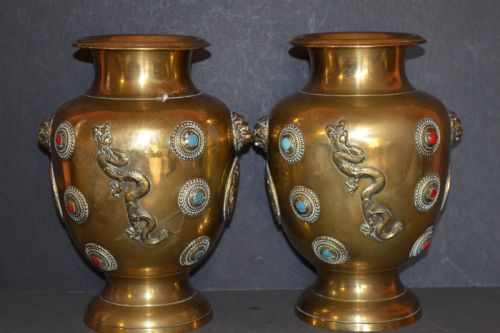


Dragon Relief Bronze Urns
Dragon relief bronze urns are substantial vessels carrying fierce mythical motifs, prized for their sculptural intensity and weight.
Dragon Relief Bronze Urns
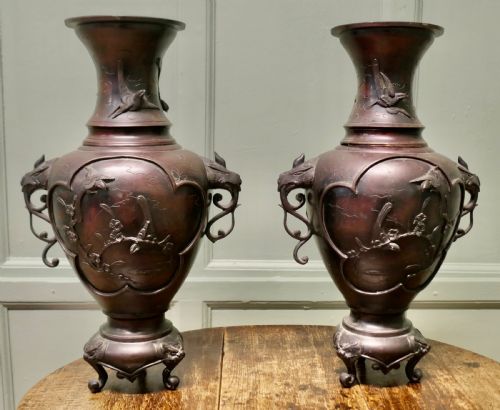
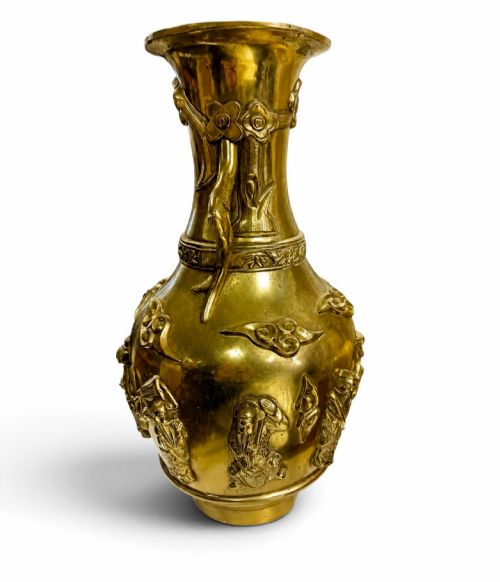
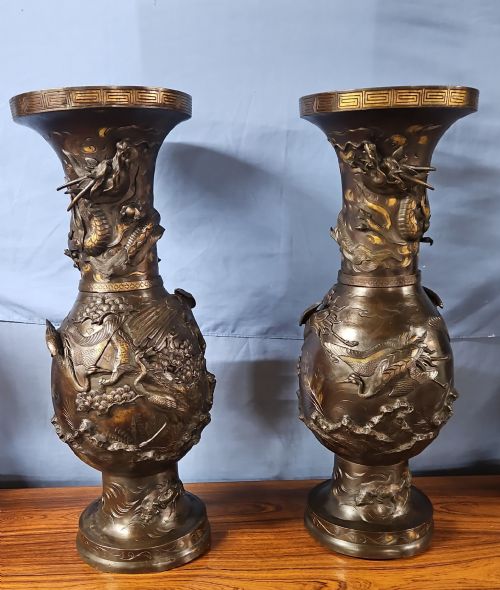
When you search for dragon relief bronze urns, you encounter heavy metal vessels originating from Asian and Victorian workshops. These pieces predominantly take the form of large baluster vases, decorative posy urns, and jardinieres designed for display.
How they were made
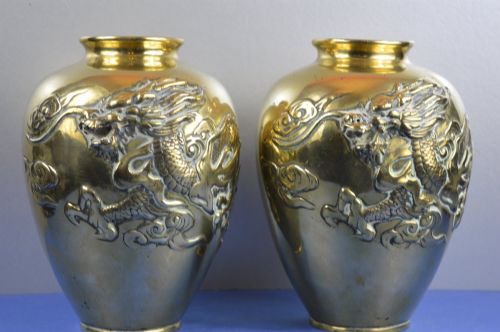
Foundries cast these vessels in bronze, copper alloy, and brass, occasionally applying rich patination or gilt surfaces to heighten the metallic depth. Skilled metalworkers hammered, chased, and sculpted the dragons in high relief directly onto the body.
Certain pieces incorporate contrasting embellishments such as turquoise and coral inlay, while others integrate wooden stands or mounted lamp fittings added during the Victorian era.
Several heavy dragons manage to weigh over five kilograms while clinging steadfastly to the sides of vases.
What varies in quality
The definition and depth of the dragon relief set the finest examples apart from standard production work. Superior pieces display crisp chiselling where every scale and claw stands out sharply from the textured ground.
Weight and balance also dictate distinction, as heavier copper-alloy casts demonstrate substantial metal thickness and secure base construction. The harmony of the patination completes the visual authority of the better vessels.
The Dragon Relief Bronze Urns Glossary
- Baluster
- A tall vase form with a rounded body and a narrow neck. This shape provides an expansive surface for wrapping dragon reliefs.
- Patination
- The chemical treatment or natural weathering applied to the metal surface. It creates deep brown, black, or greenish tones on the bronze.
- Meiji Period
- The era in Japanese history spanning from eighteen sixty-eight to nineteen twelve. Pieces from this time demonstrate exceptional metalworking skill.
- Qing Dynasty
- The final imperial dynasty of China, lasting until nineteen twelve. Many decorative bronze vessels originate from this extensive imperial period.
- High-Relief
- A sculptural technique where the figures project significantly from the background plane. On these urns, the dragon body stands clear of the vase surface.
Dragon Relief Bronze Urns: Frequently Asked Questions
How were dragon relief bronze urns originally used?
Households displayed these substantial vessels as primary decorative ornaments in principal reception rooms. Their impressive weight and scale suited placement on heavy tables or pedestals.
In some instances, workshops adapted them into table lamps or utilised them as jardinieres for holding floral displays. Their robust metal construction easily accommodated practical interior functions.
How do I tell Japanese Meiji period pieces apart from Chinese ones?
Japanese Meiji pieces often exhibit meticulous surface finishing and distinct stylistic interpretations of mythical beasts typical of nineteenth-century export wares. Chinese examples frequently display heavier proportions and connections to earlier dynastic forms.
Examining the base marks and the specific rendering of the dragon scales helps clarify the regional origin. Each tradition employed distinct casting signatures and patination methods.
How should I clean a antique bronze urn?
You should maintain the surface by dusting gently with a dry, soft cloth to prevent accumulation. Avoid commercial metal polishes that strip away historical patination.
Preserving the aged skin of the bronze maintains both the visual character and the integrity of the metal. Professional conservation is advisable if deeper cleaning becomes necessary.
Where should I place these heavy bronze pieces at home?
Their considerable weight requires stable furniture or direct floor placement on secure surfaces. Positioning them away from high-traffic household areas protects both the vessel and surrounding objects.
Allowing adequate natural light to fall across the bronze highlights the intricate details of the dragon relief. Pairing them with complementary wood furniture enhances their substantial presence.