




Dragon Carved Display Stand
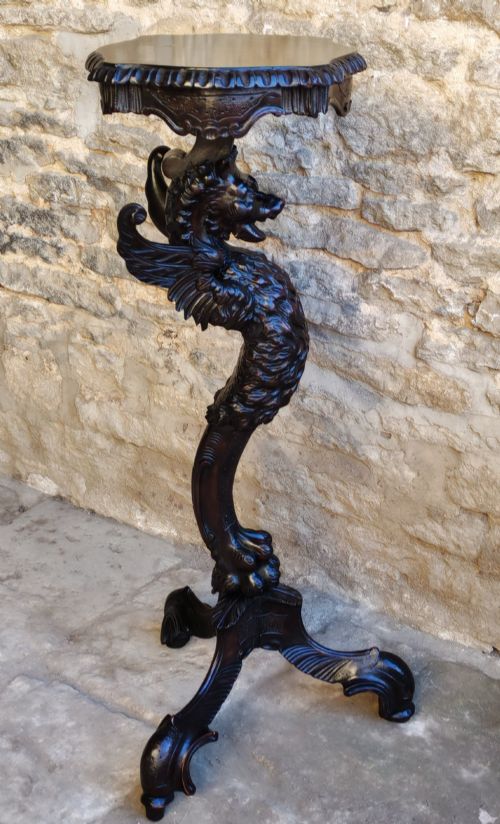
A dragon carved display stand brings vigorous carved detail and a distinct focal point to any room, holding objects with real presence.
Dragon Carved Display Stand
When you search for a dragon carved display stand, you encounter pieces intended to elevate ceramics, plants, and decorative objects. These items emerge from the nineteenth century across various global aesthetics, including Japanese Edo and Taisho periods, Chinese export work, and Victorian interpretations.
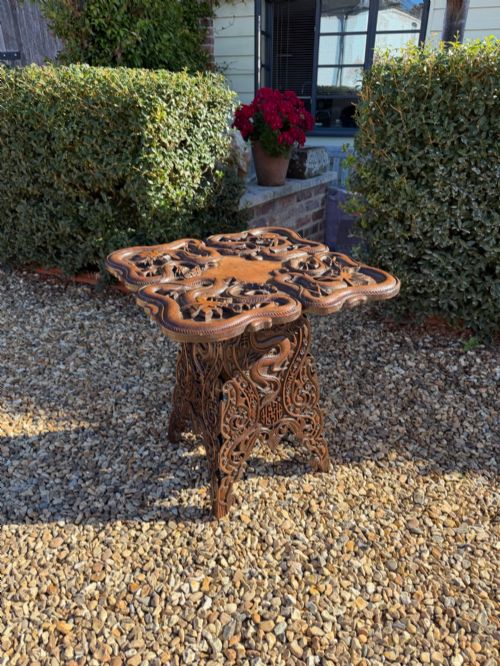
The forms on this page span display cabinets, plant stands, torchere pedestals, side tables, and jardiniere stands. Hardwood and carved wood dominate the construction, often finished with ebonised surfaces or dark stains to heighten the dramatic carving.
How they were made
Joinery and assembly relied on traditional cabinet-making methods suited to load-bearing stands and delicate display cabinets alike. Structural integrity supported heavy decorative bowls, chargers, and planters without compromising the fluidity of the surrounding woodcarving.
Dragon Carved Display Stand Retail Price Guide 2026
Typical asking prices for dragon carved display stand among the pieces listed under this phrase on Sellingantiques today, from the lower quarter to the upper quarter. They describe what is for sale here now, not the wider market.
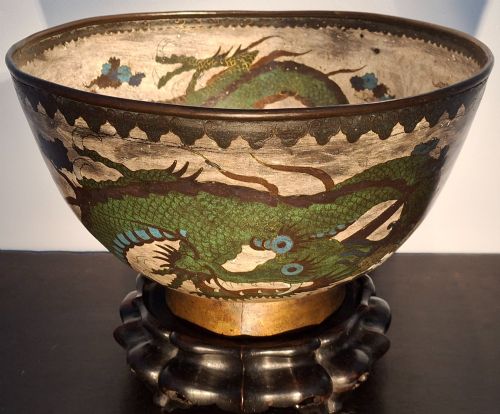
Materials span walnut and dense hardwoods, paired occasionally with rouge marble inserts and cloisonne enamel.
What varies in quality
The distinction between standard items and exceptional pieces rests upon the depth, sharpness, and anatomical accuracy of the carved dragon motif. Finer examples display undercut carving where claws and scales stand completely free from the background timber, showing deliberate hand-tool work rather than mechanical smoothing.
Material selection and secondary elements dictate the upper tier of quality. The inclusion of genuine rouge marble inserts, high-grade cloisonne enamel plaques, or robust dense hardwoods elevates a piece beyond simpler softwood or lightly stained alternatives.
Gabriel Viardot
The Dragon Carved Display Stand Glossary
- Torchere
- A tall stand designed to hold a light or a decorative vessel. These slender pedestals lift displays to eye level.
- Jardiniere stand
- A small table or pedestal specifically constructed to support a plant pot or floral arrangement. Many incorporate water-resistant surfaces such as marble inserts.
- Ebonised
- Wood treated with a chemical stain or black finish to imitate expensive ebony. This technique was popular in Victorian and Aesthetic Movement furniture.
- Cloisonne enamel
- A decorative metalwork technique where enamel paste is applied within compartments created by soldered wire. These vibrant panels frequently accompany carved wooden frameworks.
- Shodana
- A traditional Japanese multi-shelved display cabinet designed for curios and art objects. They feature asymmetric shelving and intricate woodwork.
Dragon Carved Display Stand: Frequently Asked Questions
What periods do these stands come from?
The pieces span the nineteenth century, including specific dates from the eighteen-fifties through to nineteen-ten. Victorian, Aesthetic, and Japanese Edo or Taisho eras heavily influence the design vocabulary.
Craftsmanship from this timeframe emphasises hand carving and distinct regional stylistic crossovers, such as Anglo-Indian or Chinese export work.
How were these stands used originally?
Owners placed them in reception rooms and parlours to display prized porcelain, bronze vessels, and exotic plants. Taller pedestals highlighted single decorative objects, while cabinets housed delicate collections.
Their robust construction ensured they could safely bear the weight of heavy stone vessels and large ceramic chargers.
How do I care for carved wooden stands?
Keep the wood away from direct heat sources and strong sunlight to prevent the timber from drying out and splitting. Dust the deep recesses of the dragon carvings regularly using a soft brush.
Apply a neutral furniture wax sparingly only when the wood appears dry, avoiding any buildup within the carved details.
What materials are commonly found on these pieces?
Hardwood, walnut, and ebonised wood form the primary structural materials for the stands and cabinets. Secondary elements frequently include brass hardware, rouge marble tops, and cloisonne enamel.
These varied materials contribute to the contrasting textures and visual weight typical of nineteenth-century decorative arts.