
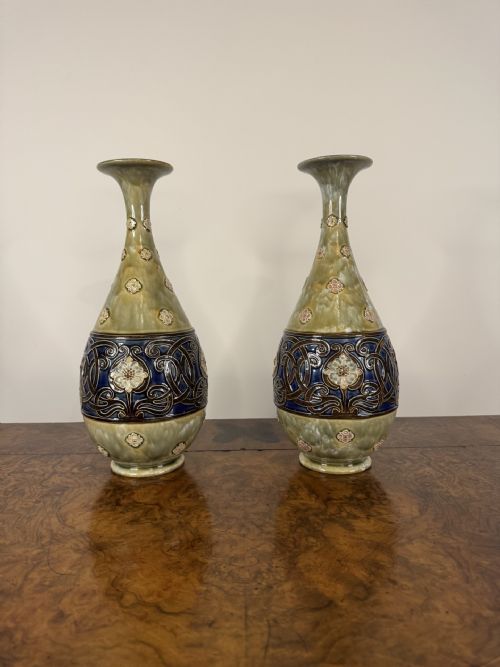


Doulton Stoneware Urn
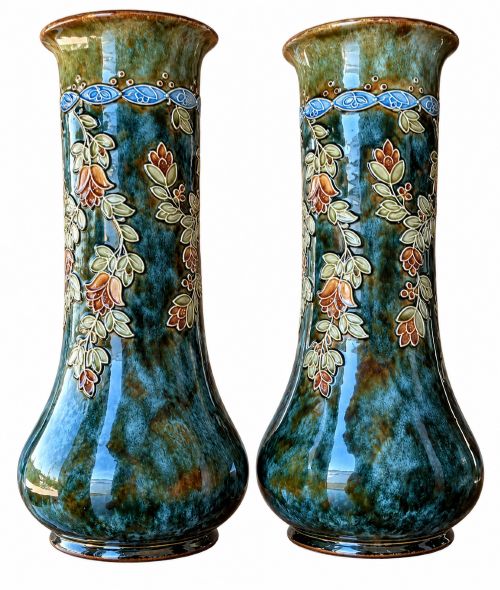
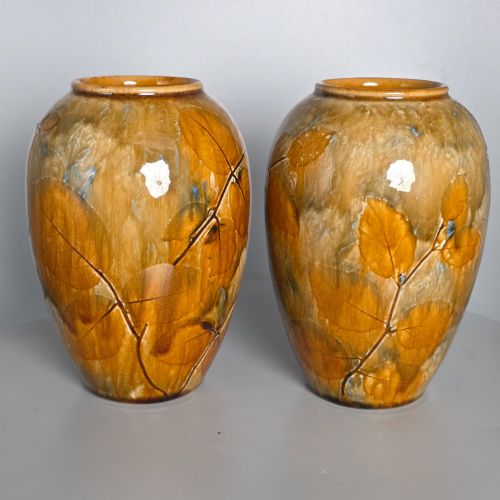
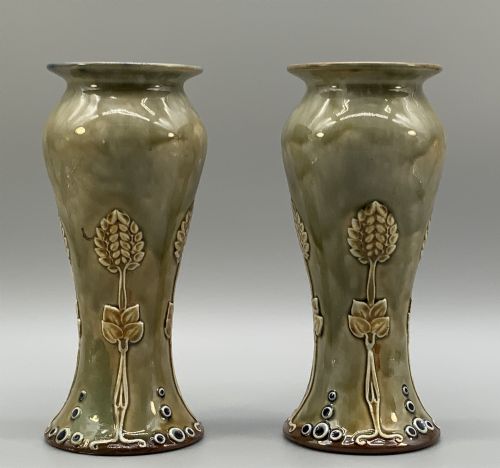
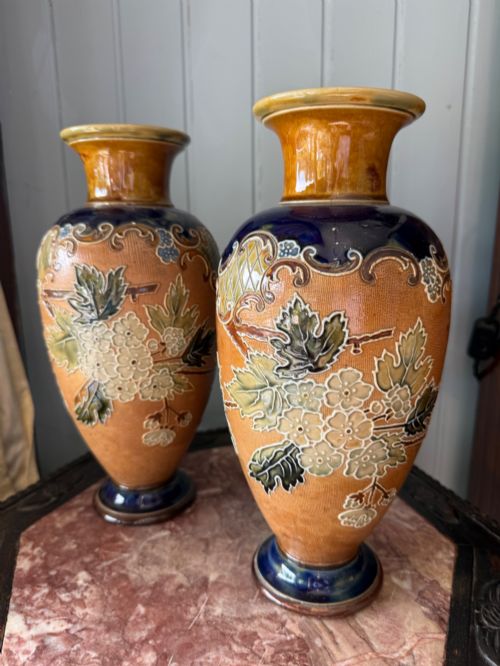
These doulton stoneware urn pieces are salt-glazed vessels from late Victorian and Edwardian studios, prized for their rich earthy textures and botanical slip decoration.
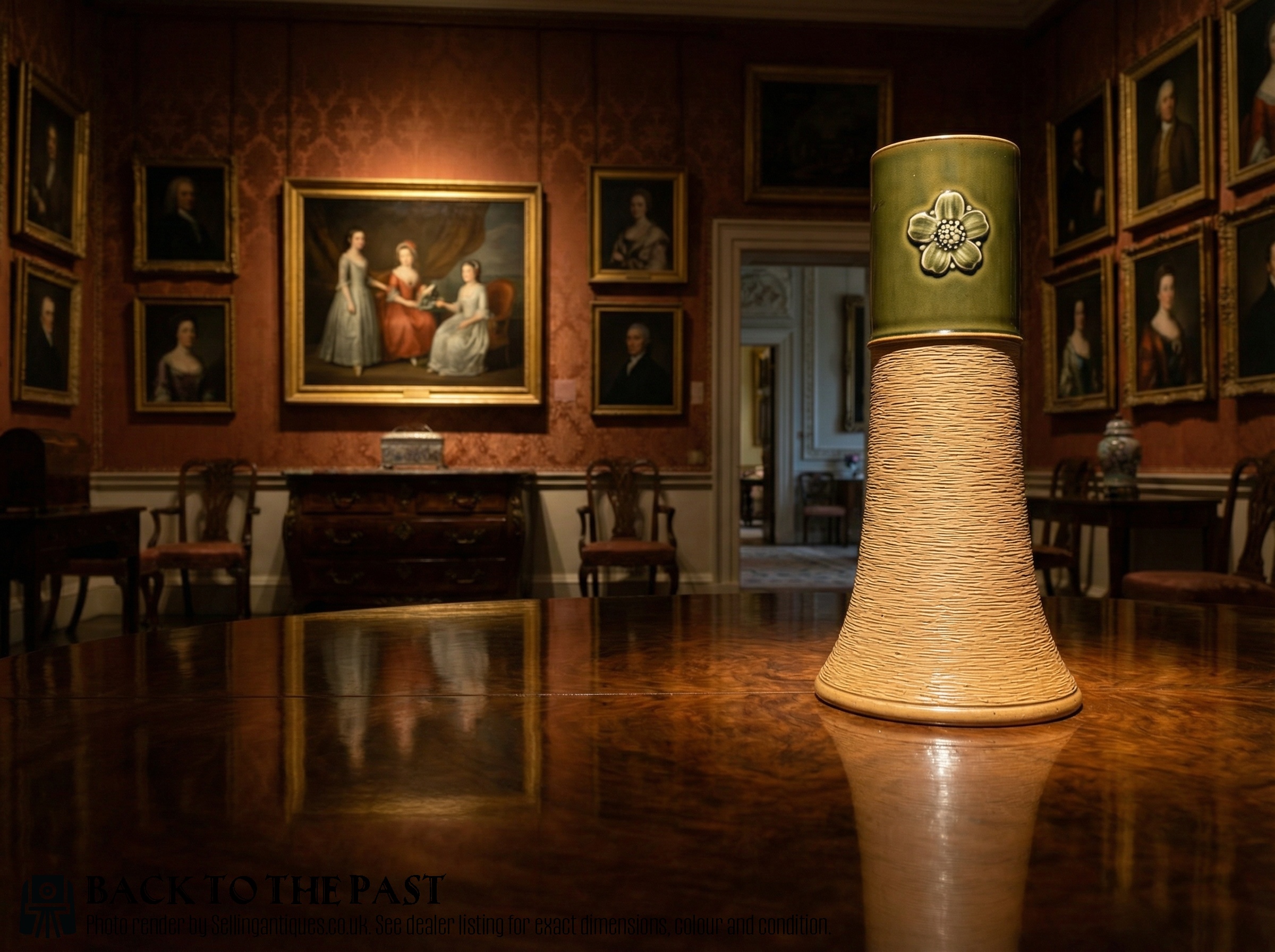
Doulton Stoneware Urn
When you search for doulton stoneware urn and associated ceramic vessels, you encounter robust studio pottery originating primarily from the Lambeth works. The selection spans baluster vases, planters, and jardinières produced across the Victorian, Edwardian, and Art Nouveau periods.
Most examples you meet on this page date from the late nineteenth century to the early twentieth century. These pieces reflect distinct movements including Arts and Crafts and Victorian Art Pottery, moving from simple utilitarian containers to highly decorative display items.
The forms range from small cabinet vases to large tree planter bases intended for conservatories and patios. Pairs feature frequently alongside single exhibition pieces, demonstrating the versatility of the Lambeth potteries in meeting domestic demand.
Materials and glazing techniques
Makers utilised dense stoneware bodies capable of holding water and enduring heavy daily use. This clay body was thrown or moulded before receiving specialised surface treatments.
Surfaces frequently combined salt glaze finishes with intricate enamel floral décor, gold leaf accents, and textured ground applications such as Slaters Patent lace impressions.
Individual artists applied slip painting and hand-incised foliage directly onto the raw clay, resulting in organic patterns that interacted with the vitreous glazes during firing.
Listings feature stoneware and ceramic materials decorated with enamel, gold leaf, and traditional glaze techniques across the Victorian, Edwardian, and Art Nouveau styles.
Judging design and execution
The distinction between standard production items and premier pieces rests upon the precision of the hand-carved ornamentation and the reputation of the studio artist. Pieces carrying individual monograms demonstrate superior artistic oversight compared to factory-standard patterns.
Depth of colour, complexity of the enamel floral decoration, and the crispness of impressed lace textures determine the visual impact of a piece. Finer examples maintain perfect registration between the relief patterning and the surrounding glaze fields.
Louisa Wakely·Eliza Simmance·Emily Edwards·Emily Stormer·Ethel Beard·Florence Barlow
The Doulton Stoneware Urn Glossary
- Stoneware
- A heavy, impermeable ceramic fired at high temperatures until vitrified. This dense body resists moisture without requiring interior glazing.
- Lambeth
- The London district where the primary Doulton art pottery studios operated. Pieces marked thus denote specific metropolitan production.
- Slaterware
- A patented technique pressing real lace or woven fabrics into damp clay to create textured surfaces. These areas were often highlighted with enamel and gold leaf.
- Faience
- Tin-glazed earthenware produced at the Lambeth studios offering a smooth canvas for painted decoration. It differs from salt-glazed stoneware by presenting an opaque, glossy surface.
- Baluster
- A tall vase form featuring a rounded lower body tapering to a narrow neck. This traditional shape was favoured by Art Nouveau designers for floral stems.
Doulton Stoneware Urn: Frequently Asked Questions
What is doulton stoneware?
Doulton stoneware is a hard, vitrified ceramic produced by the Lambeth factory using salt-glazing methods that create pebbled or smooth textured surfaces.
These pieces were decorated with hand-carved plant motifs, applied enamels, and lace-impressed patterns during the Victorian and Edwardian eras.
How were these urns used?
Historic uses ranged from grand conservatory planter bases for large palms to decorative mantelpiece vases and loving cups.
Smaller vessels held cut flowers in domestic parlours, while heavy jardinières accommodated indoor foliage in Victorian drawing rooms.
How do I date these pieces?
Dating relies on factory impressed stamps underneath the base, combined with stylistic indicators such as Art Nouveau or Arts and Crafts ornamentation.
Victorian pieces often feature simpler geometric incising, whereas 1910 examples incorporate more elaborate enamel floral decorations.
Can I use them for plants?
Stoneware is naturally water-resistant and non-porous, making historic jardinières and planters suitable for holding potted plants today.
Care should be taken with antique surfaces by utilising internal plastic liners to protect the historic glaze from mineral deposits.