
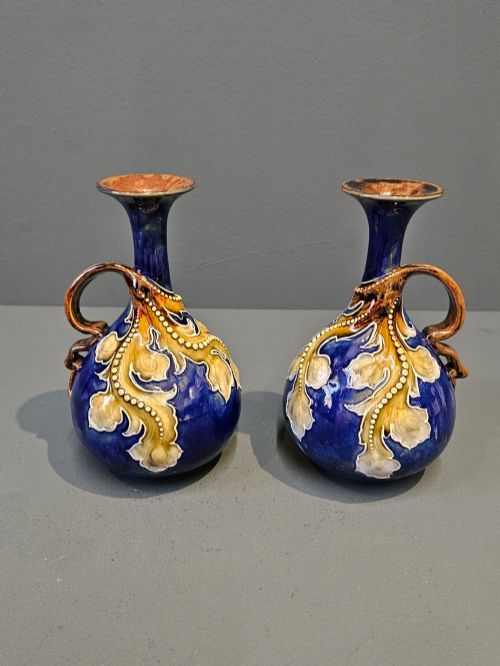
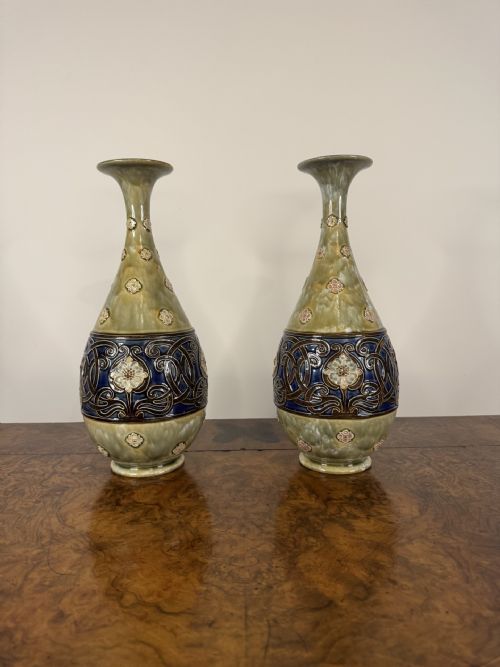


Doulton Stoneware Pair Vases
These doulton stoneware pair vases bring distinctive late Victorian and early twentieth century ceramic artistry into any interior.
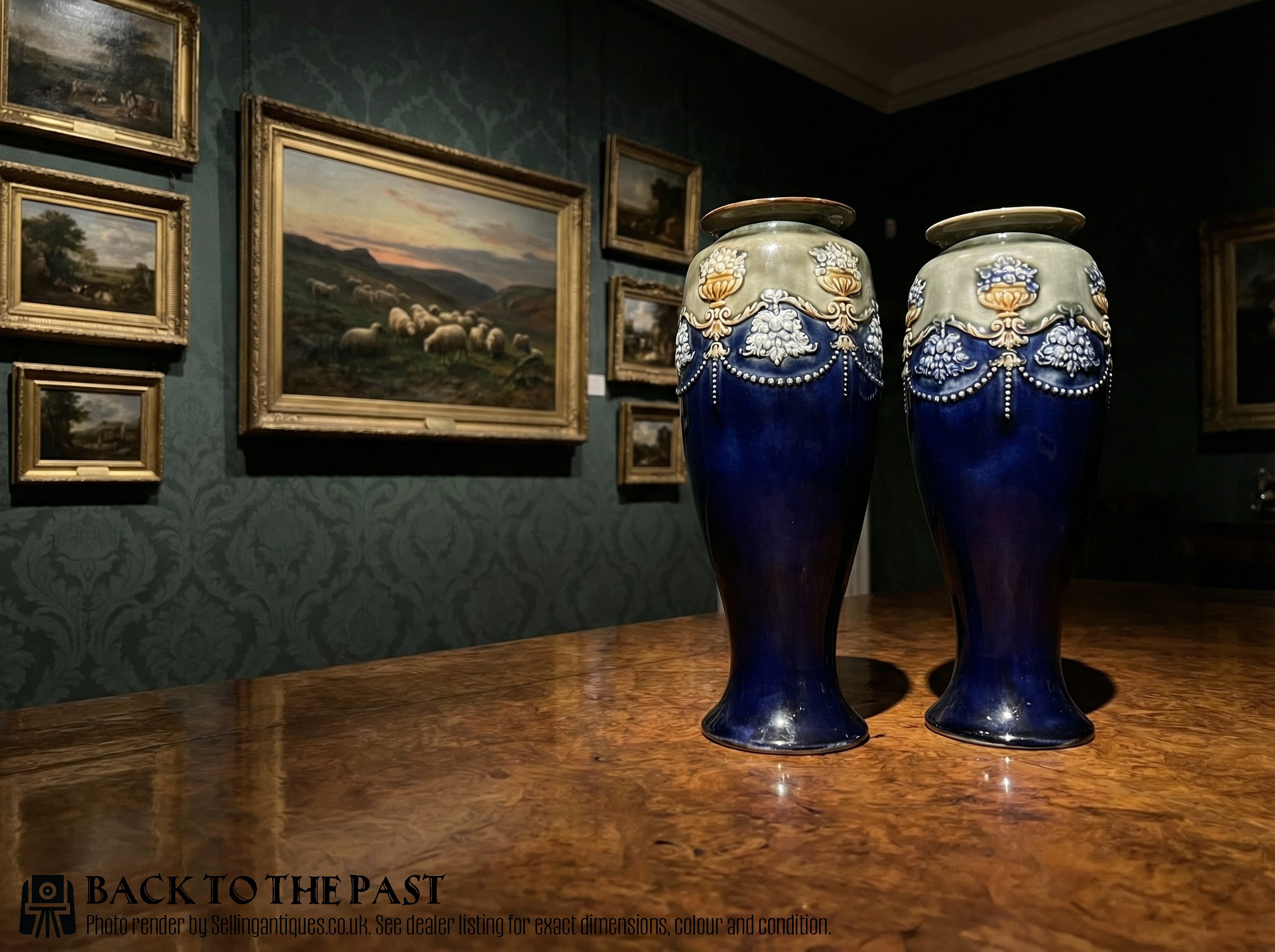
Doulton Stoneware Pair Vases
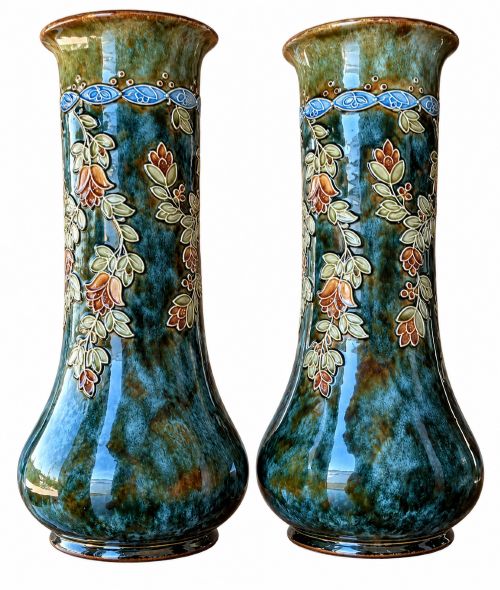
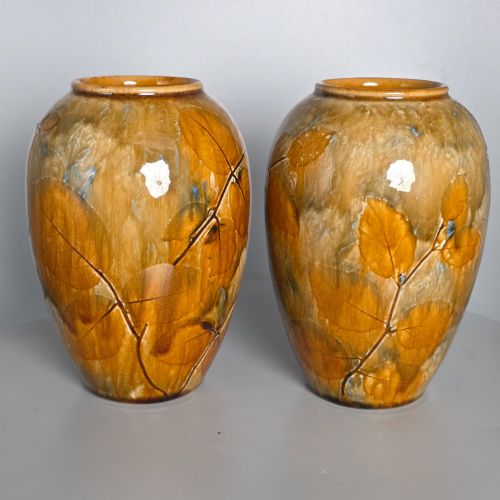
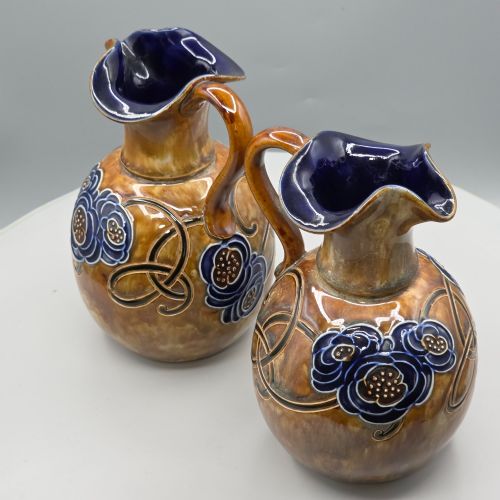
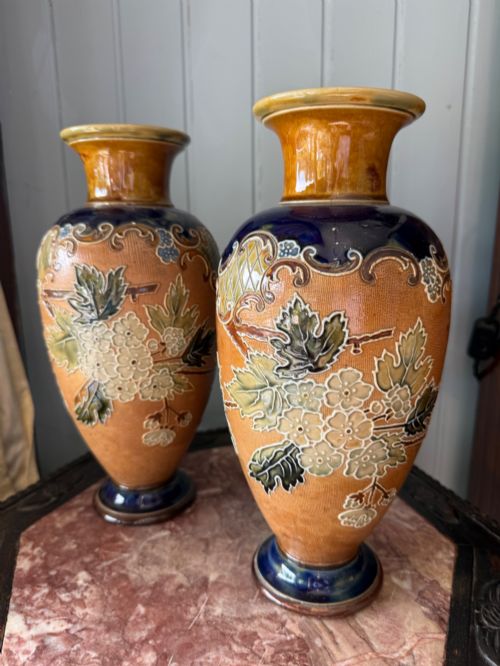
A set of doulton stoneware pair vases typically presents matching vessels shaped from durable clay bodies during the Victorian, Edwardian and early twentieth century periods. These matching pairs originate predominantly from the Lambeth pottery works, capturing the transition from ornate Victorian taste towards fluid Art Nouveau and functional Arts and Crafts designs.
Buyers encounter forms ranging from baluster shapes to slender jugs and decorative vases bearing distinct surface patterns. The examples recorded here span from the eighteen-eighties through to nineteen-twenty, demonstrating the sustained output of matched ceramic pairs across several decades.
Materials and technique
Potters utilised robust stoneware clay that accepted heavy throwing and moulding before undergoing high-temperature firing. This dense body provided a stable canvas for the characteristic salt glaze and vitreous finishes applied across the surface.
Makers embellished these pieces using applied enamel floral décor, gold leaf gilding, and textured Slater patent finishes pressed directly into the damp clay. Individual artists then hand-painted foliage, leaf patterns and abstract motifs before the final kiln process.
Listings feature stoneware, ceramic, and glazed surfaces embellished with enamel and gold leaf across Victorian and Edwardian periods.
Judging quality
The distinction between standard production vessels and superior examples rests upon the crispness of the modelled ornament and the control of the glaze. Master decorators achieved subtle tonal variations and precise registration where slip-raised patterns meet the ground.
Attribution to named studio artists elevates a pair, as does the complexity of the decorative scheme, such as combined enamelwork and gilded highlights. Form contributes significantly, with unusual silhouettes and balanced proportions distinguishing exceptional pairs from routine workshop output.
Louisa Wakely·Emily Edwards·Ethel Beard
The Doulton Stoneware Pair Vases Glossary
- Stoneware
- A type of pottery fired at high temperatures until vitrified and impermeable to liquids. This dense material forms the heavy, durable body characteristic of Lambeth production.
- Slater patent
- A specialised Doulton patterning technique created by pressing lace or coarse fabric into damp clay to produce a textured surface. This impressed ground was often highlighted with enamel and gold.
- Baluster
- A vertical architectural form swelling gently toward the base, frequently adapted for ceramic vase profiles. Many taller pieces in this group utilise this balanced silhouette.
- Art Nouveau
- A decorative style characterised by organic, flowing lines and plant-inspired motifs that influenced British pottery around nineteen hundred. This aesthetic appears frequently across the listed pairs.
- Lambeth
- The south London district where Doulton established principal works for art pottery production. Pieces originating from this studio often bear specific factory ciphers alongside decorator initials.
Doulton Stoneware Pair Vases: Frequently Asked Questions
What periods do these vases date from?
The recorded pieces span from the late Victorian era through the Edwardian period and into the nineteen-twenties. Most examples cluster around eighteen-eighty and nineteen-ten.
Production methods shifted over these decades from ornate Victorian revival styles toward streamlined Art Nouveau and Arts and Crafts aesthetics.
How are individual artists identified on the pottery?
Maker marks and monogram initials impressed into the base reveal the specific decorator responsible for the surface work. Factory stamps from the Lambeth works accompany these signatures.
Matching pairs sometimes feature sequential ciphers or identical artist ciphers indicating simultaneous hand decoration.
What is Slater patent decoration?
This patented method involved pressing textiles like lace into the damp clay body before firing to create a textured, patterned ground. Artisans then hand-painted details over this impression using enamel colours.
Pairs featuring this technique offer a distinct tactile quality compared to smooth glazed surfaces.
How do matched pairs differ from single vessels?
Matched pairs were thrown, turned and decorated together to maintain symmetry in height, profile and palette for mantelpiece or console display. Surviving complete pairs remain desirable for interior arrangement.
Individual pieces within a pair share stylistic traits but may display subtle hand-painted variations unique to the artist.