


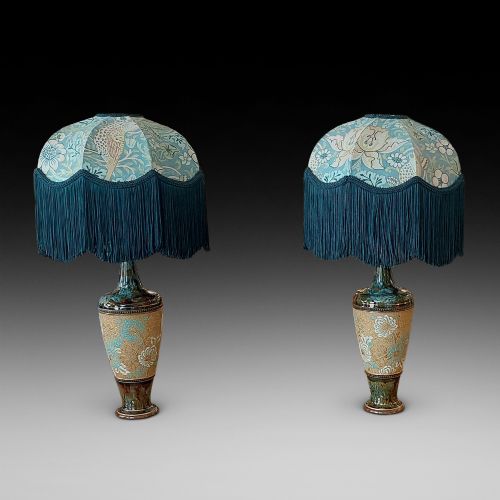
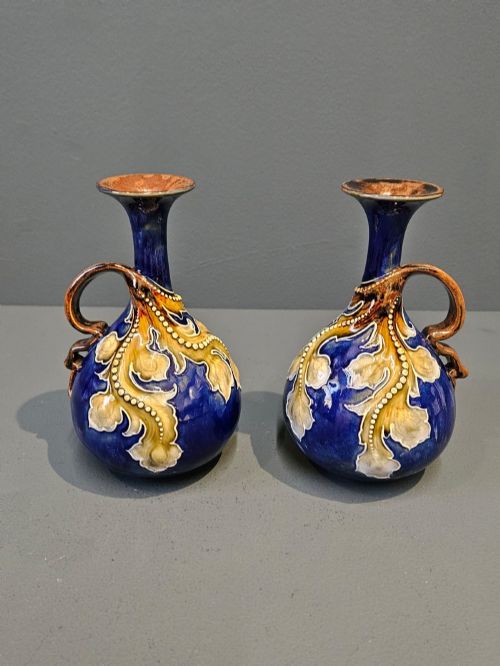
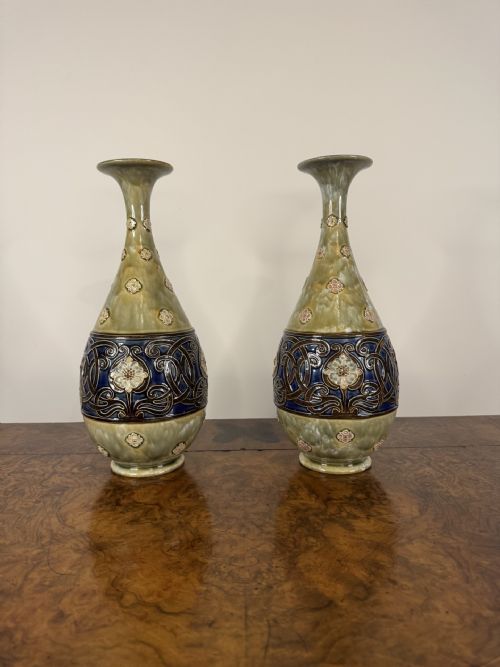


Doulton Lambeth Stoneware Pair
These doulton lambeth stoneware pair pieces bring tactile salt-glazed texture and intricate Victorian or Art Nouveau design to any mantelpiece.
Doulton Lambeth Stoneware Pair
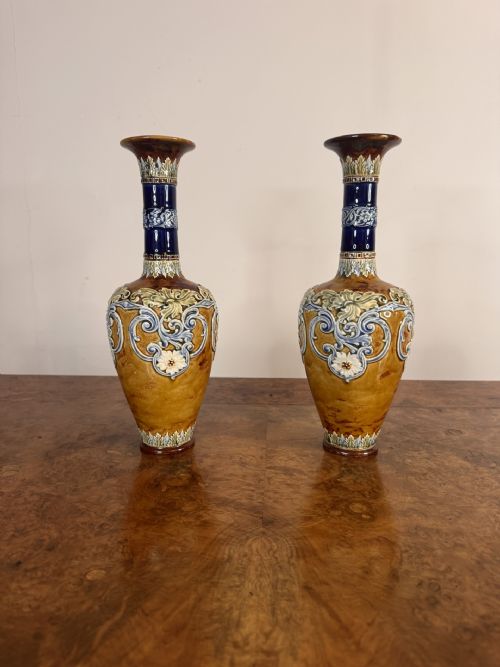
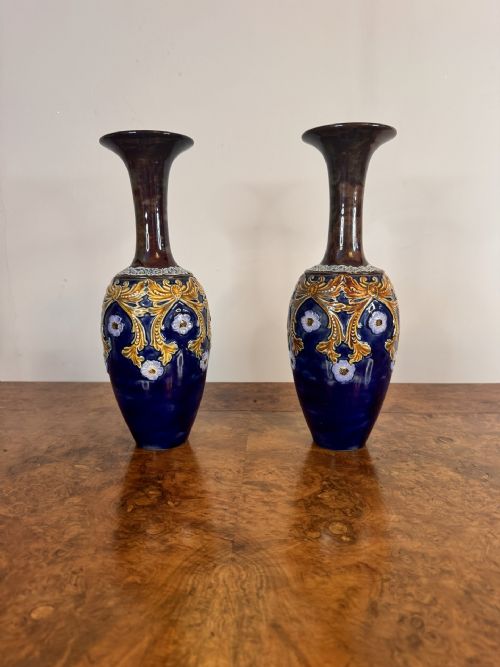
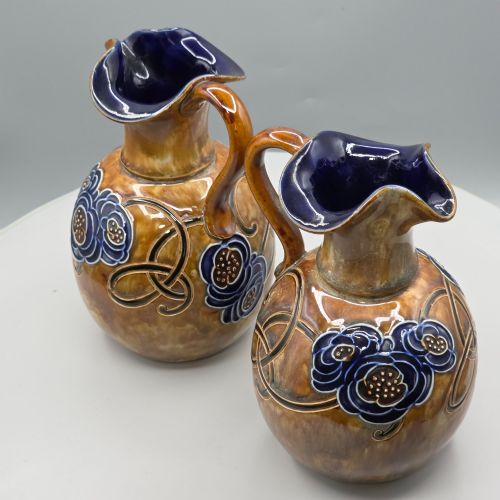
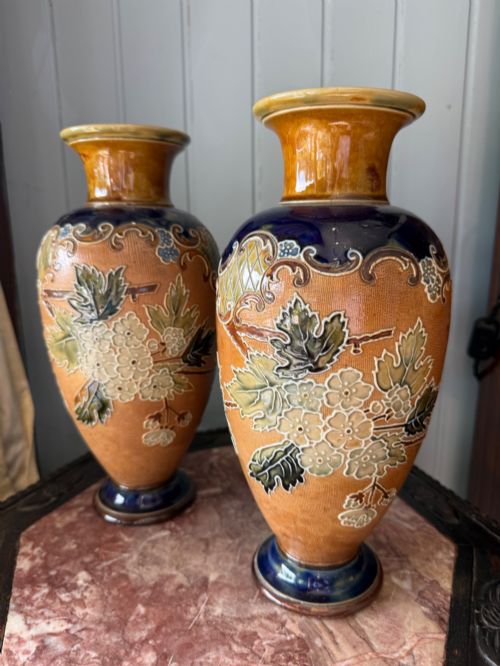
A doulton lambeth stoneware pair consists of matching ceramic vessels created by the renowned pottery during the nineteenth and early twentieth centuries. These coordinated sets most commonly take the form of decorative baluster vases, jugs, and occasional utilitarian storage jars converted for display.
The objects span major stylistic movements including Victorian Arts and Crafts, Edwardian design, and flowing Art Nouveau. Buyers encounter pieces bearing impressed marks from distinct workshop years, ranging from the late Victorian era up through the nineteen-twenties and nineteen-forties.
Originating from south London, these paired groupings reflect the immense creative output of specialised artists working within the studio pottery tradition. They offer symmetry and visual balance, designed specifically for mantelpieces, sideboards, and architectural display.
How they were made
Makers shaped heavy stoneware clay on the potter's wheel or in moulds, applying salt-glaze techniques that produced distinctive textured, pebbled surfaces. Applied ornamentation, incised foliage, and enamel floral décor were worked directly into the damp clay before firing.
Individual artists applied specialised glazes and metallic elements, sometimes incorporating brass mounts or silver rims onto harvest jugs and tobacco jars. The high-temperature kilns fused these mineral colours into the durable ceramic body, creating lasting tactile depth.
Doulton Lambeth Stoneware Pair Retail Price Guide 2026
Typical asking prices for doulton lambeth stoneware pair among the pieces listed under this phrase on Sellingantiques today, from the lower quarter to the upper quarter. They describe what is for sale here now, not the wider market.
Listings feature stoneware, ceramic, and glazed finishes accompanied by brass fittings, enamel work, and silver rims.
What varies in quality
The distinction between standard production items and exceptional pieces rests upon the crispness of the incised patterns and the control of the glaze firing. Superior examples display named artist signatures, intricate hand-painted enamel decoration, and complex stylistic motifs characteristic of the Arts and Crafts movement.
Proportion and symmetry define the success of a pair, alongside the integrity of any added metal rims or converted lamp fittings. Pieces that retain their original factory coloration and sharp surface detailing command greater interest among collectors of studio pottery.
Louisa Wakely·Emily Edwards·Ethel Beard·Royal Doulton
The Doulton Lambeth Stoneware Pair Glossary
- Stoneware
- A robust, vitrified ceramic fired at high temperatures until non-porous. It accepts salt glazes and deep surface carving without losing structural integrity.
- Baluster
- A tall vase form with a rounded bulbous lower body and a slender neck. This silhouette provides an ideal canvas for incised foliate ornament.
- Salt-Glaze
- A finish achieved by throwing common salt into the kiln during high-temperature firing. This creates a characteristic orange-peel texture across the stoneware surface.
- Slater's Patent
- A specific Doulton technique utilising lace or woven fabrics pressed into damp clay to create textured background patterns. These impressed motifs were often highlighted with coloured enamels and gilding.
- Arts and Crafts
- A design movement emphasising handcraftsmanship, natural materials, and vernacular styles. It heavily influenced the decorative surface patterns of late Victorian pottery.
Doulton Lambeth Stoneware Pair: Frequently Asked Questions
How do I display a pair safely?
Place them on stable surfaces away from heavy foot traffic to protect their ceramic bodies and delicate raised slip decoration.
Keep them out of direct sunlight to preserve the richness of the enamel floral motifs and applied glazes over time.
Can I use these vessels for flowers?
Most antique stoneware jugs and vases are structurally sound for holding water, though many collectors prefer to display them empty.
Take care when filling them to avoid thermal shock, and use a protective liner if the interior glaze shows hairline crazing.
How do I identify the period?
Examine the base for impressed factory stamps, hallmark ciphers, and specific artist monograms that indicate the decade of production.
Stylistic cues such as heavy Victorian moulding versus flowing Art Nouveau incising also help narrow down the manufacturing era.
Were these always made as matching sets?
Potters threw and decorated many pieces concurrently in the workshop to ensure visual harmony when displayed together as a pair.
Some matched sets bring together items sharing identical patterns, glazes, and dimensions produced by the same studio hands.