

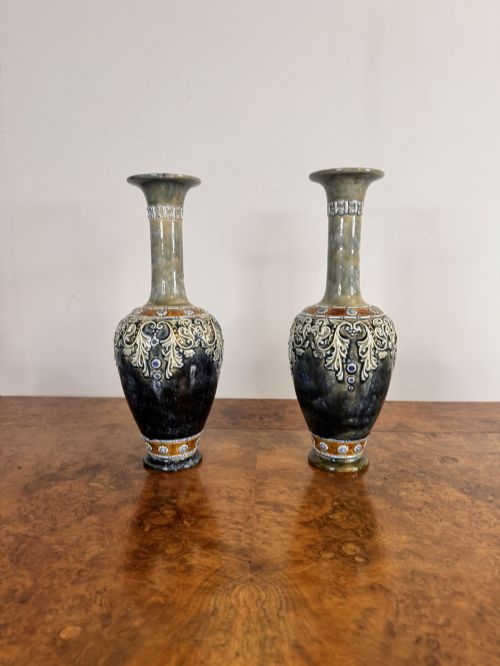
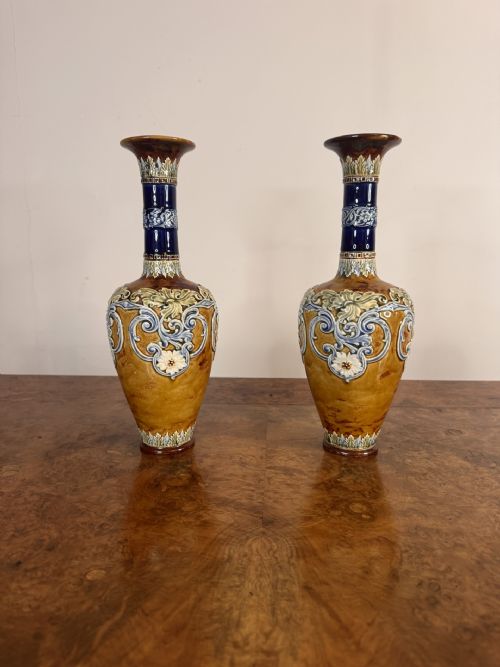
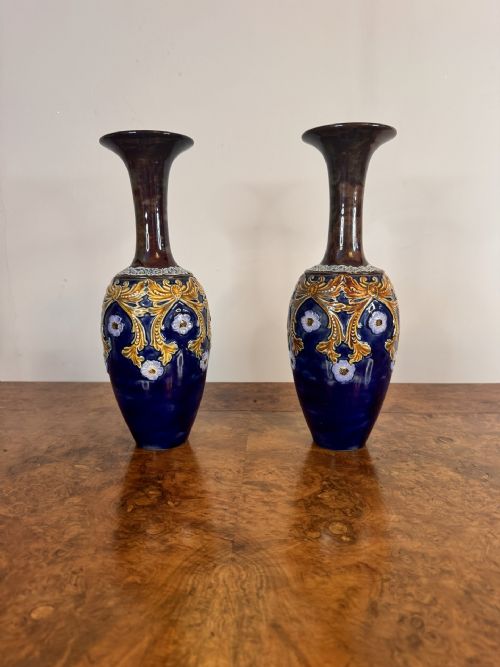
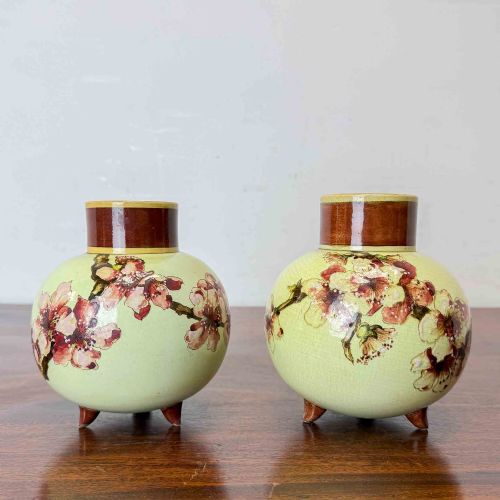
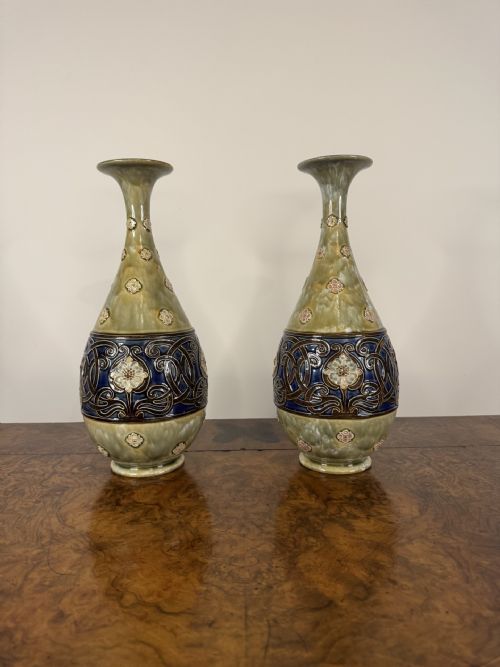


Doulton Ceramic Vessel Pair
These doulton ceramic vessel pair items offer striking ceramic artistry from various periods, providing timeless decorative appeal for your home.
Doulton Ceramic Vessel Pair
When you search for a doulton ceramic vessel pair, you are examining paired items made by Doulton across eras ranging from the nineteenth century to the mid twentieth century. The selections available here heavily feature vases alongside storage jars and loving cups.
Most examples you will encounter date from the late nineteenth century and the early twentieth century, spanning Victorian, Edwardian, and Art Nouveau styles. These objects take forms such as baluster vases and heavy shipping jars.
How they were made
The makers utilised ceramic, stoneware, earthenware, and glazed pottery as foundational bodies for these items. Potters applied glazes and enamel floral decor to the surfaces to create colourful finishes.
Certain pieces incorporate gilded ceramic detailing alongside specialised techniques like Slater's Patent stoneware applications. Artisans shaped these vessels into distinct forms including ballister and baluster silhouettes.
Doulton Ceramic Vessel Pair Retail Price Guide 2026
Typical asking prices for doulton ceramic vessel pair among the pieces listed under this phrase on Sellingantiques today, from the lower quarter to the upper quarter. They describe what is for sale here now, not the wider market.
What varies in quality
Quality differences rest upon the complexity of the surface ornamentation and the distinctiveness of the vessel shape. Pieces featuring named artist decoration or intricate enamel floral work sit at a different level from plain glazed items.
The precision of the throwing and the execution of specific styles like Art Nouveau or Victorian Arts and Crafts determine the standing of each pair. Weight, scale, and the retention of crisp decorative motifs also dictate the standard.
Louisa Wakely·Ethel Beard
The Doulton Ceramic Vessel Pair Glossary
- Stoneware
- A robust ceramic type fired at high temperatures until vitrified. It forms the impermeable body for many Doulton vessels.
- Baluster
- A vertical architectural form shaped with a rounded lower portion tapering toward the top. This profile appears frequently in the vases listed.
- Slater's Patent
- A manufacturing technique involving textured lace pressed into clay surfaces before glazing. This method created patterned backgrounds for enamel floral decoration.
- Faience
- Earthenware decorated with opaque coloured glazes. It provided a smooth canvas for painted floral motifs on nineteenth-century pieces.
Doulton Ceramic Vessel Pair: Frequently Asked Questions
What periods do these vessels come from?
The listings span from the nineteenth century through the Edwardian era up to nineteen forty. You will find pieces marked by Victorian, Aesthetic Movement, and Art Nouveau influences.
Dates cluster heavily around eighteen eighty, nineteen hundred, and nineteen ten. Each era brought distinct decorative preferences and manufacturing techniques.
How were these pairs used originally?
Vases served primarily as decorative mantel or table items in period homes. Storage jars and alcohol jars fulfilled practical containment roles on shipping vessels.
Loving cups functioned as communal drinking vessels during celebratory toasts. Their paired nature often meant they were displayed symmetrically in formal rooms.
How do I identify Art Nouveau examples?
Art Nouveau pieces display characteristic flowing organic lines and natural motifs such as cherry blossom designs. These items often date around nineteen hundred to nineteen ten.
The shaping of the ceramic body tends to embrace asymmetrical or plant-inspired silhouettes rather than rigid geometric forms.
What materials make up these items?
Makers utilised ceramic, stoneware, earthenware, and glazed pottery. Surfaces often feature enamel floral decor and gilded ceramic accents.
Specialised treatments like Slater's Patent stoneware provide textured patterning beneath the glazes. The physical weight varies from delicate earthenware to massive shipping jars.