
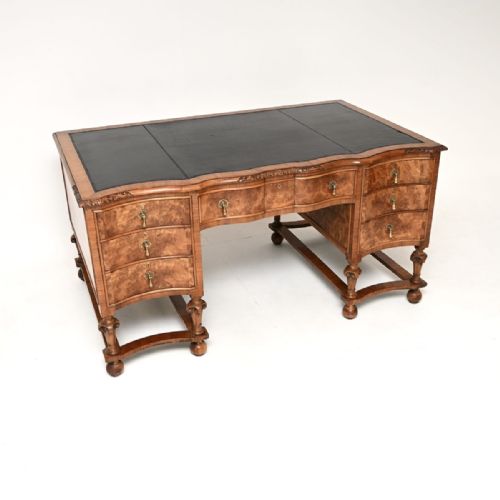
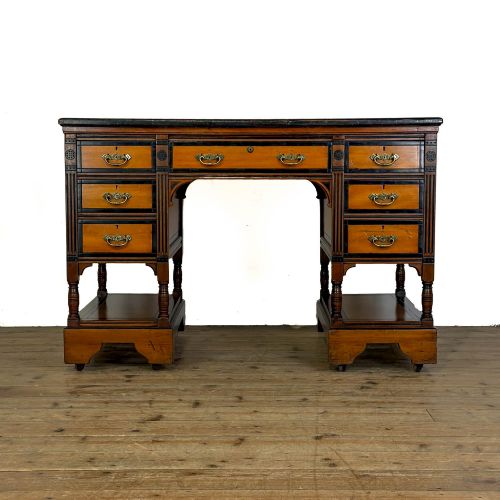
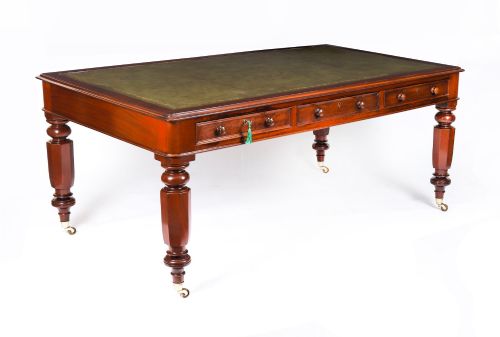
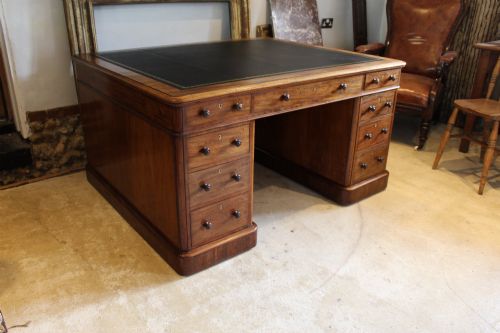

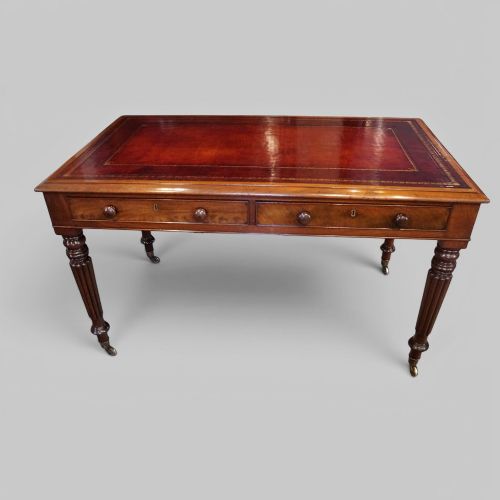
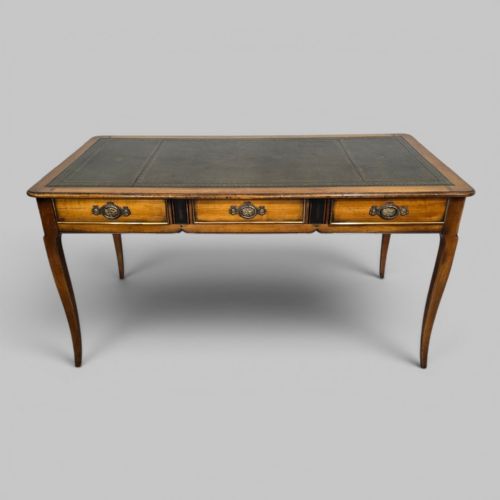
Double Sided Table
When you search for a double sided table, you are looking at substantial freestanding library desks and writing tables designed to be used from both directions.
Double Sided Table
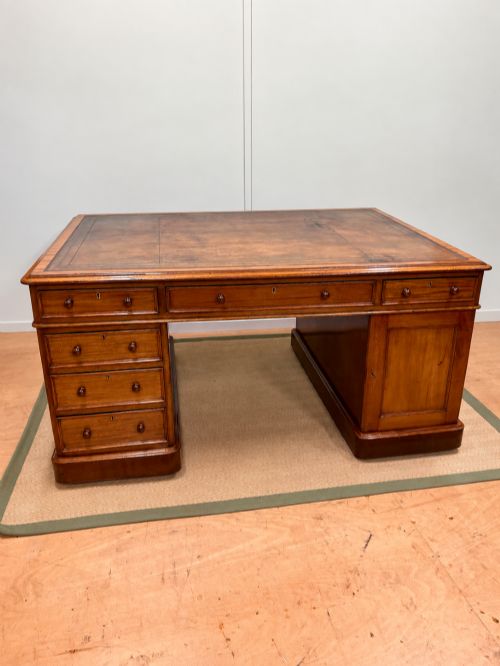
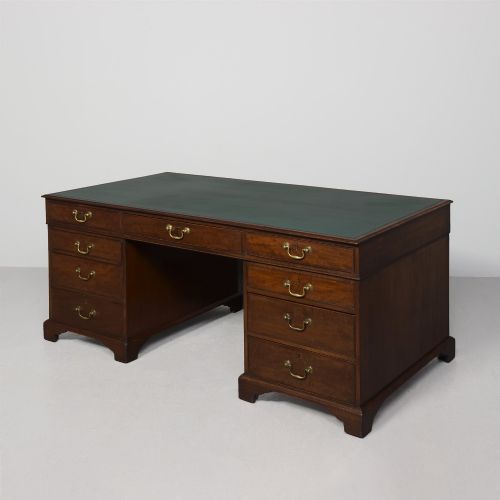
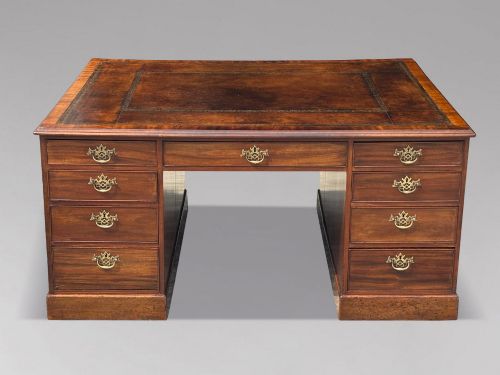
A double sided table primarily takes the form of a partners desk, library table, or writing desk constructed to allow two people to work opposite one another. These pieces originate predominantly from the 18th and 19th centuries, spanning Georgian, Regency, and Victorian periods.
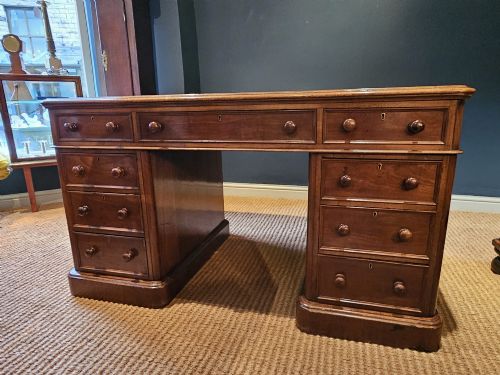
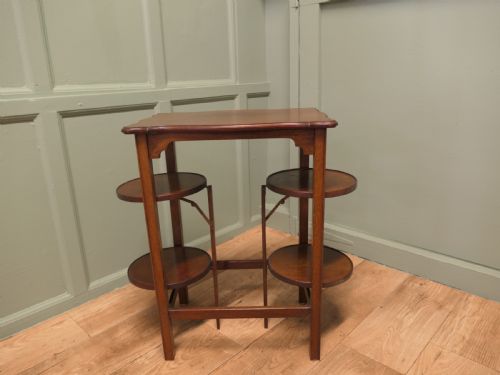
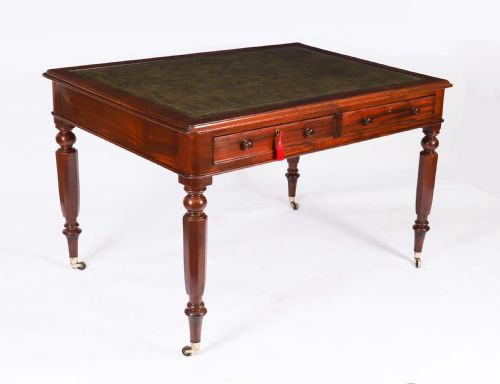
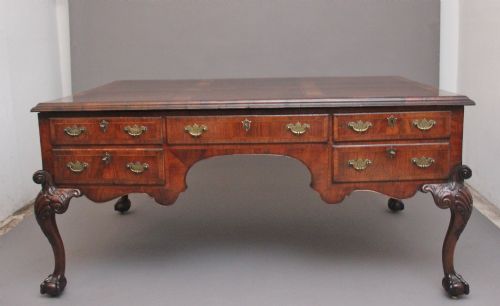
Most examples encountered on this page are large pedestal desks or library tables rendered in mahogany, oak, or burr walnut, often fitted with leather writing surfaces. Alongside these substantial desks, the selection includes smaller tables, adjustable reading tables, work tables, and occasional pieces.
The layout typically incorporates drawers, cupboards, or kneeholes mirrored on both faces to maintain symmetry and utility for two users. Makers and workshops constructed these for institutional libraries, grand studies, and administrative offices where efficient dual usage was required.
How they were made
Cabinetmakers utilised dense timbers such as mahogany, oak, burr walnut, and rosewood, often selecting flame or figured veneers for the primary visual surfaces. These woods were joined using traditional framing techniques and finished with inset leather panels for writing.
Hardware such as brass handles, escutcheons, and hinges secured drawers and doors that operated symmetrically from both sides of the piece. Secondary construction materials included pine and oak for internal drawer linings and structural carcases.
Listings feature pieces spanning the 18th, 19th, and early 20th centuries, executed in mahogany, oak, burr walnut, and brass.
What varies in quality
The distinction between tiers of quality rests on the selection of timber veneers, the crispness of hand-carved mouldings, and the fidelity of period details like cockbeading around drawers. Superior pieces exhibit continuous grain matching across expansive desk tops and refined secondary timbers internally.
Proportion and structural integrity also dictate standing, where substantial weight and freestanding placement demand robust joinery that remains firm across both working faces over centuries of use.
Maple and Co·Charles Andrea Nosotti·T Wilson
The Double Sided Table Glossary
- Partners desk
- A large freestanding desk equipped with drawers, cupboards, or kneehole spaces on both long sides to accommodate two people sitting opposite each other.
- Pedestal desk
- A desk comprising a top surface supported by two independent pedestals containing banks of drawers.
- Flame mahogany
- Mahogany timber cut at an angle to the branch junction, producing a distinct, fiery flame-like grain pattern used for decorative veneer.
- Cockbeading
- A narrow, rounded projecting moulding fitted around the edges of drawer fronts to protect the veneer edges and provide a neat finish.
- Burr walnut
- Timber taken from a walnut tree growth or burl, yielding a swirling, highly figured grain pattern prized for luxury cabinetwork.
Double Sided Table: Frequently Asked Questions
What is a partners desk?
A partners desk is a large freestanding desk designed with drawers and kneeholes on both sides so two people can work face-to-face.
These pieces were traditionally utilised in stately libraries, banks, and private studies where colleagues shared a workspace.
How do I place a double sided table?
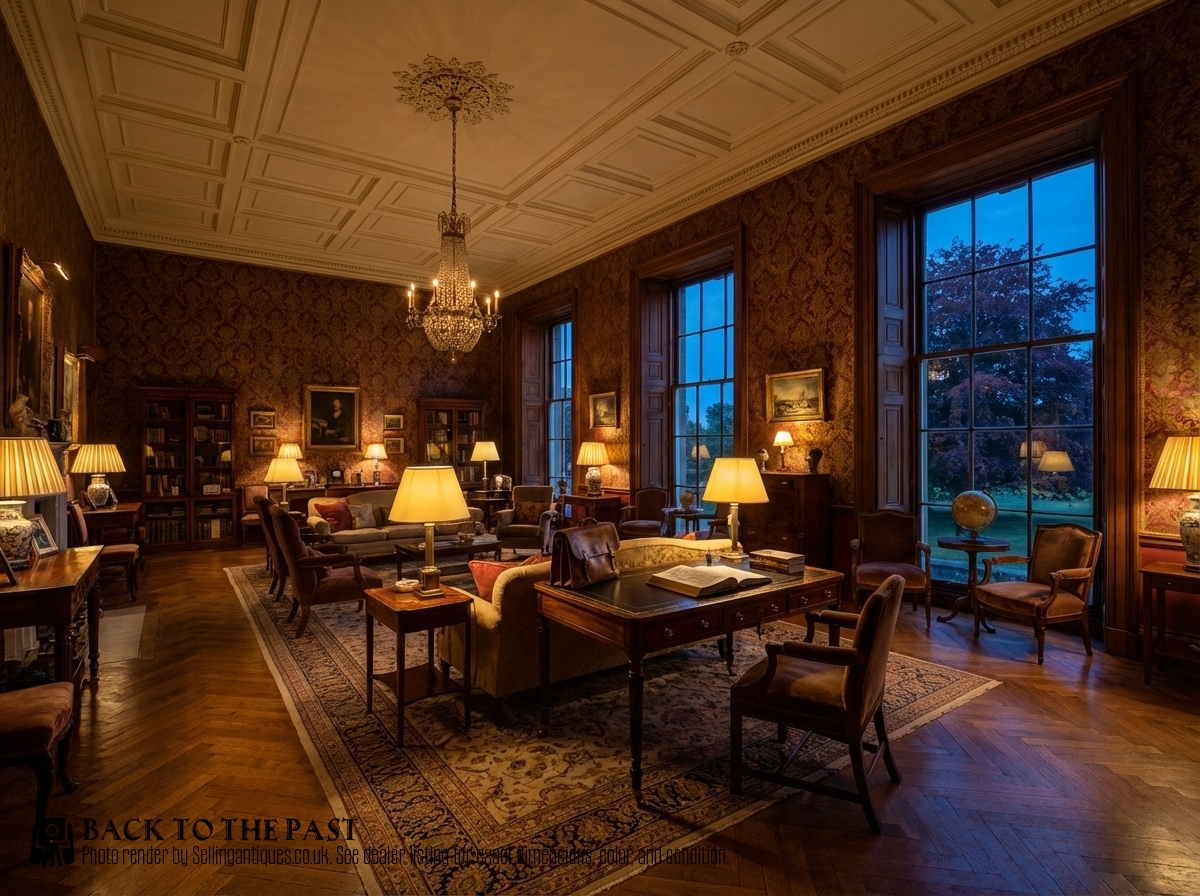
Because these tables are finished on all sides, they sit best in the centre of a room rather than pushed against a wall.
Ensure you leave adequate clearance around the entire perimeter so chairs can pull out comfortably from both faces.
What woods are common?
Mahogany, oak, and burr walnut dominate the construction of these tables, supplemented by rosewood and satinwood on select pieces.
Cabinetmakers often paired these dense exterior hardwoods with secondary timbers like pine for internal drawer framing.
How do I date a Victorian desk?
Dating relies on examining construction methods, timber choice, and the prevailing decorative style recorded in the period evidence.
Victorian pieces often display heavier proportions and rich flame mahogany or walnut veneers compared to earlier Georgian examples.