

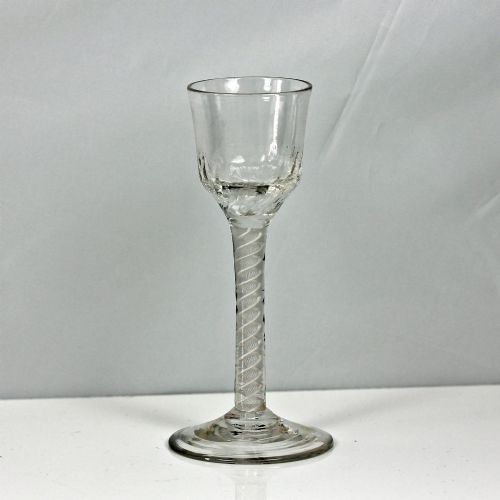
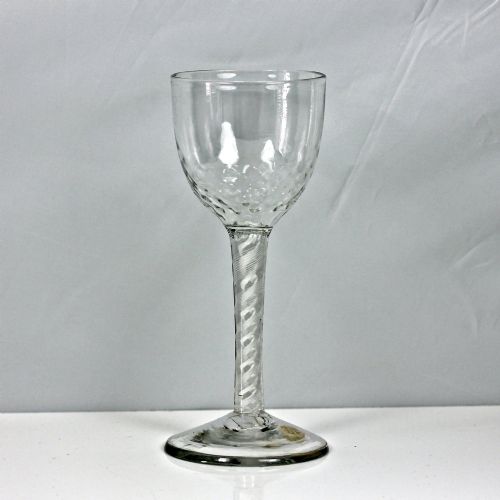
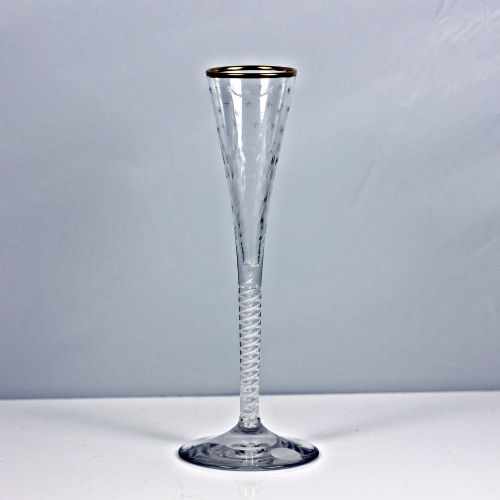
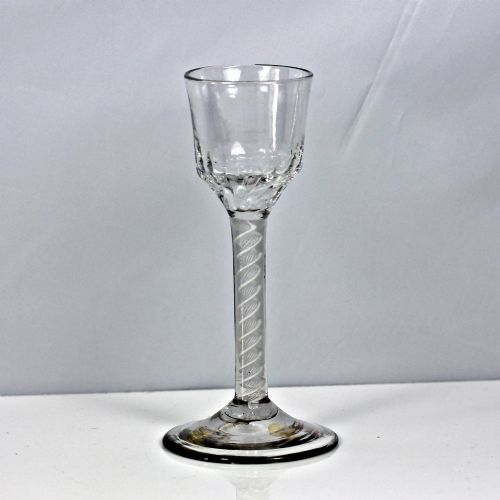



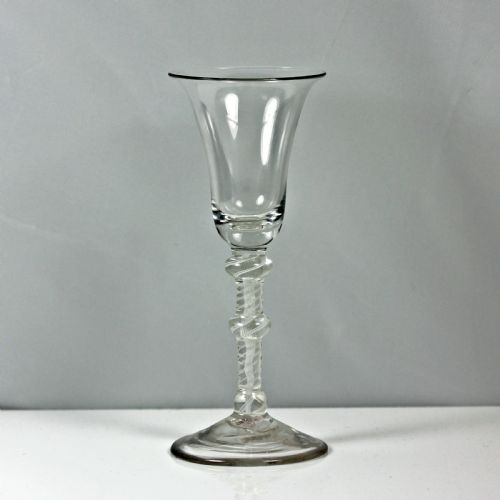


Double Opaque Twist Stem
A double opaque twist stem brings the tactile white enamel threads of Georgian glassmaking straight to your table.
Double Opaque Twist Stem
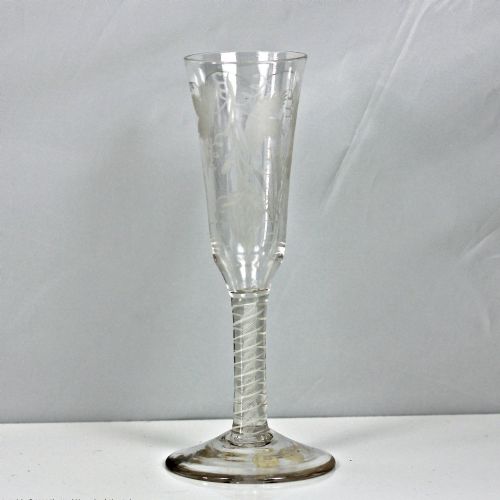
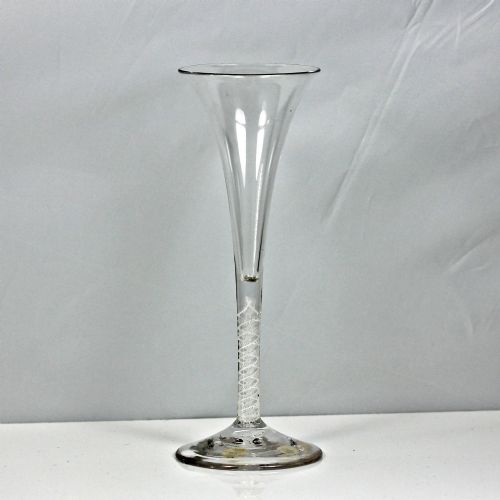
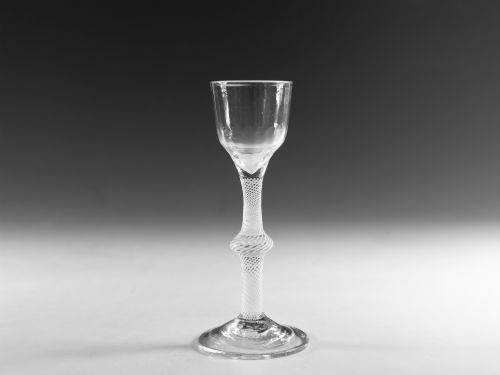
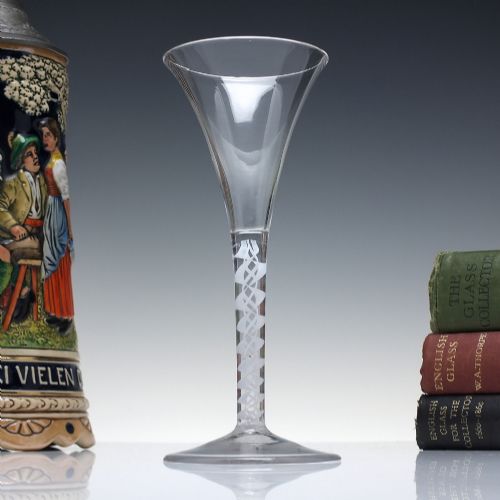
When you search for a double opaque twist stem, you are looking at eighteenth-century English glassware created during the Georgian period. These items survive primarily as wine glasses, alongside occasional cordial, ale, champagne, or sweetmeat glasses and wine goblets. Most examples on this page date from the seventeen-sixties and feature double series twists enclosing white enamel threads.
The forms span trumpet, ogee, everted, and conical bowls, sometimes set above a medial or triple knop or a conical foot. While flute-moulded bowls and ovoid shapes appear, the defining characteristic across these vessels remains the intricate internal stem formation enclosed within clear lead glass or lead crystal.
How they were made
Maker-glassmen produced these vessels using lead glass and flint glass, manipulating the hot material to encase white enamel threads inside the stem. The double series twist technique involved combining two distinct opaque enamel elements within the clear matrix before drawing and twisting the stem to the desired length.
Craftsmen shaped the bowls separately, whether trumpet, ogee, or flute-moulded, before attaching them to the twisted stems and finishing the feet. Enamel glass components required precise thermal control during manufacture to maintain the clarity of the clear glass outer layer against the opaque interior spirals.
Double Opaque Twist Stem Retail Price Guide 2026
Typical asking prices for double opaque twist stem among the pieces listed under this phrase on Sellingantiques today, from the lower quarter to the upper quarter. They describe what is for sale here now, not the wider market.
What varies in quality
Quality in these eighteenth-century glasses rests upon the precision and complexity of the internal twist formation. Double series twists with tight, regular spirals demonstrate greater technical proficiency than simpler or looser configurations.
The Double Opaque Twist Stem Glossary
- Opaque Twist
- A stem containing white enamel glass threads enclosed within clear lead glass. This decorative technique defines the visual character of mid-eighteenth-century English drinking vessels.
- Double Series
- A stem configuration featuring two distinct sets of twists, such as a pair of opaque white spirals surrounding an inner element or column. It represents a more complex manufacture than single twist variations.
- Ogee
- A bell-shaped bowl with an 'S' curve profile, curving out at the rim and in towards the base. This form frequently appears on Georgian wine glasses.
- Knop
- A prominent knob or swelling on the stem of a glass. Craftsmen added medial or triple knops for decorative emphasis and grip.
- Sweetmeat Glass
- A small pedestal vessel used for serving dry confections or sweetmeats during dessert courses. These pieces often share the stem and bowl characteristics of contemporary wine glasses.
- Flute-Moulded
- Ornamented with vertical concave flutes, usually applied to the lower portion of the bowl. This decorative pressing catches the light alongside the internal stem twist.
Double Opaque Twist Stem: Frequently Asked Questions
What is a double opaque twist stem?
A double opaque twist stem is a characteristic feature of eighteenth-century English glassware where white enamel threads are spun within clear lead glass.
These stems were formed by skilled glassmakers during the Georgian period, producing intricate optical patterns that remain visible through the clear exterior metal.
How old are these glasses?
The pieces available here date from the eighteenth century, specifically the Georgian era around the seventeen-sixties.
They represent a distinct period of English glass manufacturing before the widespread adoption of later Victorian production methods.
What drinks were served in them?
Original owners used these vessels primarily for wine, ale, cordials, and champagne during formal dining and social occasions.
Specialised forms like sweetmeat glasses also held confectionary or dry sweet treats at the conclusion of a meal.
How do I care for an antique glass?
Handle eighteenth-century lead glass with care, washing it by hand in lukewarm water without harsh detergents.
Avoid sudden temperature changes and store them securely on a stable surface away from modern dishwasher use.