


Double Back Settee
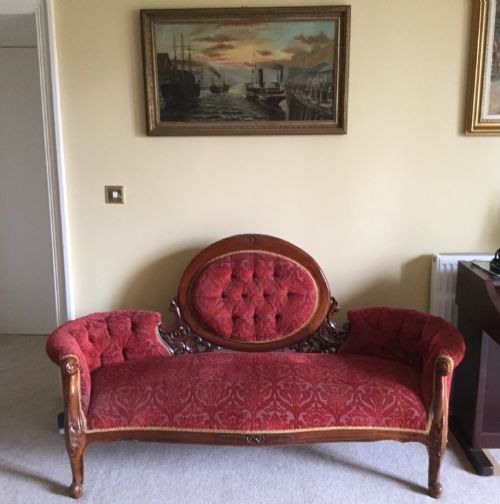
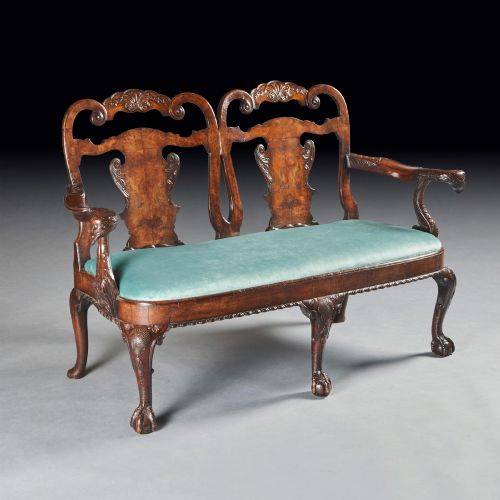
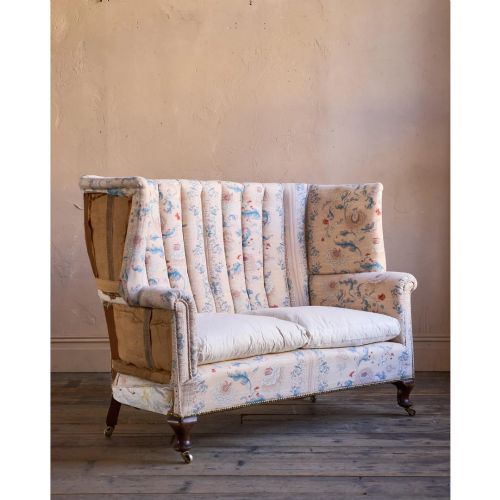
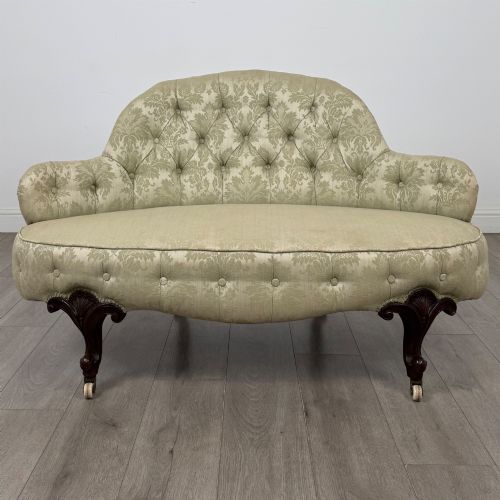
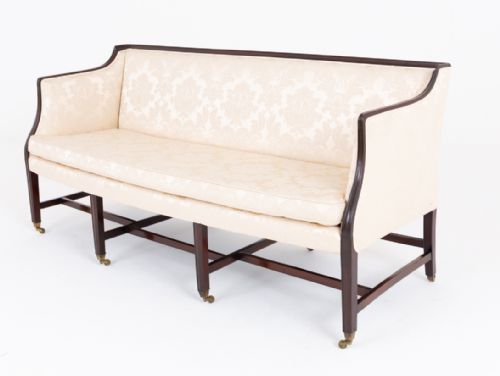
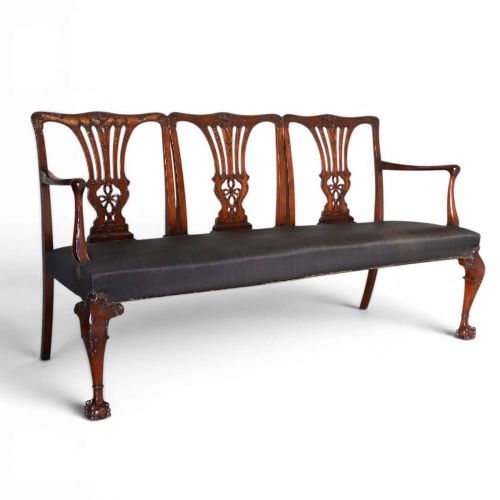
A double back settee provides extended seating shaped by twin chair backs or double spoon backs in mahogany or walnut.
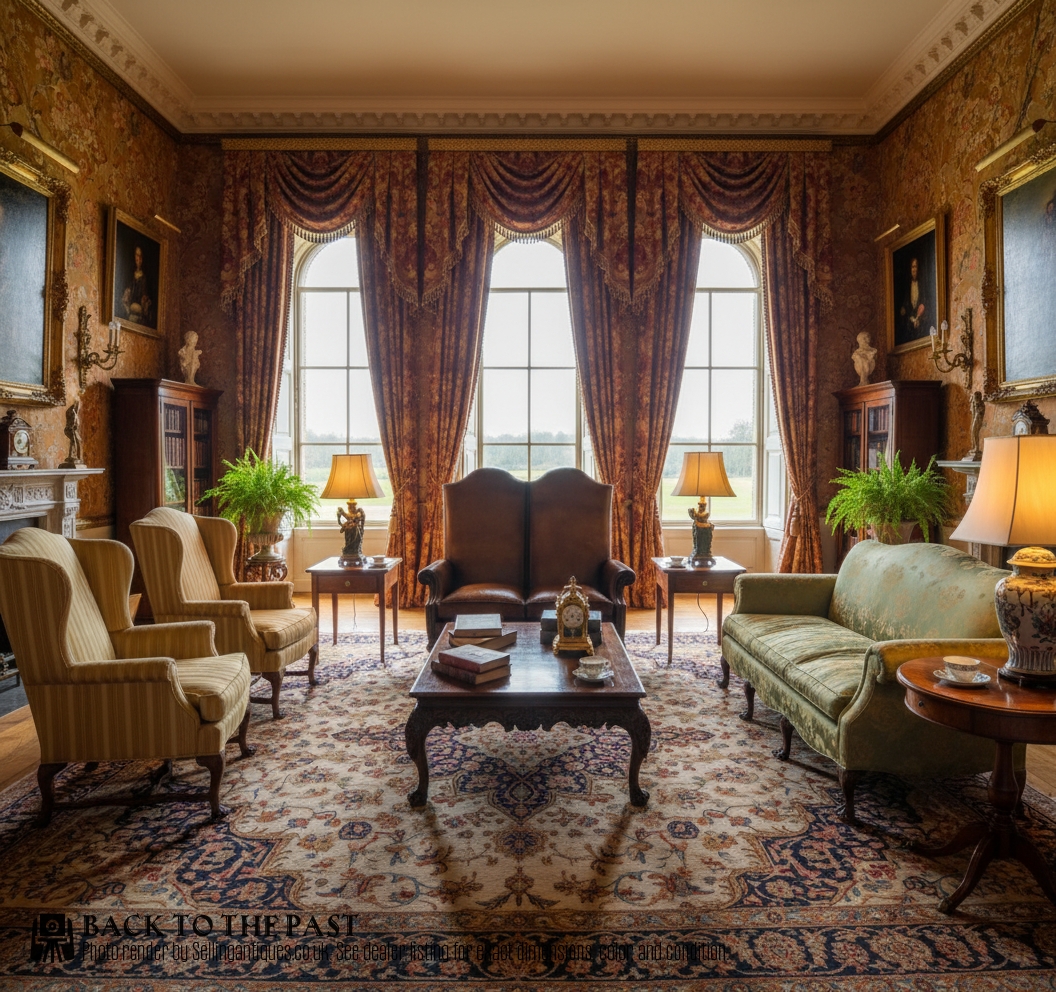
Double Back Settee
A double back settee is an upholstered or wooden seat designed for two or more occupants, defined structurally by a twin or double backrest that echoes the silhouette of paired dining chairs. These seating forms emerge across several eras, with examples appearing from the eighteenth century through the Victorian and Edwardian periods up to the early twentieth century.
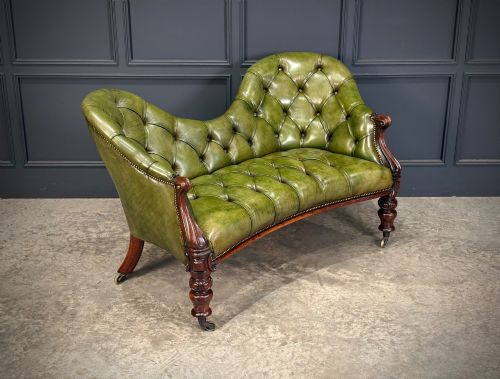
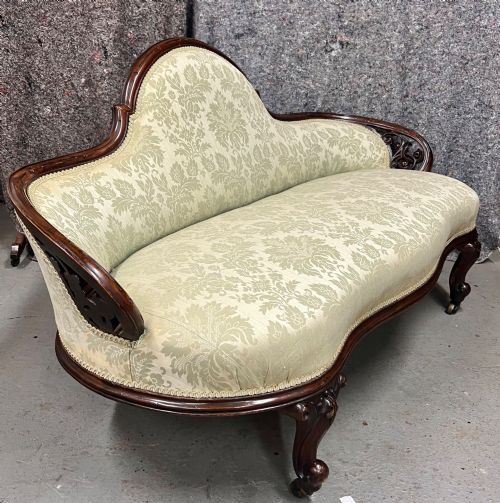
The pieces on this page lean heavily toward nineteenth-century Victorian and Edwardian interpretations, alongside revival works following George II and Chippendale designs. Common formats include twin chair back settees, double spoon-back sofas, and double-ended configurations upholstered in fabrics such as velvet, damask, leather, and brocade.
Materials and construction
Makers constructed the primary frames of these settees using dense hardwoods, predominantly mahogany and walnut, though occasional pieces utilise oak, rosewood, or blonde wood. Frames frequently feature carved details, pierced splats, or inlay work reflecting Georgian, Chippendale, or Louis XVI revival influences.
Upholstery techniques range from sprung bases and deep-buttoned leather to modern re-coverings in deep pile brocade and textile. Internal framework relies on traditional joinery paired with webbing, horsehair, and coil springs in surviving nineteenth-century and Edwardian pieces.
Some double-ended settees allowed two people to converse while facing opposite directions without bumping their heads.
Distinctions in quality
Quality in a double back settee rests in the crispness of the timber carving and the structural integrity of the joined twin backrests. Finer examples display meticulously shaped splats, balanced proportions, and substantial mahogany or walnut framing that supports the dual back design without strain.
The standard of upholstery and the choice of covering material also separate standard production from superior workshop output. Pieces retaining supportive sprung seat bases and precise fabric application show greater fidelity to their original period design and intended comfort.
The Double Back Settee Glossary
- Double spoon-back
- An upholstered Victorian backrest shape resembling two vertical, concave spoon bowls placed adjacently. The curved wooden frame supports padded upholstery designed to fit the human spine.
- Double-ended
- A sofa or settee featuring raised, matching ends at both sides rather than a single headrest or one arm higher than the other. This symmetrical form allows reclining from either direction.
- Splat
- The central vertical slat of wood within a chair or settee backrest, frequently shaped, pierced, or carved. In double back settees, twin splats anchor the visual design of the back.
- Brocade
- A heavy, jacquard-woven fabric featuring raised patterns, often utilised in the upholstery of period settees. It provides a textured surface finish to nineteenth-century and Edwardian seating.
Double Back Settee: Frequently Asked Questions
What is a double back settee?
A double back settee is a traditional seating form featuring a backrest visually or structurally divided into two distinct sections, resembling joined chairs.
These pieces typically seat two people and appear in styles ranging from eighteenth-century Georgian designs to Edwardian and Victorian revivals.
How do I identify a George II style settee?
George II style settees usually feature dark hardwoods like walnut or mahogany, paired with chair-back frames and subdued carving.
Makers working in this revival style during the nineteenth and early twentieth centuries drew on earlier proportions and splat forms.
Where were these settees placed?
Historically, double back settees served as drawing room, salon, or parlour seating, positioned along walls or near windows.
Smaller examples also functioned as window seats or bedroom seating within larger nineteenth-century homes.
Are these settees comfortable for daily use?
Comfort depends heavily on the internal springing and upholstery padding, which vary between pieces due to age and restoration.
Many surviving examples feature sprung bases and deep buttoning designed to provide structured support.