
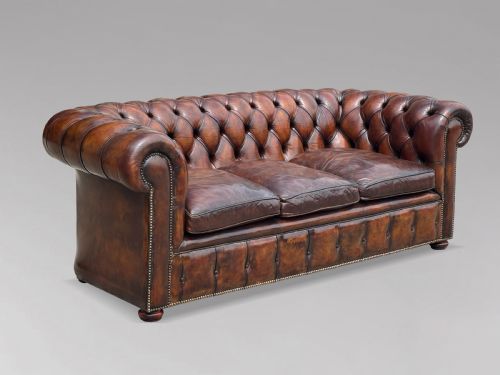


Brass Studded Couch
A brass studded couch offers deep buttoning and robust timber frames, bringing centuries of traditional English seating into a room.
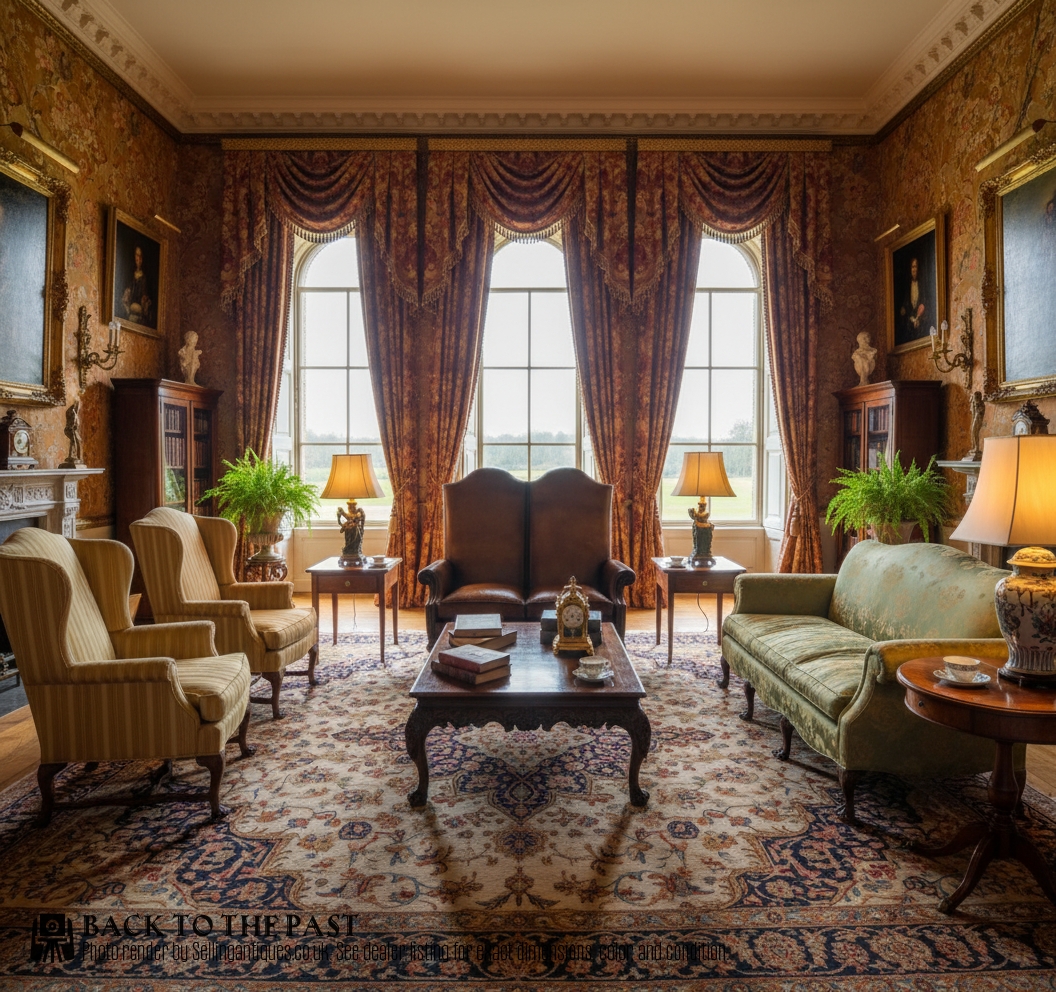
Brass Studded Couch
A brass studded couch encompasses traditional English seating forms such as Chesterfields, settees, and wing back sofas spanning the Victorian, Regency, and 1930s periods. These pieces provide deep buttoned comfort and substantial proportions designed for reception rooms and studies.
The version most commonly met on this page is the brown leather Chesterfield sofa, often featuring hand dyed finishes and characteristic low backs. Examples range from two-seater models to expansive four-seater drop arm and highback variations.
Makers and workshops construct these sofas using sturdy timbers like mahogany and hardwood to support heavy sprung interiors. The characteristic brass studs secure the upholstery edges along the scroll arms and borders.
How they were made
Makers build these couches around robust hardwood and timber frames, employing coil springing and horsehair stuffing to create resilient padded seats. Skilled upholsterers then cover the interior structure in durable leather, damask, or fabric.
Individual brass tacks are hammered in by hand along the seams and borders to secure the leather and outline the curves of the arms and back. Deep buttoning is pulled tight through the padding to form the characteristic tufted pattern.
Listings feature Victorian, Regency, and 1930s periods constructed from leather, mahogany, hardwood, and damask.
What varies in quality
Quality rests in the integrity of the underlying timber frame and the depth of the hand dyeing on the leather. Finer examples display careful attention to button tufting and the precise alignment of individual brass studs.
The proportion of the arms and the sweep of the back dictate the visual balance of the settee. Superior pieces combine substantial coil springing with supple, high-grade hides that age with a rich patina.
Howard and Sons
The Brass Studded Couch Glossary
- Chesterfield
- A large upholstered sofa with deep buttoning and arms of the same height as the back. This form remains a staple of traditional English seating.
- Tufting
- A method of upholstery where buttons are pulled deep into the padding and secured to the frame. This technique creates geometric indentations across the leather surface.
- Knoll sofa
- A settee featuring adjustable drop arms that can be lowered on one or both sides. This style provides versatile lounging configurations.
- Damask
- A reversible figured fabric woven on a loom, sometimes utilised as an alternative to leather upholstery. It introduces textured patterns to period settees.
Brass Studded Couch: Frequently Asked Questions
What is a brass studded couch?
A brass studded couch is a heavy upholstered seating form, most commonly represented by leather Chesterfields and settees from the Victorian and Regency eras. They feature prominent metal tacks outlining the arms and borders.
These pieces rely on deep buttoning and sturdy timber frames to provide formal and robust seating.
How do I date a leather sofa?
Dating depends on examining the frame construction, timber types such as mahogany or hardwood, and the style of the armrests and feet. Regency and Victorian examples show distinct joinery methods compared to 1930s models.
Upholstery materials like horsehair stuffing and hand dyed leather also offer clues to the period of manufacture.
Are these sofas comfortable for daily use?
These couches utilise traditional coil springing and padded horsehair fillings designed to offer firm, supportive seating. Over decades, the materials conform to regular use while retaining structural integrity.
Deep seats and high backs provide substantial support for lounging in studies or living rooms.
What maintenance does antique leather need?
Antique leather requires occasional conditioning to keep the hide supple and prevent cracking along the button tufts. Avoiding direct sunlight helps preserve hand dyed colour finishes.
Gentle cleaning maintains the natural patina developed over the nineteenth and twentieth centuries.