


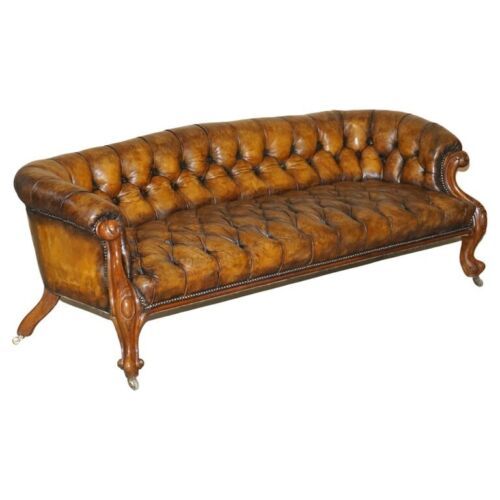

19th Century Leather Settee
A 19th century leather settee brings character and substance to a room, offering deep seating wrapped in patinated hide.
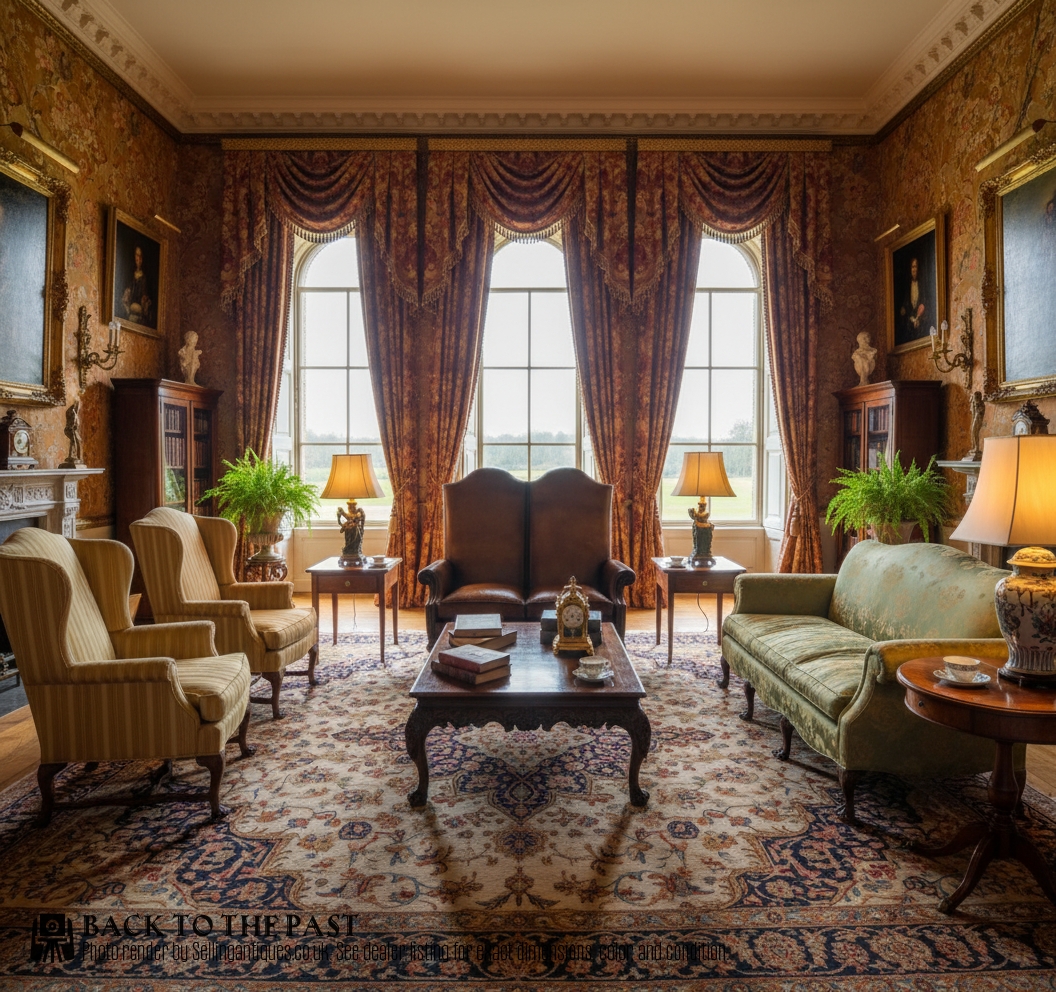
19th Century Leather Settee
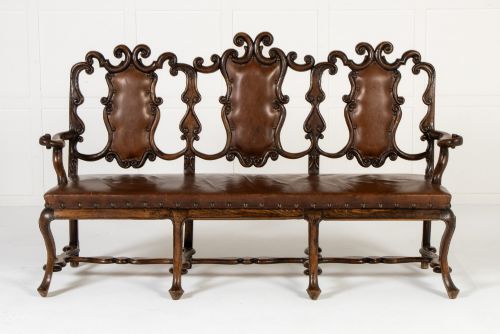
When searching for a 19th century leather settee, you encounter a robust range of seating, from substantial Victorian Chesterfields to carved walnut show-frame sofas and country house benches.
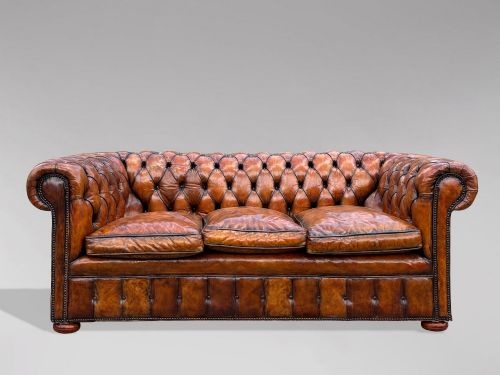
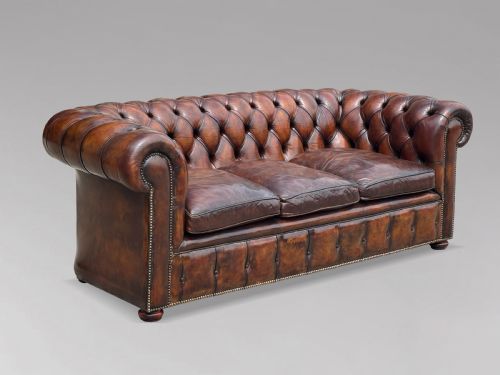
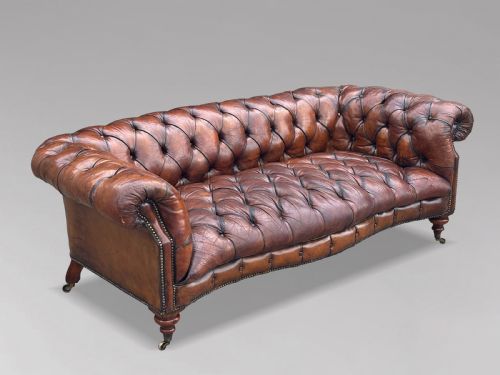
The Victorian period dominates these listings, frequently expressed through deep-buttoned Chesterfields upholstered in brown, hand-dyed, or coloured leathers.
Alongside standard three-seater sofas, the selection includes open-arm variants, scroll-end frames, highback George II styles, and Italian or Venetian carved pieces.
How they were made
Frames are built from hardwoods such as walnut, mahogany, oak, and general timber, providing a sturdy architectural skeleton for the upholstery.
Hides are worked into traditional leather finishes, including hand-dyed variants, original patinated leathers, and rich colours like amethyst, aubergine, and British racing green.
Metal components such as brass often feature alongside carved wooden elements like herms, statues, and elaborate show frames.
Materials recorded across the selection span multiple hardwoods, brass details, and diverse leather treatments from original patinas to hand-dyed finishes.
What varies in quality
Quality rests in the integrity of the underlying wooden frame and the depth of carving, distinguishing simple utilitarian benches from palatial Venetian or Italian show pieces.
The character of the hide dictates much of the appeal, separating uniformly replaced upholstery from deeply patinated original leathers or specialist hand-dyed finishes.
Howard and Sons·Hampton and Sons of Pall Mall
The 19th Century Leather Settee Glossary
- Chesterfield
- A large upholstered sofa characterised by deep buttoning and equal height back and arms. It remains a staple form in nineteenth-century seating.
- Show frame
- A wooden structural skeleton left exposed around the upholstered sections. Walnut and mahogany are frequently used for this decorative framing.
- Scroll end
- A sweeping, curved arm or terminal reminiscent of a scroll. This shape appears on early nineteenth-century mahogany-framed settees.
- Herm
- A carved bust or figure tapering from the waist down, often integrated into the wooden architecture of Regency frames.
- Patination
- The natural ageing, wear, and lustre acquired by leather and timber over decades of use. It marks the historical authenticity of the piece.
19th Century Leather Settee: Frequently Asked Questions
What is a 19th century leather settee?
It is a historical upholstered seat built during the eighteen-hundreds, predominantly taking the form of a buttoned Chesterfield or a carved wooden framed sofa.
These pieces combine timber structures with leather upholstery, drawing on styles ranging from Regency elegance to Victorian Gothic Revival and Baroque revival.
How do I identify a Victorian Chesterfield?
A Victorian Chesterfield is typically recognised by its deep-buttoned upholstery, low back, and rolled arms set at the same height as the back.
They appear in various leathers, from rich brown tones to hand-dyed shades, often supported on short timber legs with castors.
Where were these settees placed?
In the nineteenth century, large leather settees and carved benches occupied country house libraries, grand halls, and formal reception rooms.
Today, their substantial proportions suit similar large living spaces or commercial interiors requiring robust seating.
What woods were used for the frames?
Cabinetmakers utilised sturdy timbers including mahogany, walnut, oak, and general hardwoods to support the heavy leather upholstery.
Show-frame models display these woods carved around the edges, while standard Chesterfields conceal the internal timber beneath hide and stuffing.
How do I care for old leather?
Nineteenth-century leather benefits from stable room environments away from direct heat sources and strong sunlight that can dry the hide.
Regular, gentle conditioning helps maintain the flexibility and historic patination of the original or hand-dyed surface.