
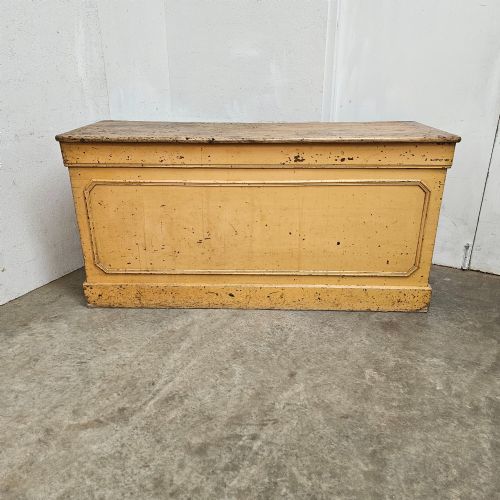
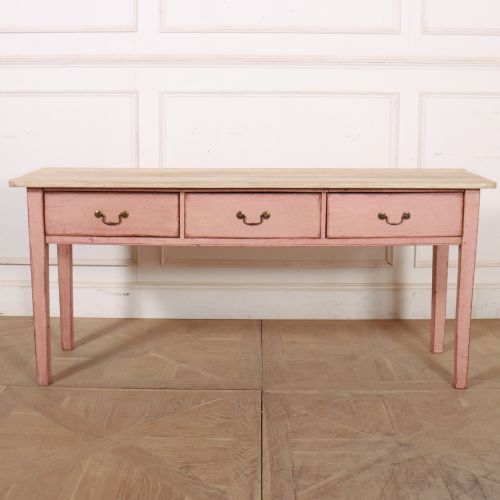


Distressed Pine Sideboard
A distressed pine sideboard brings a grounded character to a room through weathered timber and storied layers of historical paint.
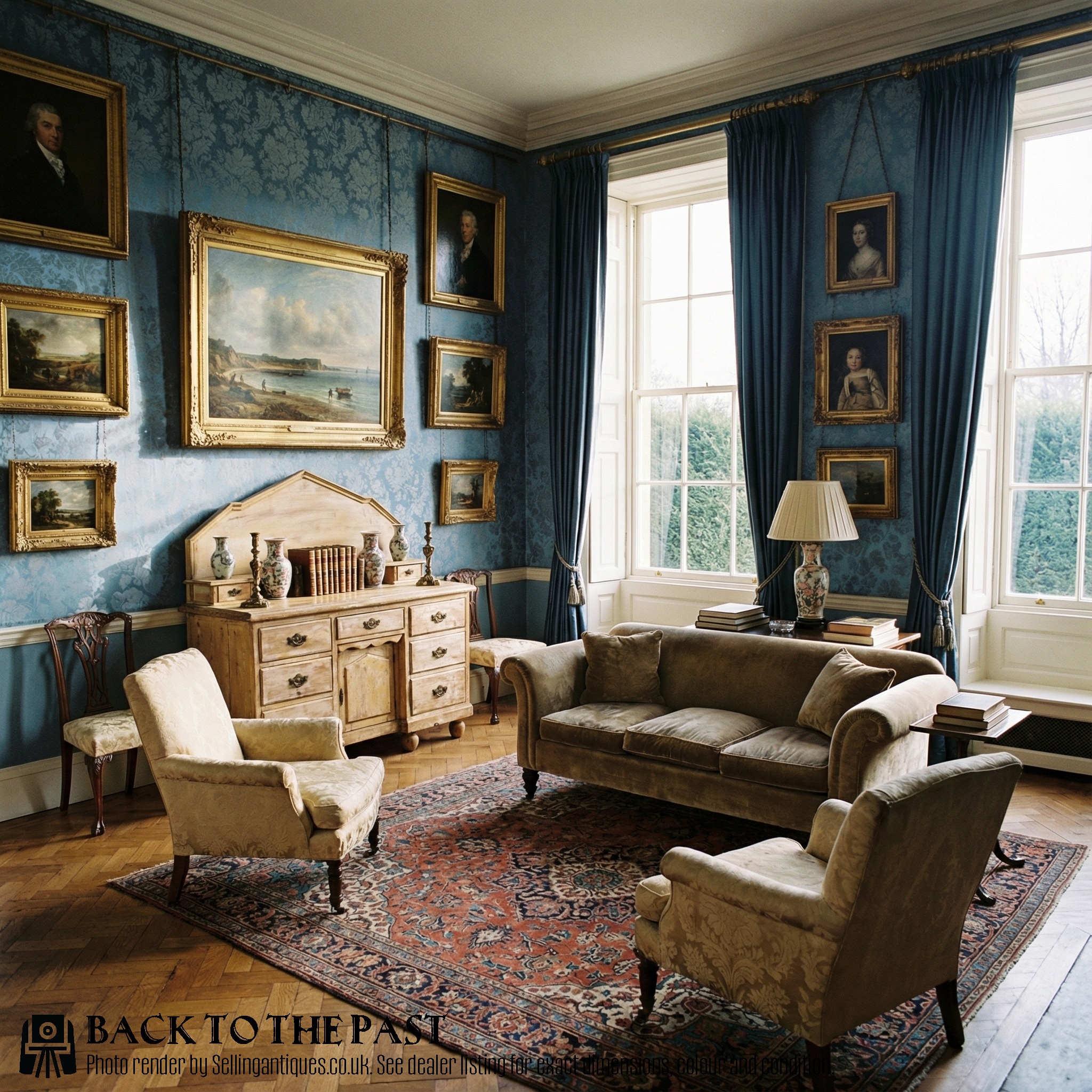
Distressed Pine Sideboard
A distressed pine sideboard encompasses a variety of substantial storage furniture built from softwood timbers that show distinct signs of age and wear. Buyers searching for a distressed pine sideboard will find a selection dominated by nineteenth century dresser bases, sideboards, and cupboards originating from English, French, Scandinavian, and Hungarian traditions.
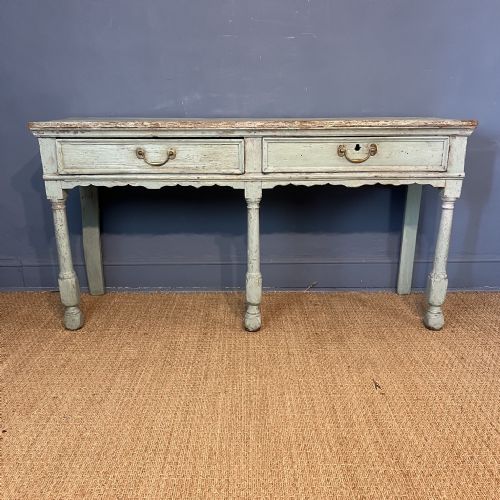
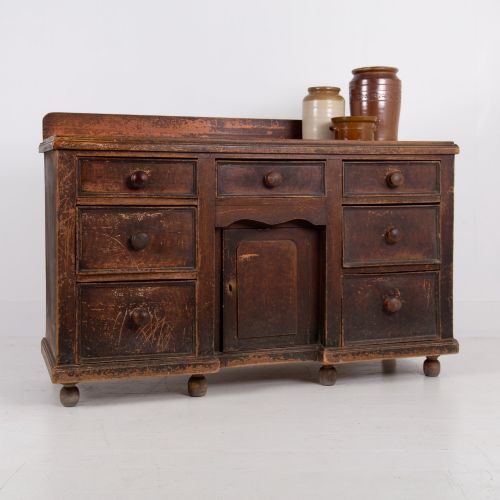
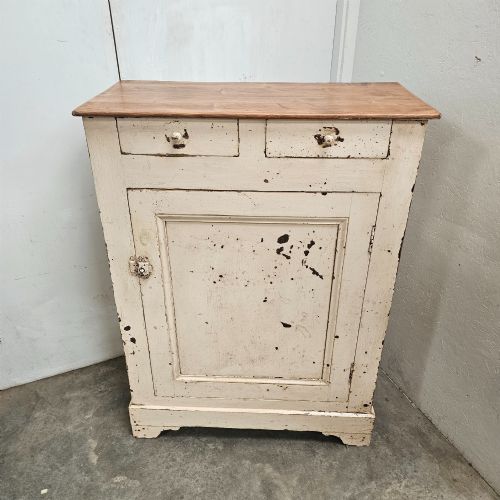
The objects appearing in this category include utilitarian pieces such as kitchen dresser bases, potboard bases, shop counters, and linen cupboards. Many retain traces of original paint finishes, ranging from muted pastoral tones to deeper black pigments.
Regional vernacular designs dictate the proportions and joinery of these pieces, showing specific characteristics from West Country English workshops to Swedish and Austrian provincial houses. These items served demanding domestic roles in kitchens, dining rooms, and farmhouses before entering the antique market.
Materials and construction
Makers constructed these pieces primarily from solid pine timber, utilising sturdy boards for tops, sides, and structural framing. Iron and brass hardware, such as hinges, pulls, and keyplates, secured doors and drawers while adding functional metal detail to the softwood bodies.
Surface treatments rely heavily on painted wood finishes, often applied in multiple layers over decades of use. Original paintwork survives on numerous pieces, showing natural crackle, weathering, and wear that accumulated through everyday domestic service.
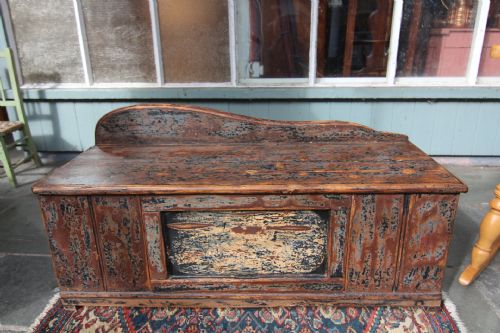
One unexpected survivor on the floor is a sturdy nineteenth century barge box seat designed for life on the water.
Distinctions in quality
Quality rests upon the integrity of the original construction and the preservation of authentic surface finishes rather than pristine condition. Pieces retaining their original paint layers without modern stripping or aggressive intervention command greater interest from collectors.
The proportion, regional vernacular detailing, and structural balance separate standard utilitarian storage from finer provincial examples. Exceptional pieces display harmonious proportions combined with unblemished historical patination across the pine timber and painted surfaces.
The Distressed Pine Sideboard Glossary
- Dresser base
- A lower storage unit featuring drawers or cupboards beneath a flat top surface, frequently used in kitchens and dining areas. These pieces often lack the upper plate rack of a traditional full dresser.
- Potboard base
- An open lower storage structure featuring a lower shelf, known as a potboard, positioned near the floor for storing heavy earthenware vessels. This design is characteristic of older English vernacular furniture.
- Original paint
- Pigment applied to the timber during the period of manufacture or early domestic use that has survived without later repainting. The presence of untouched historical surface layers heavily influences the character of a piece.
- Vernacular furniture
- Domestic objects built by local craftsmen using regional styles and readily available materials rather than following formal metropolitan design blueprints. These pieces reflect the specific traditions and practical needs of their geographic origin.
- Confiturier
- A small French cupboard traditionally utilised for storing confits and preserves in domestic kitchens. These compact cabinets typically feature single doors and modest proportions.
Distressed Pine Sideboard: Frequently Asked Questions
What is a dresser base?
A dresser base is the lower portion of a traditional kitchen dresser, typically comprising a row of drawers above cupboards or an open potboard shelf. These sturdy pieces functioned as primary work surfaces and storage units in historical homes.
Today, they serve well as sideboards or console tables in dining rooms and living spaces, offering practical storage capacity while displaying aged timber character.
How do I identify original paint?
Original paint exhibits natural wear patterns, subtle crazing, and multiple integrated layers that conform to the contours of the underlying pine timber. It lacks the uniform texture and modern chemical flatness associated with recent repainting.
Examining corners, edges, and recessed areas often reveals the accumulation of historical pigments and genuine patination built up over decades of use.
Where were these pieces made?
These pieces originate from various European regions, including English counties such as the West Country, French provincial workshops, and Scandinavian rural communities. Each region developed distinct joinery techniques, proportions, and decorative painting traditions.
Local timber availability and domestic customs shaped the design of these cabinets, resulting in diverse styles ranging from austere Swedish cupboards to robust English farmhouse bases.
How do I clean painted pine?
Painted pine requires gentle maintenance using a soft, dry cloth to remove dust without disturbing fragile historical surface layers or original pigment. Moisture and harsh cleaning agents can damage aged paintwork and strip the protective patina from the softwood.
Applying microcrystalline wax sparingly can help protect stable painted surfaces and exposed timber areas while preserving the authentic aged appearance of the piece.