



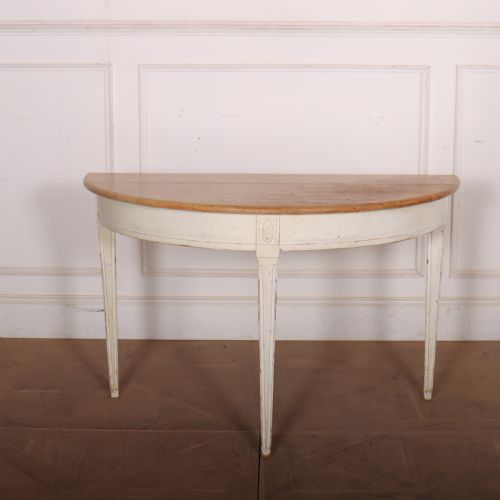
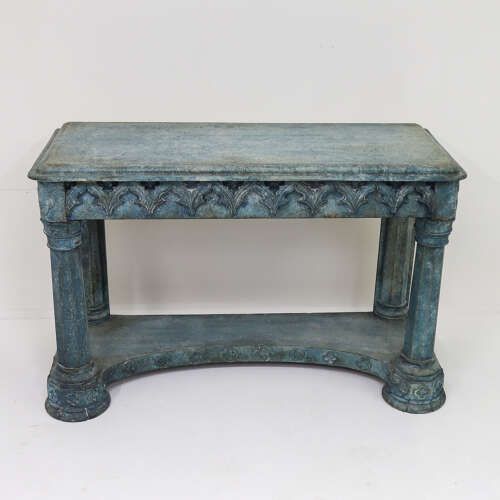


Distressed Painted Hall Table
A distressed painted hall table brings character to an entrance, combining aged finishes with practical proportions for daily use.
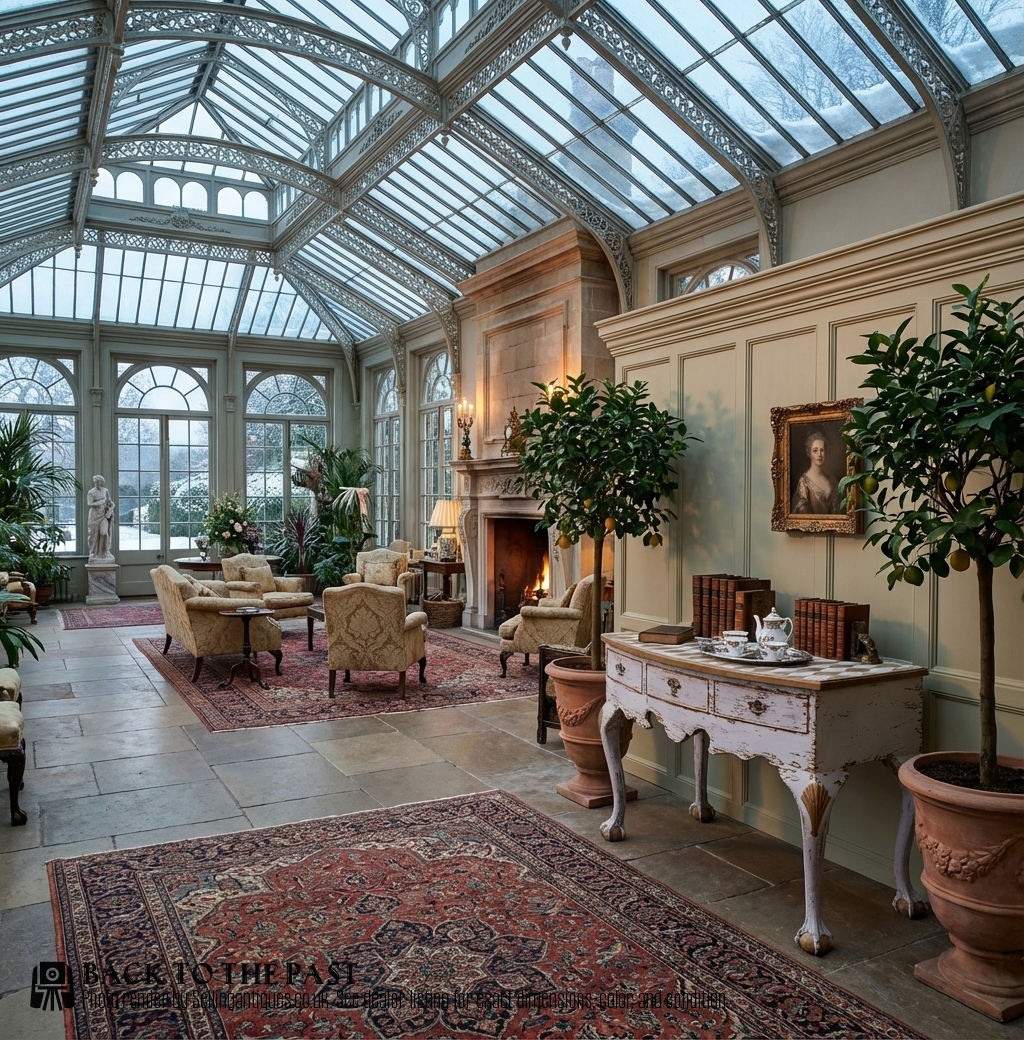
Distressed Painted Hall Table
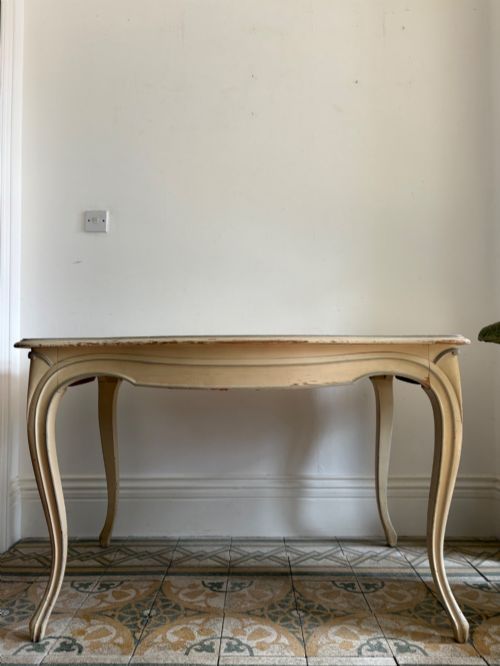
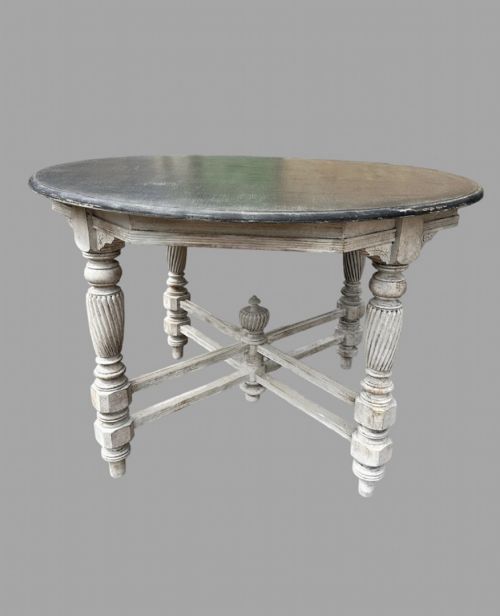
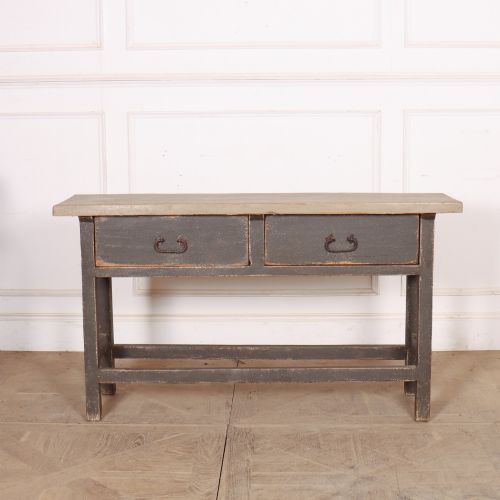
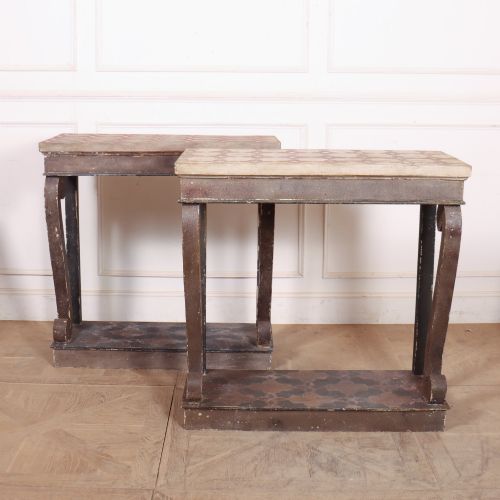
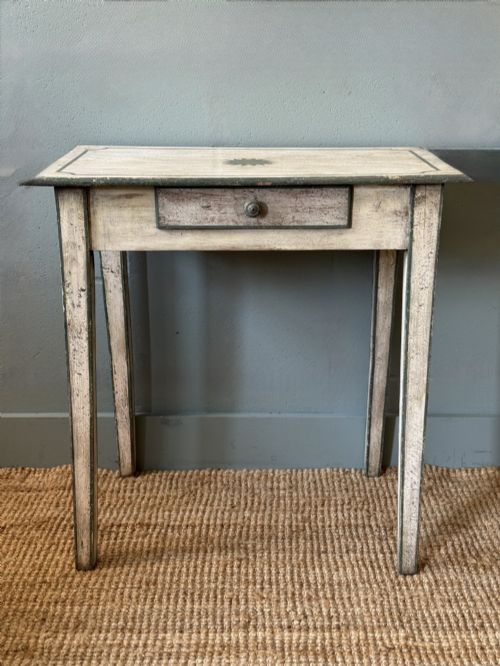
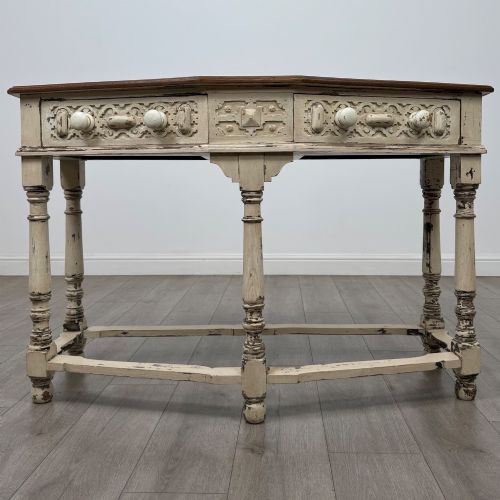
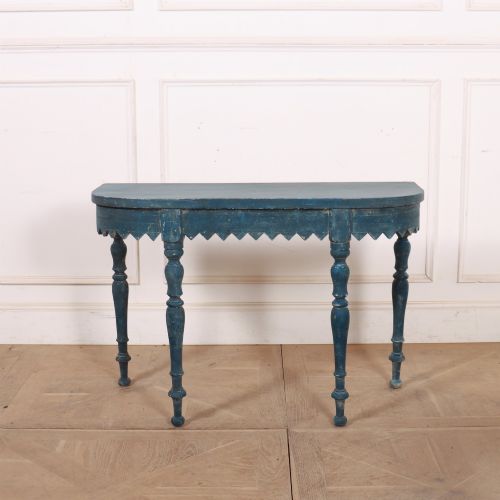
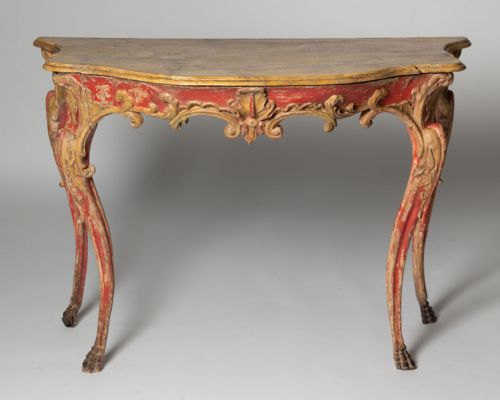
A distressed painted hall table serves as a functional surface in an entryway, taking the form of console tables, side tables, and washstands. These items originate from various periods including the eighteenth and nineteenth centuries, alongside Edwardian and 1920s examples.
Most pieces seen here demonstrate regional domestic styles, notably English country, French provincial, and Scandinavian country. Makers shaped these items from timber and applied surface paint, creating practical furniture for corridors and reception spaces.
How they were made
Carpenters constructed these tables primarily from pine, oak, fruitwood, and general painted wood, often incorporating carved wood details or gesso ornament. Selected pieces integrate inset marble tops or brass fittings to enhance the surface durability.
Craftsmen applied layered paint finishes over timber frames, allowing natural wear to accumulate through age and use. Structural joints typically rely on traditional joinery suitable for domestic furniture of the eighteenth, nineteenth, and early twentieth centuries.
Some nineteenth-century washstands now hold visiting cards instead of washbasins.
What varies in quality
Quality rests in the integrity of the timber frame and the authenticity of the surface paint. Tables retaining original decorative schemes display greater depth than those with unsympathetic later layers.
Proportion and structural balance separate simpler utility pieces from finer console tables. Well-proportioned legs and harmonious decorative carving elevate the standing of an individual table within its stylistic group.
The Distressed Painted Hall Table Glossary
- Console table
- A table designed to stand against a wall, frequently supported by brackets or cabriole legs. These pieces suit narrow hallways and reception rooms.
- Demi-lune
- A half-moon shape characteristic of certain console and side tables. This profile allows the furniture to sit flush against an entrance wall.
- Gesso
- A plaster-like material applied to wood surfaces to form a base for paint or intricate low-relief moulding. It is common on decorative continental tables.
- Washstand
- A wooden stand fitted with a surface for a basin, frequently adapted for general hall use. Victorian and nineteenth-century examples often incorporate pine.
- Gueridon
- A small round table supported by a central column or legs, originating in seventeenth-century France. Later examples appear in nineteenth-century settings.
Distressed Painted Hall Table: Frequently Asked Questions
Where should I place a hall table?
These tables fit naturally in narrow entryways, corridors, and reception spaces where surface area is required without blocking passage.
Their slim profiles, particularly console and demi-lune shapes, allow them to stand flat against walls beneath mirrors or artwork.
How do I clean a painted wooden surface?
Dust the surface regularly with a soft, dry cloth to prevent dirt accumulation on aged paint.
Avoid harsh chemical cleaners or excess moisture, which can damage historic paint layers and exposed timber underneath.
What is the difference between a console and a side table?
Console tables are specifically designed to stand against a wall and may rely on the wall for structural stability or balance.
Side tables function as freestanding items that can move around a room, though many nineteenth-century examples serve both purposes.
How can I identify an eighteenth-century table?
Eighteenth-century pieces display specific regional joinery techniques, heavy timber construction, and early surface treatments characteristic of Georgian or Baroque design.
Examine the underside and drawer construction for hand-cut joints and period-appropriate woods like oak and pine.