
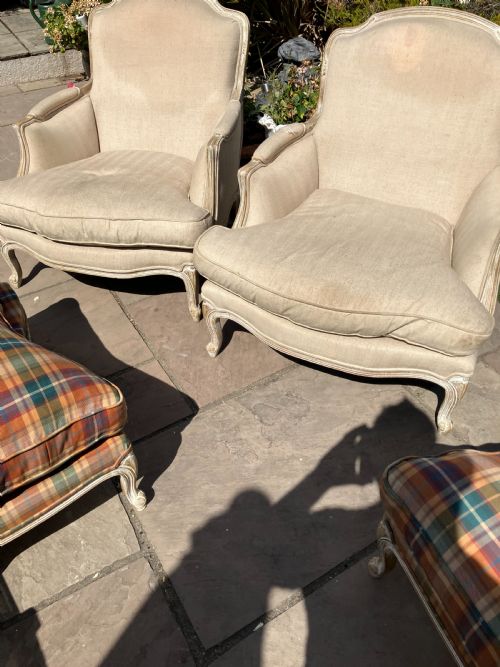
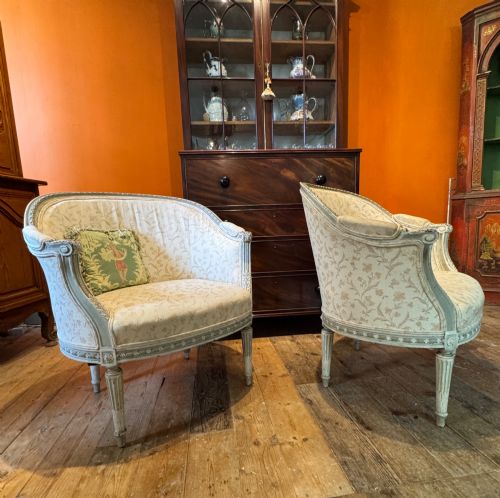
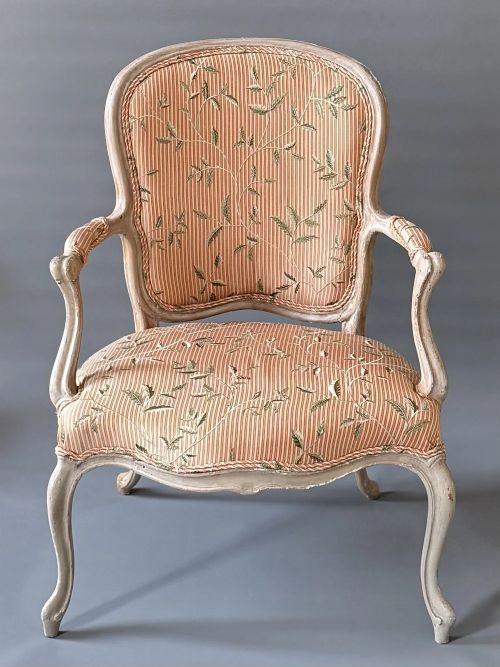
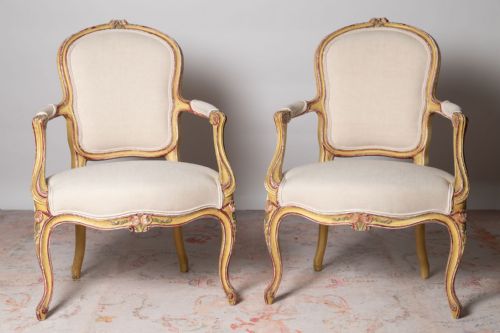
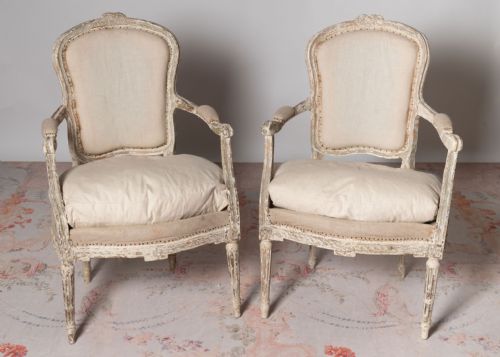
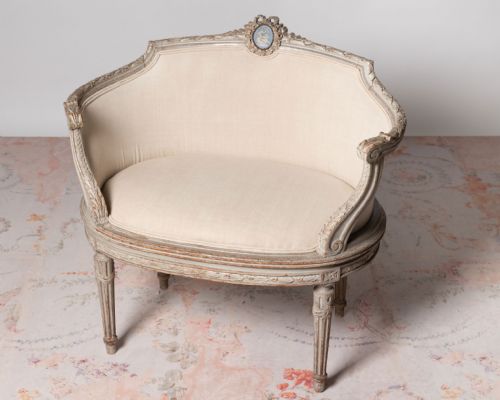


Distressed Cream Armchair
These distressed cream armchair selections bring painted woodwork and woven fabrics together for practical seating with a weathered finish.
Distressed Cream Armchair
A distressed cream armchair offers comfortable seating defined by aged paint surfaces and classic silhouettes, often drawing on French provincial traditions. Buyers searching for a distressed cream armchair will typically encounter painted wooden frames upholstered in linen, woven fabric, or needlework.
The selections span various periods including the eighteenth, nineteenth, and early twentieth centuries, alongside revival designs. Armchairs and settee forms feature styles ranging from Louis XV and Louis XVI to Hepplewhite and Georgian influences.
Most examples originate from French workshops or Italian makers, with occasional Swedish pieces appearing among the stock. These seating options combine carved wood structures with faded cream or off-white paintwork suited to period and eclectic interiors.
Materials and construction methods
Frames rely on sturdy timbers such as beech, walnut, and general carved wood to support the structural form. Artisans shaped these woods into curved cabriole legs and supportive armrests following traditional joinery techniques.
Surfaces received layers of paint, sometimes paired with parcel gilt highlights, which naturally aged over decades of use. Upholstery work utilised woven fabric, linen, and detailed needlework secured to the seat frames.
Materials documented across the inventory include beech, walnut, linen, needlework, and original paint.
Distinguishing quality in painted seating
Quality rests in the integrity of the carved wooden frame and the authenticity of the original paint surface. Finer examples display crisp hand-carved detailing and harmonious proportions characteristic of their specific period style.
The survival of original textiles or period needlework upholstery adds significant character to the piece. Construction sturdiness and balanced proportions separate superior seating from simpler vernacular alternatives.
Gillows
The Distressed Cream Armchair Glossary
- Bergere
- A closed-upholstered armchair with wooden frames and enclosed sides, typically featuring a cane or upholstered back. These seats often include loose squab cushions.
- Fauteuil
- An open-framed armchair with upholstered armrests and back, originating in France. The wooden arms generally leave the carved woodwork exposed.
- Parcel Gilt
- A decorative technique where small areas of a painted surface are highlighted with gold leaf. This method accentuates carved details on the wooden frame.
- Needlework
- Hand-stitched textile work utilising wool or silk threads on a canvas ground. Such upholstery frequently appears on eighteenth and nineteenth-century seating.
- Cabriole Leg
- A furniture leg that curves outward in a convex arc and tapers inward in a concave arc, ending in a pad or scroll foot. This form is common in Louis XV style pieces.
Distressed Cream Armchair: Frequently Asked Questions
How do I clean the painted wood?
Dust the painted frame gently with a dry, soft cloth to remove everyday particles.
Avoid using harsh chemical cleaners or abrasive materials that might damage the aged cream finish.
Are these chairs comfortable for daily use?
Most pieces provide supportive seating through upholstered backs and padded seat cushions.
Consider adding a supportive lumbar cushion if you plan to sit for extended periods.
How do I identify a revival style?
Revival pieces replicate earlier eighteenth-century aesthetics, such as Louis XV or Louis XVI designs, but were manufactured in later periods.
Examine the construction methods and wood ageing to determine if a piece is contemporary to the original era or a later interpretation.
Can the upholstery be replaced easily?
Upholstery can be updated by a professional restorer who understands traditional webbing and stuffing techniques.
Retaining original needlework or historic fabric is often preferred by collectors to preserve character.