
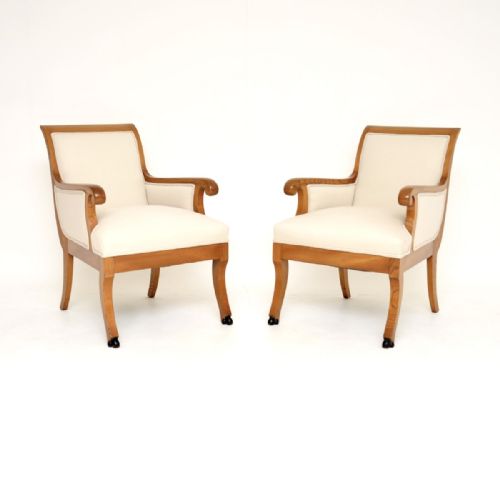


Neoclassical Arm Chair
A neoclassical arm chair brings balance and symmetry to a room, offering refined lines drawn from classical antiquity.
Neoclassical Arm Chair
A neoclassical arm chair represents a definitive shift away from heavy ornamentation towards restrained, geometric lines inspired by archaeological discoveries in Pompeii and Herculaneum. Pieces meeting this description span the eighteenth century, the regency era, and nineteenth-century revivals, alongside later interpretations produced around nineteen hundred.
Buyers encountering this selection will frequently find mahogany frames, giltwood accents, and painted finishes alongside upholstered seats covered in velvet, silk damask, or modern textiles. Forms range from shield-back and open-arm chairs to heavier painted and parcel-gilt seating rooted in English, French, and Swedish traditions.
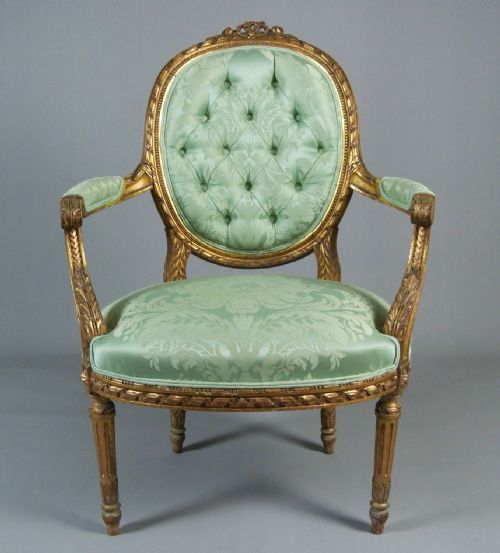
Regional variations shape the selection significantly, contrasting the crisp carving of English Hepplewhite and Sheraton workshops with the lighter, cooler palette of Swedish Gustavian and Karl Johan designs. French examples typically adopt Louis XVI or broader continental neoclassical idioms characterised by exposed wooden frames and balanced proportions.
Materials and construction methods
Cabinetmakers relied heavily on dense hardwoods like mahogany, walnut, and birch to achieve crisp joinery and slender structural members that could support upright proportions without bulk. Elm and beech also served local traditions, particularly when frames required steam-bending for curved shield backs or rounded arm supports.
Surface decoration combined traditional cabinetmaking skills with applied ornament, utilising hand-carved giltwood, parcel-gilt highlights over painted wood, and delicate marquetry inlays. Upholstery techniques progressed from traditional stuffing supported by webbing and horsehair to exposed nailhead trimming and silk damask or leather coverings.
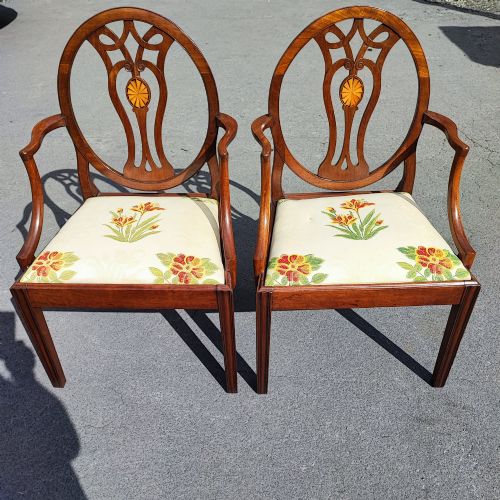
Music-themed painted decoration brings a cheerful note to sturdy Georgian elbow chairs.
Distinguishing quality across examples
Quality rests primarily on the crispness of the carving and the integrity of the timber frame, where sharp fluting on legs and refined paterae carvings distinguish superior work from softer, mechanically produced alternatives. Original surface treatments, such as untouched paint or genuine period gilding, hold greater aesthetic merit than later refinishing efforts.
Proportion and structural balance dictate the visual success of a chair, separating well-resolved proportions from heavier, less harmonious revivals. The retention of original upholstery foundations and harmonious textiles further elevates the standing of an individual piece.
Thomas Chippendale·Gillows
The Neoclassical Arm Chair Glossary
- Shield-back
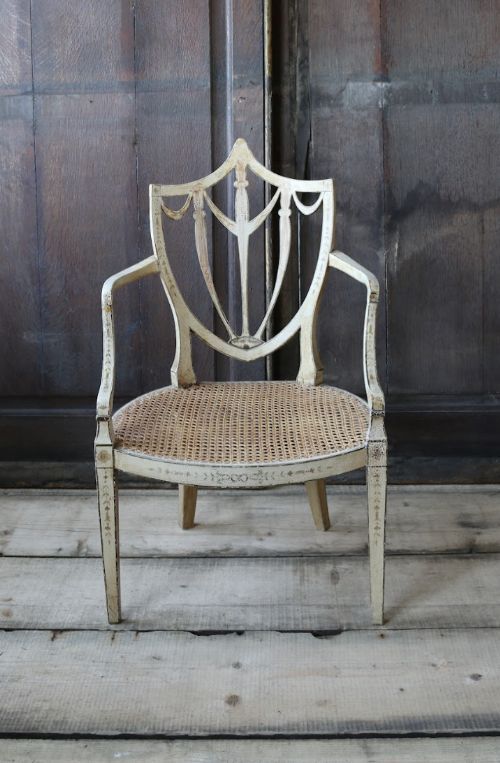
- A chair back shaped like a rounded shield, popular in late eighteenth-century English design. This form typically incorporates carved splats and fine mahogany framing.
- Giltwood
- Timber treated with a thin layer of gold leaf applied over a prepared gesso surface. This finish appears frequently on formal neoclassical seating.
- Fauteuil
- An open-framed armchair with upholstered armrests and seat, originating in France. These chairs display exposed wooden framing around the back and sides.
- Gustavian
- The Swedish interpretation of neoclassical design, characterised by pale painted finishes and restrained symmetry. Pieces from this tradition often utilise birch or elm.
Neoclassical Arm Chair: Frequently Asked Questions
How do I identify a neoclassical arm chair?
Look for straight tapered legs, symmetrical geometric framing, and decorative motifs such as urns, fluting, and paterae drawn from classical architecture.
Compare the timber choice and carving sharpness against regional styles like Sheraton or Louis XVI to determine the likely origin and period.
Were these chairs used for dining or salons?
Neoclassical arm chairs served primarily as salon, drawing room, or parlour seating rather than everyday dining chairs, reflecting their formal status.
Open armchairs and elbow chairs offered comfortable seating for conversation while displaying the owner's taste in fashionable interior decoration.
How should I care for antique upholstery?
Protect delicate textiles such as silk damask or antique velvet by limiting direct sunlight and maintaining stable indoor humidity levels.
Professional conservation cleaning preserves fragile fabric structures without introducing harsh chemicals that might damage historic fibres.
Are painted finishes usually original?
Many eighteenth and nineteenth-century chairs received later overpainting to suit changing interior fashions during subsequent decades.
Expert examination under magnification helps determine whether underlying layers of pigment match the period of the wooden frame.