

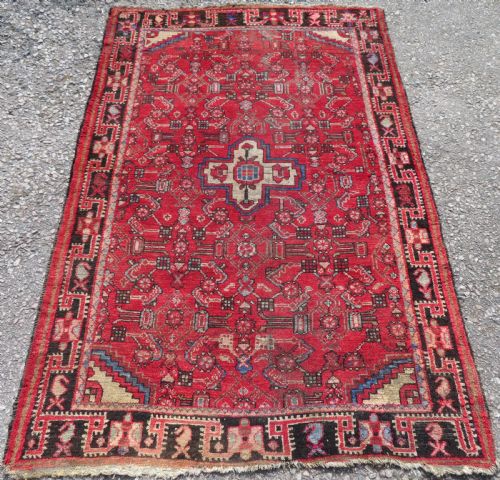
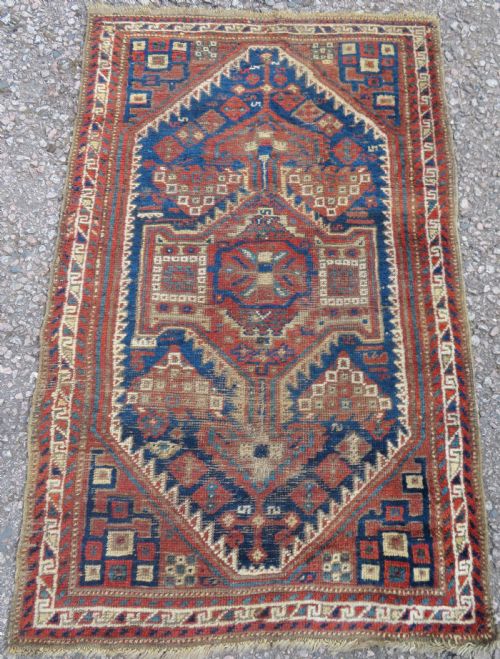
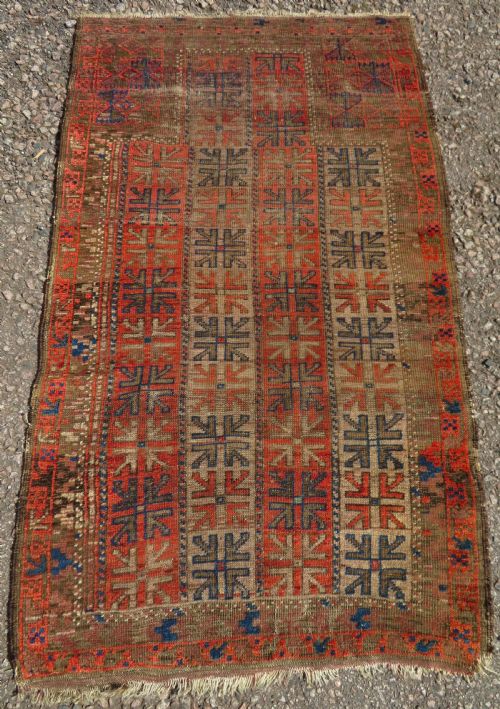
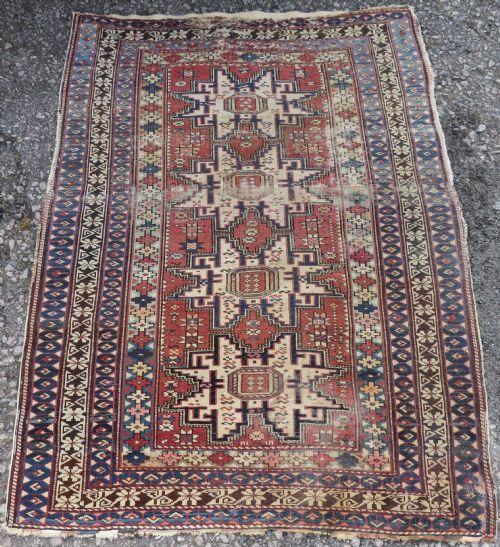


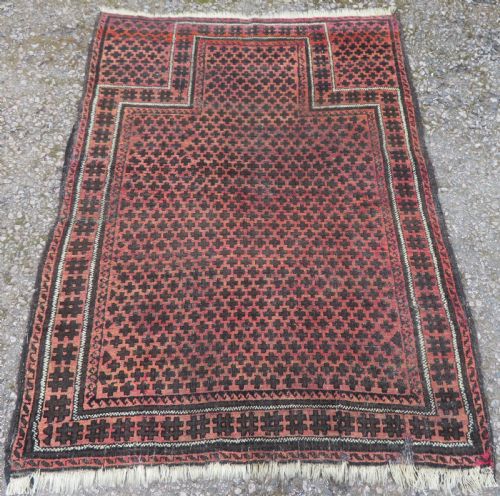
Distressed Carpet
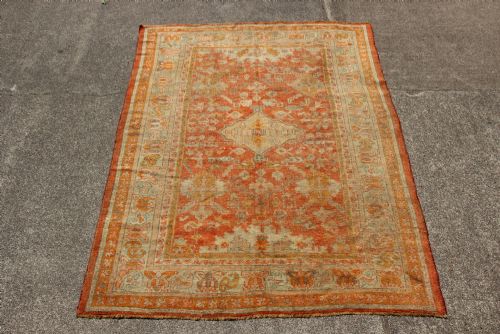
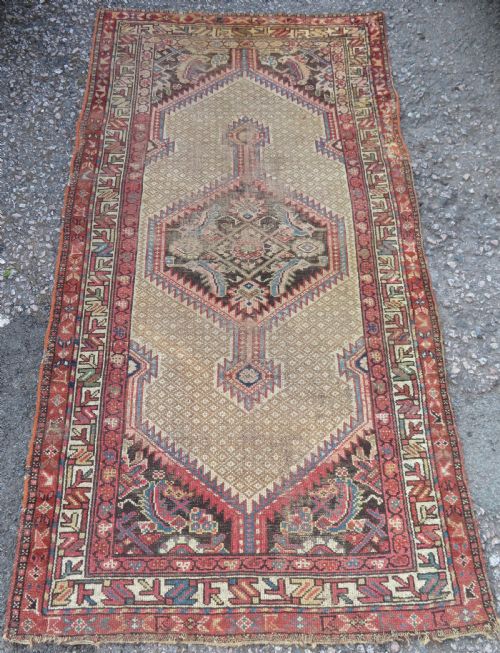
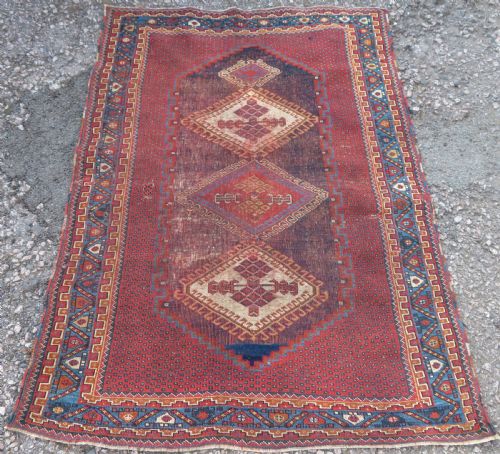
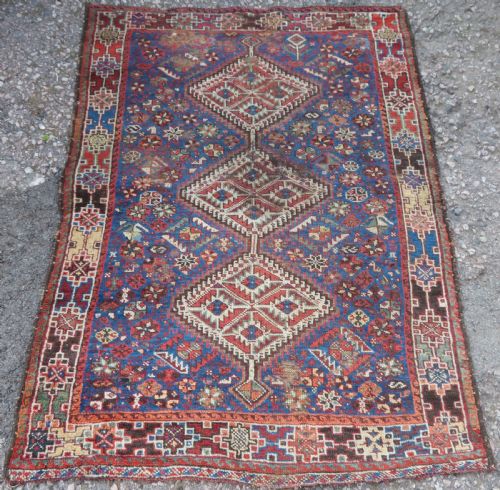
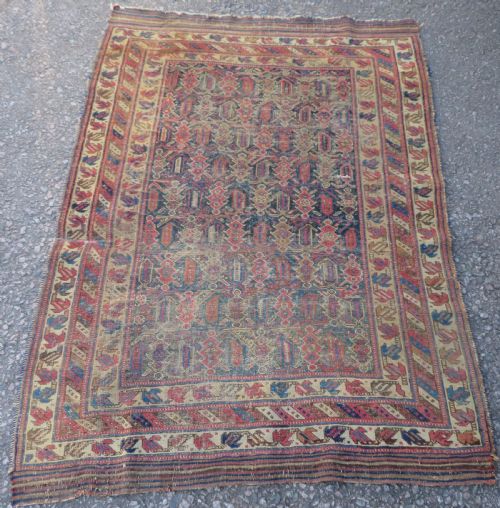
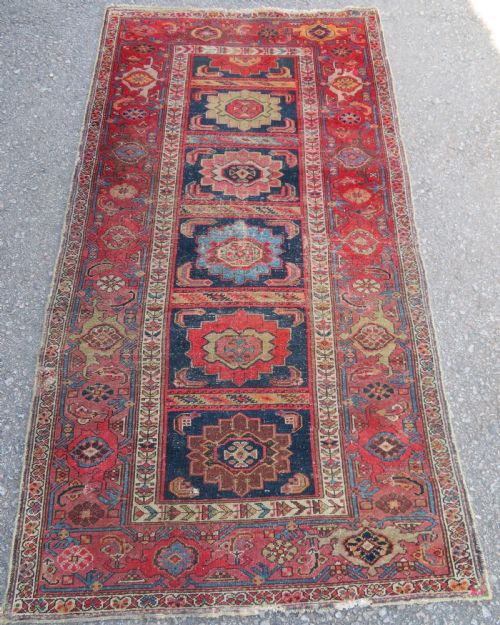
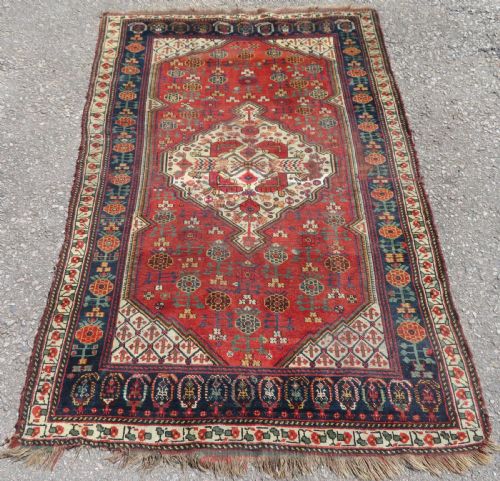
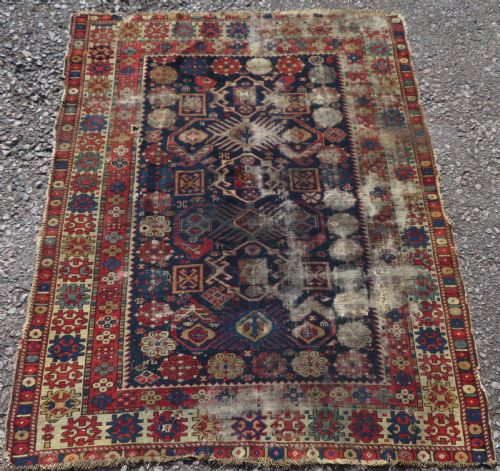
When you search for a distressed antique carpet, you are looking at weathered woven textiles carrying decades or centuries of pedestrian wear.
Distressed Carpet
A distressed antique carpet is a floor covering originating from Persian, Caucasian, and Anatolian weaving traditions, dating from the late nineteenth century into the early decades of the twentieth century.
The inventory on this page ranges from smaller tribal formats such as Baluch prayer rugs and Afshar village pieces to large room-size Oushak, Heriz, and Mahal carpets.
These textiles display genuine abrasion to the pile, soft patination, and exposed foundation threads resulting from actual age and historic use rather than artificial chemical washing.
Materials and structural methods
Weavers constructed these pieces using hand-spun wool and cotton foundations, occasionally incorporating camel hair for natural brown and golden tones within the designs.
Dyeing relied upon natural colour sources, yielding vegetable and mineral pigments that mellow gradually under light rather than fading harshly.
Knotting techniques vary by region, from symmetrical and asymmetrical knots on cotton warps in Persian workshops to heavy wool foundations in nomadic tribal weaving.
Several runners on this page carry charming structural asymmetries from rural looms where the weavers ran out of space or thread.
Distinctions in construction and design
Quality rests upon the integrity of the remaining wool pile, the balance of the natural dyes, and the structural soundness of the underlying foundation.
Finer village and city carpets maintain crisp geometry and tightly packed knots even where the surface has worn thin, while inferior pieces suffer from structural dry rot or heavy modern re-weaving.
The Distressed Carpet Glossary
- Pile
- The vertical tufts of wool that form the soft surface of the carpet. As this wears away through centuries of foot traffic, the underlying foundation becomes visible.
- Warp
- The vertical foundation threads stretched lengthwise on the loom. Weavers knot the pile around these parallel strands.
- Weft
- The horizontal threads passed across the warp alternating with rows of knots to bind the structure firmly together.
- Patina
- The surface sheen and softening of colour acquired by organic materials over long periods of use and exposure.
- Prayer rug
- A small format textile featuring a mihrab or arch design indicating the direction of Mecca during daily worship.
Distressed Carpet: Frequently Asked Questions
How do I care for a fragile antique carpet?
Keep these textiles away from direct sunlight to protect the natural dyes from further fading. Use a breathable underlay to prevent slipping and reduce friction between the worn wool foundation and the hard floor.
Vacuum gently with suction only, avoiding any rotating brush bars that can snag loose knots or pull at delicate, low-pile areas.
Are these rugs suitable for heavy foot traffic?
While many of these pieces survived generations of household use, heavily distressed antique carpets with compromised foundations require careful placement. They perform best in low-traffic areas or bedrooms where further physical strain is minimised.
If placed in a hallway or living room, ensure the entire rug rests on a quality rug pad to distribute weight evenly and absorb impact.
How can I tell a tribal rug from a city carpet?
Tribal and village pieces, such as those from Afshar, Khamseh, or Kazak origins, typically display geometric motifs, memory-driven asymmetry, and coarser wool. They were woven on portable vertical looms by nomadic or village weavers.
City carpets like Kirman, Isfahan, or large Oushak pieces feature balanced floral medallions, curved arabesques, and finer, more uniform knotting produced within established urban workshop systems.
What causes the distressed appearance on these carpets?
Natural wear over decades or centuries causes the wool pile to recede, exposing the cotton or wool warp and weft threads beneath. This gradual loss creates a faded, low-pile texture highly desired by collectors for its soft visual harmony.
Exposure to light and repeated gentle washing over generations further softens the vegetable dyes, contributing to the distinct, muted character of the piece.