
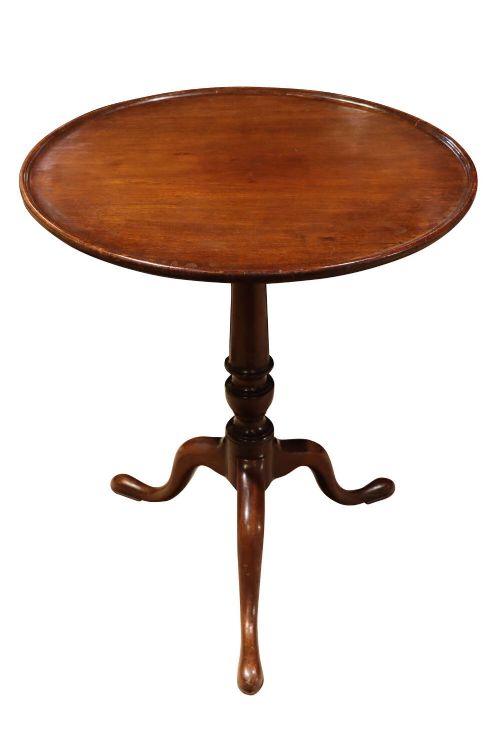


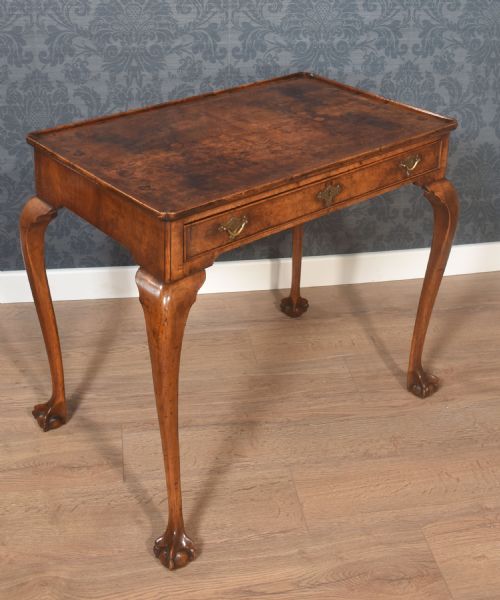


Dished Top Tea Table
A dished top tea table provides a stable surface with a raised edge designed to keep cups and saucers secure.
Dished Top Tea Table
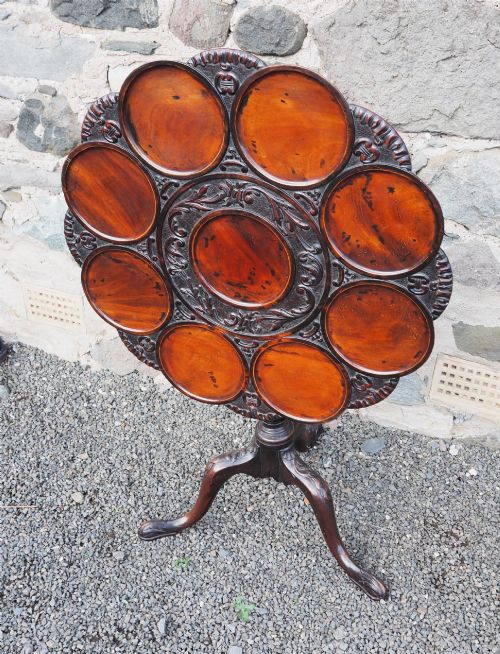
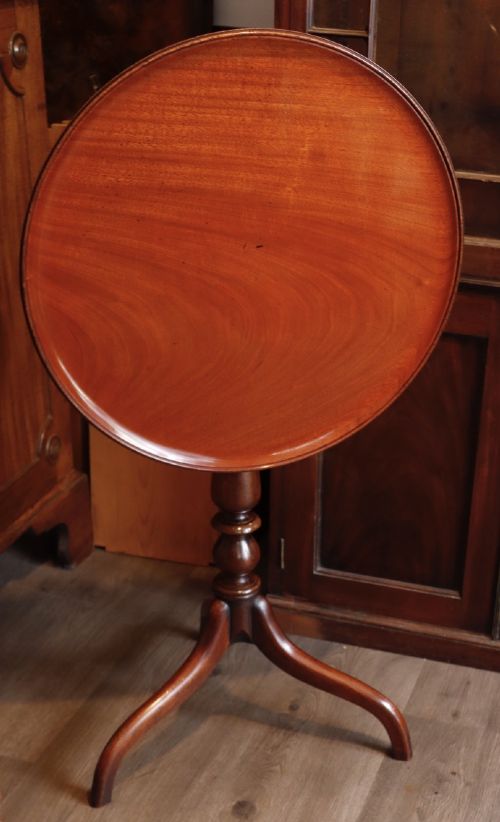
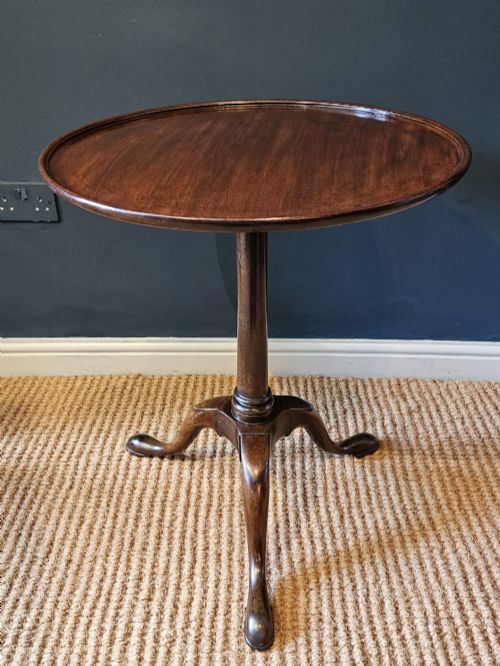
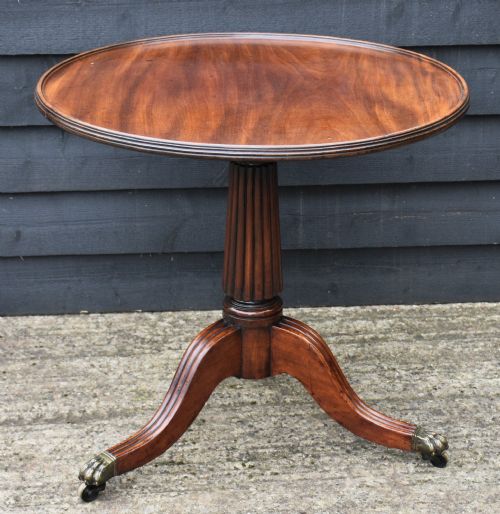
A dished top tea table is a functional antique surface designed for serving tea and beverages during the Georgian, Regency, and Victorian periods. These pieces typically feature a circular timber top with a carved or moulded raised rim, sitting upon a central pillar and tripod base.
The versions most commonly met on this page date from the eighteenth and nineteenth centuries, often constructed with tilt-top or snap-top mechanisms for easy storage. They appear in various forms including occasional tables, supper tables, and kettle stands alongside standard tea tables.
How they were made
Makers utilised solid timbers such as mahogany, red walnut, and elm to construct these tripod tables, turning the central pillars on a lathe. Tops were frequently shaped from single boards or joined sections, with the distinctive raised edge carved directly from the solid wood rather than applied as a separate moulding.
Sophisticated versions incorporate bird-cage mechanisms allowing the top to both tilt and revolve, or utilise boxwood and wood inlay for decorative contrast. Joinery relies on traditional dovetails, tenons, and finely fitted rule joints or pivoting block catches.
Early tea drinkers required raised edges because porcelain was immensely valuable and clumsy guests were entirely unforgiven.
What varies in quality
The quality of a dished top tea table rests upon the crispness of the timber carving and the architectural proportions of the tripod base. Superior examples display carefully selected grain patterns, such as figured walnut or burr wood, matched symmetrically across the circular top.
Subtleties in the turning of the pedestal column and the sculptural flow of the cabriole legs distinguish finer regional work, such as Irish Georgian pieces, from standard provincial production. The integrity of the tilt-top mechanism and the snugness of the revolving catch also separate master workshops from simpler joinery.
The Dished Top Tea Table Glossary
- Dished top
- A table surface featuring a concave depression carved into the solid timber or a raised rim turned along the outer edge. This design prevents rolling items from sliding off the surface during use.
- Snap top
- A pivoting table top secured to the central pedestal by a small catch or spring mechanism. It allows the surface to lock horizontally for use or tilt vertically against the pillar when not needed.
- Bird cage
- A wooden framework situated beneath the table top that enables the surface to both rotate horizontally and tilt vertically. This mechanism uses two parallel plates connected by four small vertical spindles.
- Tripod base
- A supporting pillar anchored by three radiating legs, commonly terminating in pad, claw and ball, or spade feet. It provides steady contact on uneven historical flooring without rocking.
- Tilt top
- A table construction where the surface pivots on hinges or pins to stand upright against the central column. This functional feature saved floor space in smaller eighteenth-century parlours.
Dished Top Tea Table: Frequently Asked Questions
What is a dished top tea table used for?
These tables served primarily for the formal pouring and consumption of tea in domestic parlours and drawing rooms during the Georgian and Regency eras. The raised rim protected porcelain teaware from sliding off the edge.
Over time, they adapted for general entertaining, serving as occasional tables, supper tables, or small display surfaces for silver and porcelain.
How do I identify a Georgian tea table?
Georgian examples are typically constructed from dense mahogany or red walnut, exhibiting hand-turned pedestals and tripod bases with pad or cabriole feet. Many incorporate snap-top or bird-cage mechanisms dating from the eighteenth century.
Construction details such as hand-cut tenons, patinated timber surfaces, and traditional cabinet-making marks help distinguish authentic period pieces from later nineteenth-century revivals.
What does a bird cage mechanism do?
The bird cage is a small wooden assembly fitted beneath the table top that allows the surface to both rotate in a full circle and tilt vertically. This ingenious framing gives the user greater flexibility when positioning the table in a room.
Tables featuring this mechanism often indicate higher-grade cabinet making from the eighteenth century, as the construction demands precise joinery to function smoothly.
Are these tables suitable for modern living?
The compact footprint and versatile tripod design make these tables practical for placement beside chairs or sofas in contemporary rooms. Their tilt-top functionality also allows them to be stored flat against a wall as decorative wood panels.
Living with antique timber requires standard care, such as avoiding direct heat sources and using coasters to protect the polished surface from moisture.
What is the difference between an occasional table and a tea table?
While both forms overlap in size and function, tea tables were specifically proportioned to hold tea services and often feature the characteristic dished top or gallery edge. Occasional tables served broader domestic duties without necessarily including a raised rim.
In historical listings, the terminology often reflects the general form and base configuration rather than a strict functional distinction.