
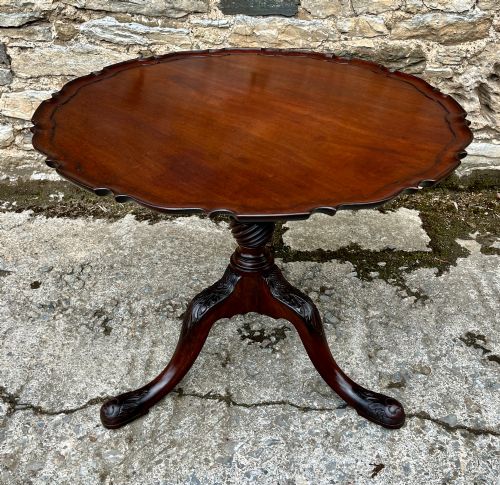


Chippendale Supper Table
A chippendale supper table is a sturdy timber pedestal piece built for evening dining and social gatherings, offering rich mahogany surfaces and pivoting mechanisms.
Chippendale Supper Table
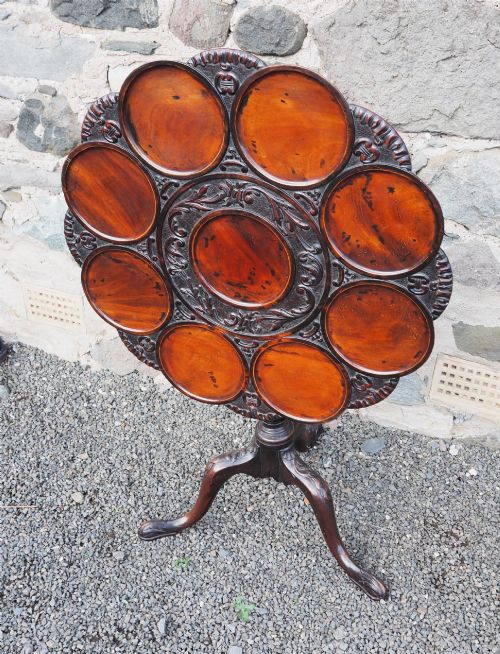
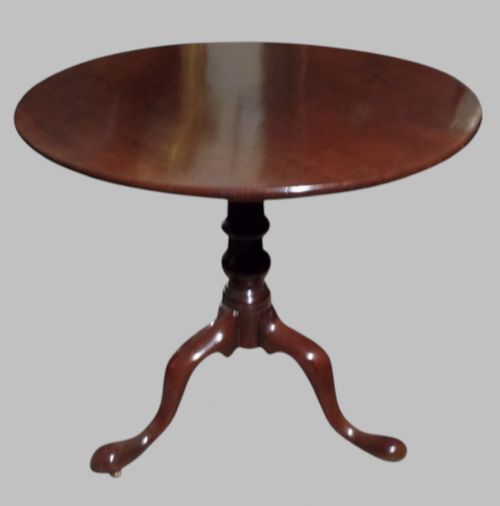
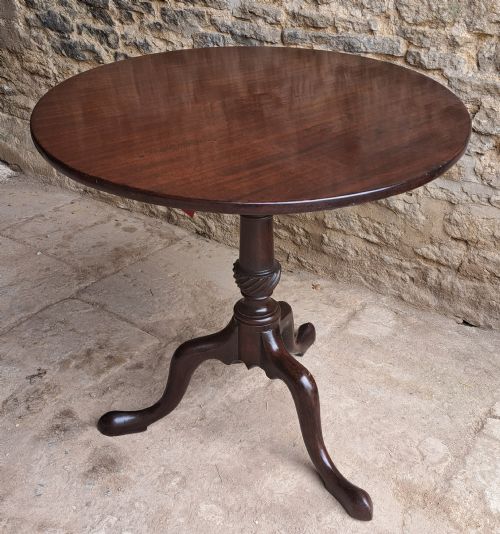
When you search for a chippendale supper table, you encounter circular wooden surfaces designed for domestic interiors during the Georgian and 18th Century eras. The version you are most likely to meet on this page combines a timber top with a pivoting mechanism supported by a central pillar and three legs.
These items span periods from the mid 18th century up to later revivals around 1900. Makers constructed them primarily as occasional, side, or tilt-top tables suited for tea, wine, or supper.
What varies in quality
The choice of timber grain dictates the visual depth of the surface, with dense Cuban mahogany displaying superior figures compared to plain secondary woods. Construction methods such as single-piece timber tops and integrated birdcage movements distinguish finer examples from standard production.
Original patination and surface age contribute to the character of early pieces. Tables retaining their authentic structural hardware and undisturbed timber finishes represent the upper tier of the range.
Listings feature pieces spanning the Georgian period, 18th Century, and 1900, constructed from mahogany, Cuban mahogany, walnut, brass, iron, wire mesh, and glass.
John Bivins
The Chippendale Supper Table Glossary
- Tilt-top table
- A table with a hinged top that pivots to a vertical position for storage. This mechanism allowed the furniture to stand flat against a wall when not in use during the evening.
- Pie crust edge
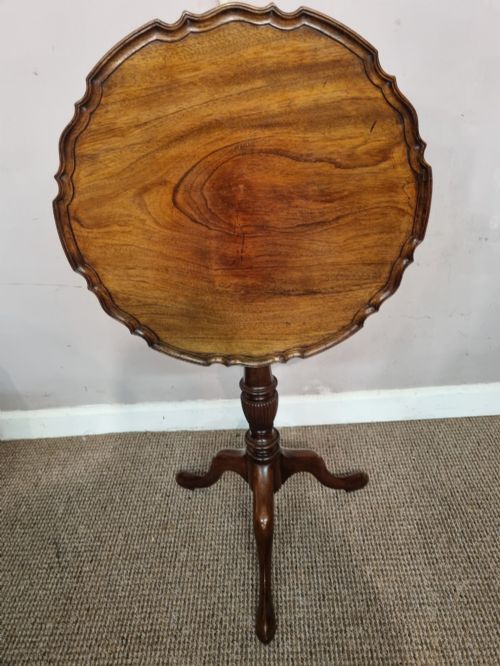
- A raised, carved moulding around the circumference of a circular table top. The decorative scalloped profile resembles the crust of a traditional pastry pie.
- Birdcage action
- A rotating wooden frame situated beneath the table top that permits the surface to both tilt and turn. It connects the central column to the top via a series of small spindles.
- Tripod table
- A freestanding table supported by a central pillar resting on three legs. The base design provides stability on uneven floorboards.
- Snap top
- An alternative term for a tilt-top table utilising a spring catch to secure the horizontal surface in place. It prevents the top from pivoting accidentally during use.
Chippendale Supper Table: Frequently Asked Questions
What is a chippendale supper table used for?
These tables served primarily for evening meals, tea, or wine in Georgian reception rooms. Their pivoting tops allowed domestic staff to store them compactly against room perimeters.
Today they function as central display surfaces or occasional tables in traditional and contemporary living spaces.
How do I identify an 18th century table?
Examine the timber species, construction methods, and hardware integration beneath the surface. Eighteenth-century pieces frequently employ dense Cuban mahogany and hand-carved birdcage actions.
Later revival pieces from around 1900 exhibit different tool marks and secondary woods that reveal their true date of manufacture.
What is a birdcage mechanism?
A birdcage is a rotating wooden assembly mounted between the central pillar and the table top. It incorporates small vertical spindles that allow the surface to spin horizontally.
This functional component also houses the hinge that lets the entire top tilt vertically.
Are all these tables tilt top?
The majority of pieces listed under this search feature tipping or snap top actions designed for space-saving storage. Some variations include drop-leaf configurations or fixed occasional surfaces.
Pivot mechanisms remain a defining characteristic across the primary selection of these tables.