

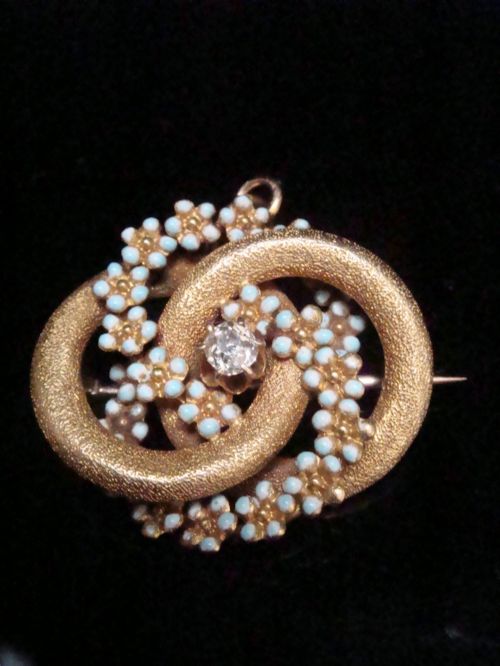
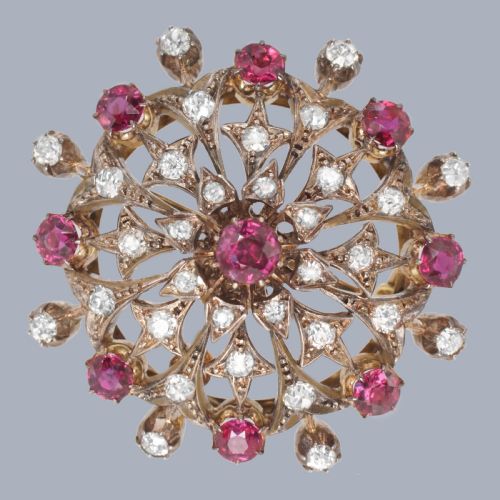


Diamond Floral Brooch
A diamond floral brooch combines precious gems with naturalistic petal and leaf motifs, offering enduring appeal for collectors of fine period jewellery.
Diamond Floral Brooch
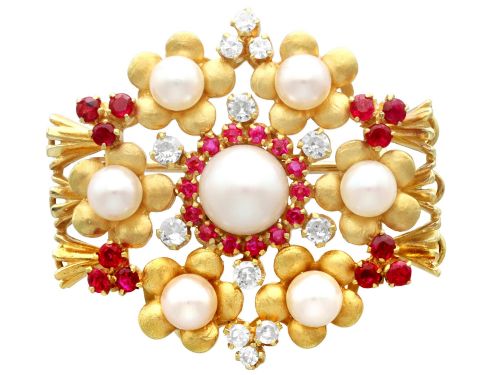
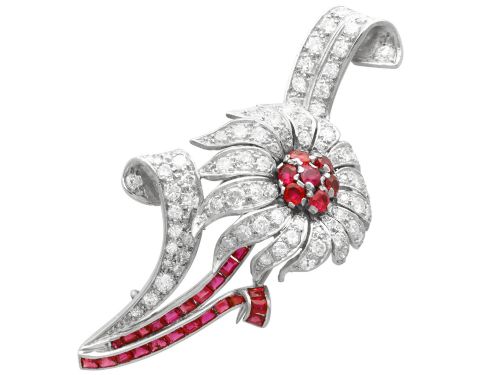
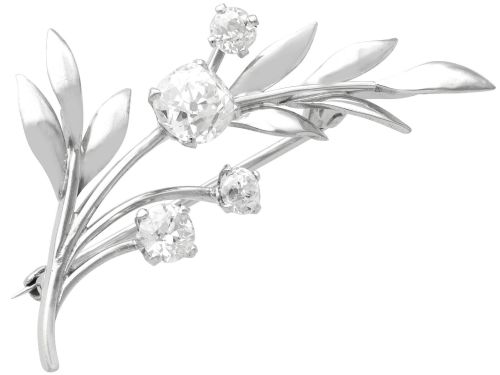
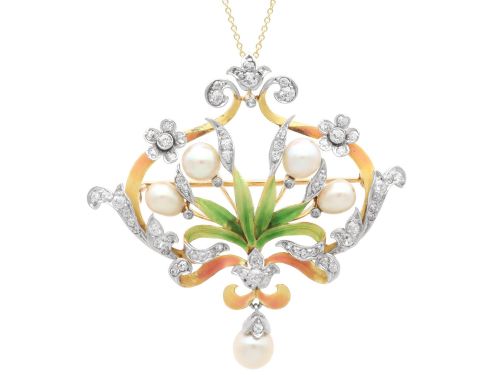
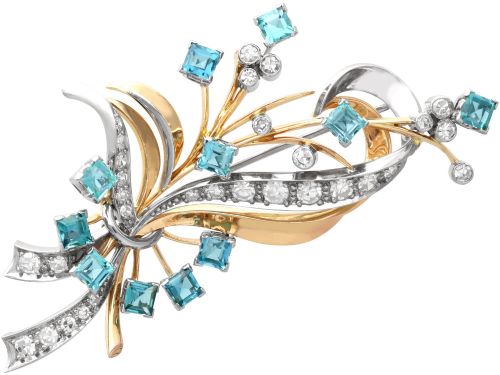
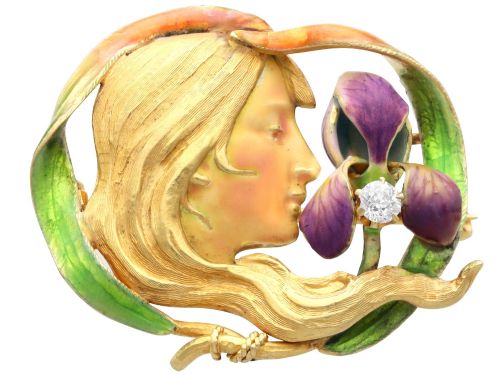
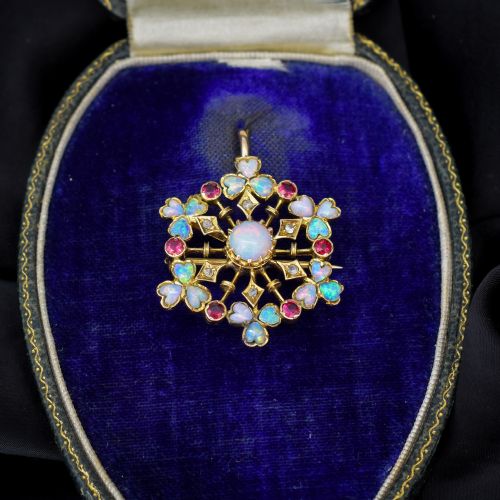
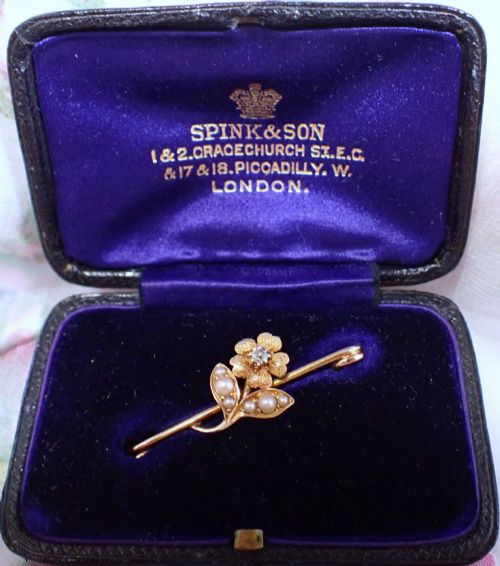
A diamond floral brooch captures botanical forms in precious metals and stones, ranging from single flower heads to elaborate leafy sprays and convertible pendant pieces. These items emerge from various decades spanning the nineteenth and twentieth centuries, reflecting changing aesthetic preferences across different eras.
Victorian and late nineteenth-century examples often present naturalistic blossoms set in gold and silver combinations. Later twentieth-century versions from the Art Deco, Retro and mid-century periods utilise platinum and white gold to create structured sprays and geometric floral clusters.
Materials and construction methods
Goldsmiths and lapidaries utilised a combination of yellow gold, white gold, platinum and silver to mount diamonds alongside coloured stones such as rubies, sapphires and emeralds. Early pieces frequently paired silver-topped gold settings to enhance the brilliance of old-cut diamonds against darker metal bases.
Craftsmen employed techniques including delicate wirework, claw settings and closed-back foils in earlier periods to secure gemstones within petal and stem configurations. Convertible designs often incorporated hidden loops or detachable bails, allowing a single jewel to function as both a brooch and a pendant.
Forget-me-not motifs in Victorian brooches allowed wearers to send whispered botanical messages across crowded drawing rooms without speaking a single word.
Distinguishing quality in floral brooches
The standard of execution in a diamond floral brooch rests on the naturalism of the carving and the articulation of leaves and petals. Superior pieces show thoughtful stone selection where individual diamond cuts complement the curving contours of botanical forms rather than overpowering the design.
Fine construction is evident in the reverse of the piece, where secure pin mechanisms and clean metalwork demonstrate meticulous workshop practice. Balance, weight distribution and the secure integration of secondary gems like pearls or rubies further separate exceptional examples from standard production.
Gubelin
The Diamond Floral Brooch Glossary
- Old-cut diamond
- A hand-faceted diamond shape typical of earlier periods, featuring a smaller table and higher crown than modern brilliant cuts. These stones display a distinctive soft luminescence under candlelight.
- Convertible
- A piece of jewellery designed to transform between different formats, such as shifting from a brooch to a pendant necklace. This versatility was highly valued in antique and vintage design.
- Plique-a-jour
- An enamelling technique where enamel is applied in cells without a backing, resembling miniature stained glass. It lets light pass through translucent coloured areas within floral or heart-shaped motifs.
- Bar brooch
- A narrow horizontal pin featuring central ornamentation such as a diamond flower cluster. This form was especially popular during the late nineteenth and early twentieth centuries.
- Spray
- A naturalistic arrangement depicting cut plant stems, leaves and blossoms clustered together. These designs often utilise graduated diamond weights to simulate three-dimensional depth.
Diamond Floral Brooch: Frequently Asked Questions
How do I wear a brooch safely?
Secure the pin through tightly woven fabrics or utilise a supportive backing plate to distribute the weight of heavier gemstone pieces. Placing the brooch near the collarbone or lapel ensures the stem remains stable throughout the day.
For convertible items with pendant loops, check that any chains or bails are securely fastened before wearing the piece as a necklace.
How do I date a floral brooch?
Dating relies on stylistic clues, metal choices and gemstone cutting styles evident in the construction. Victorian pieces often combine yellow gold and silver with old-cut diamonds, whereas mid-century examples frequently utilise platinum and white gold.
Specific design movements such as Art Nouveau or Art Deco also provide clear chronological markers for when a piece was manufactured.
How should I clean my brooch?
Gently clean precious metal and diamond surfaces using warm soapy water and a soft brush to remove everyday dust. Avoid submerging pearls or fragile organic gems in liquids, as moisture can damage their lustre.
Professional inspection helps ensure that older prong settings and delicate gemstone mountings remain secure.