


1930s Diamond Clips
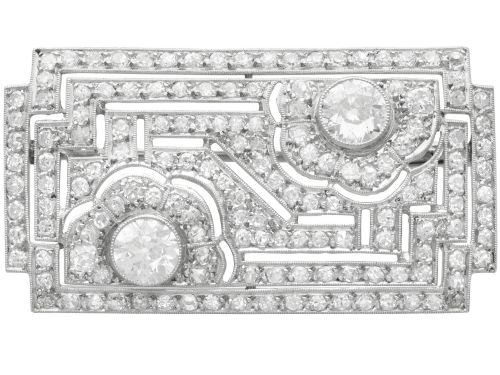
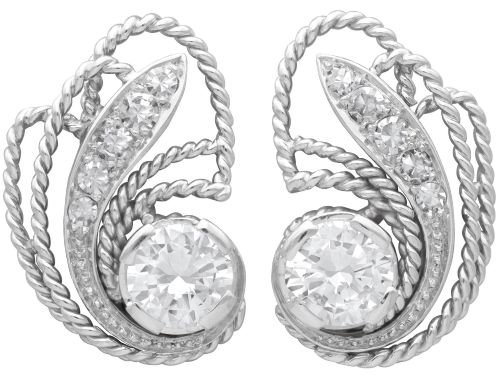
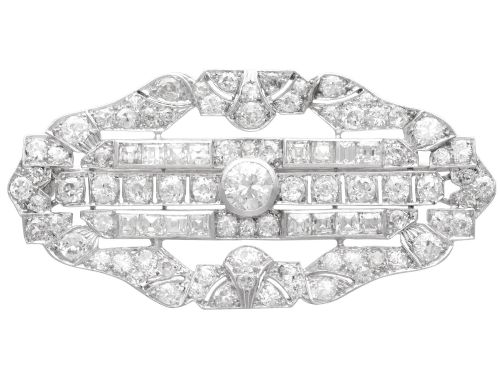
These 1930s diamond clips deliver the geometric elegance of Art Deco design with the versatility of detachable dress ornaments.
1930s Diamond Clips
When you search for 1930s diamond clips, you encounter sophisticated platinum and gold pieces designed to fasten onto lapels, dress straps, or convert into earrings. These items embody the geometric precision and clean lines characteristic of the Art Deco period, offering collectors a wearable piece of history.
How they were made
Master jewellers of the period utilised durable platinum and 18k white or yellow gold to construct secure settings for multiple small stones. Metalwork was kept crisp and architectural, often incorporating pierced or milled edges that enhanced the luminosity of the metal alongside the gems.
Diamonds were predominantly old cut, requiring meticulous hand-setting into channel or pave arrangements to create continuous ribbons of sparkle. Coloured gemstones like sapphires and zircons were integrated to provide sharp tonal contrast against the sea of diamonds.
Listings feature platinum and 18k white gold predominantly, centred firmly on the Art Deco aesthetic of the 1930s.
What varies in quality
The distinction between average and exceptional pieces rests upon the complexity of the metal fabrication and the uniformity of the stone selection. Superior examples demonstrate fluid transformation mechanisms, such as brooches that detach cleanly into symmetrical pairs of dress clips or earrings.
Another measure of quality involves the calibre of the supporting gemstones and the precision of the platinum work. Pieces incorporating high-carat central stones alongside well-matched smaller diamonds command greater attention from discerning collectors.
Paillette
The 1930s Diamond Clips Glossary
- Art Deco
- A design style spanning the 1920s and 1930s characterised by symmetry, geometric motifs, and stylised patterns. It influences the sharp angles and architectural mounts seen in fine jewellery of the era.
- Old cut
- A traditional diamond cutting style predating modern brilliant cuts, featuring a smaller table, higher crown, and open culet. These stones catch candlelight and ambient room light with a distinctive, softer glow.
- Clip-on
- A fastening mechanism that secures an earring to an unpierced earlobe via a hinged tension clip. This style gained immense popularity during the period for heavier dress earrings.
- Double clip brooch
- A dual-purpose jewel comprising two matching clips joined together by a shared brooch frame. Wearers could detach the components to wear separately on lapels or necklines.
- Platinum
- A dense, strong white metal prized for its durability and secure grip on gemstones. It allows for delicate prongs and fine millegrain work without risking structural failure.
1930s Diamond Clips: Frequently Asked Questions
How do double clip brooches convert?
These versatile pieces feature a detachable frame that holds two independent dress clips securely in place. By sliding or unclasping the mechanism, the single brooch separates into a matching pair for the lapel.
Collectors can also attach these individual components to earring findings or dress straps depending on the specific design configuration.
Are these clips suitable for daily wear?
While platinum and gold offer robust longevity, the delicate mechanism of antique clips requires thoughtful handling. They were originally created for evening wear and formal attire.
Owners often reserve them for special occasions to protect the fine stones and historical hinges from accidental impact.
How do I distinguish 1930s pieces from later reproductions?
Examine the reverse of the metalwork for period-appropriate construction techniques, such as hand-cut piercing and traditional pin stems. The presence of old cut diamonds rather than modern round brilliants is a strong indicator of age.
Hallmarks and platinum purity tests provide further physical evidence confirming the production era.
What is the difference between white gold and platinum here?
Platinum is a naturally white, dense metal that was favoured during the era for its strength in holding intricate diamond settings. White gold is an alloy mixed with other metals to achieve a similar pale tone.
Both materials appear across the listings, though platinum remains the predominant choice for high-end Art Deco mountings.