
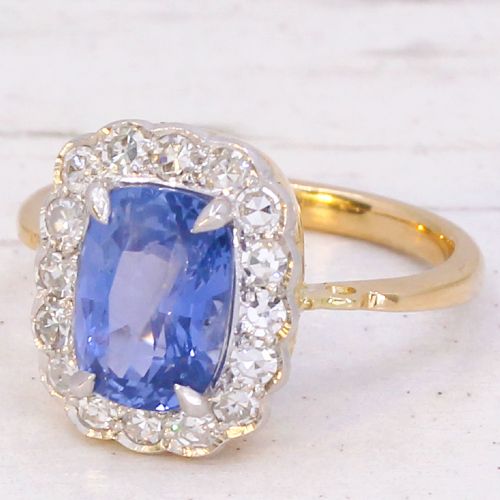
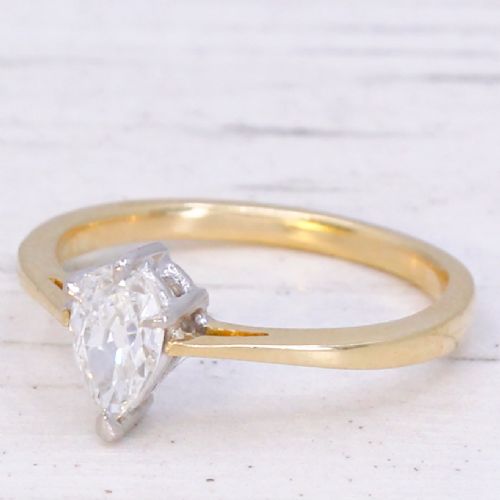
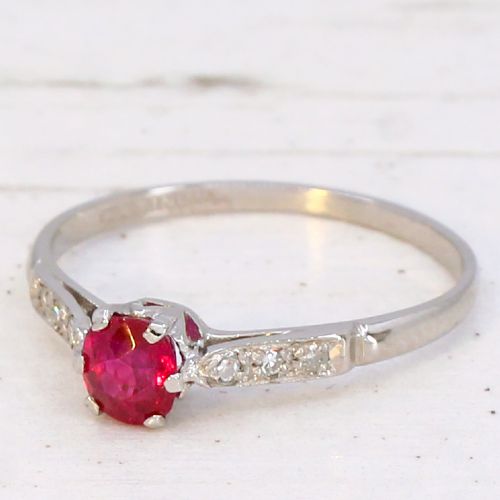

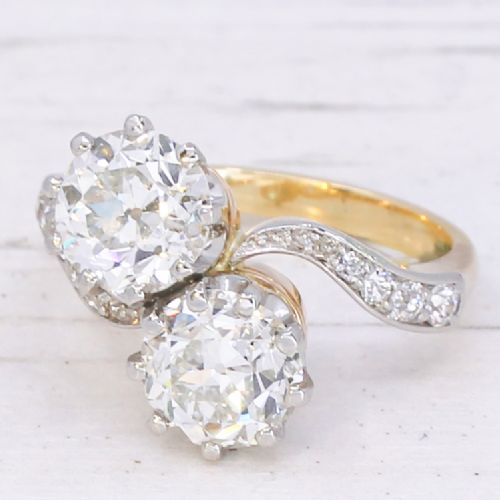


Circa 1935 Jewellery
When you handle circa 1935 jewellery, you hold the refined geometry of late Art Deco design paired with enduring precious metals and carefully cut stones.
Circa 1935 Jewellery
Circa 1935 jewellery embodies the transitional phase of the Art Deco era, balancing sharp geometric layouts with softer flowing lines. You will frequently encounter rings, earrings, and brooches originating from this period.
The selections on this page heavily feature diamond and platinum creations alongside vibrant coloured gemstones like sapphires, rubies, and emeralds set in yellow and white gold.
Materials and Construction
Platinum serves as the primary metal for many intricate cluster rings and necklaces, chosen for its strength in holding closely set stones. Yellow gold and white gold provide alternative warmth and contrast in specific ring and brooch settings.
Even a bracelet from this era managed to smuggle pearls, opals, sapphires, and diamonds onto one wrist.
Assessing Quality and Execution
The standard of circa 1935 jewellery rests upon the natural origin and clarity of the central gemstones, particularly unheated rubies and certified sapphires. Superior examples display precise matching among smaller accent diamonds.
Metalwork quality shows in the delicacy and firmness of the settings, where platinum claws and millgrain borders remain intact and secure around each stone without excess bulk.
The Circa 1935 Jewellery Glossary
- Art Deco
- A design style characterised by sleek geometric shapes, streamlined forms, and bold ornamentation. This aesthetic dominates the jewellery produced around the mid-1930s.
- Old European Cut
- A vintage diamond cut featuring a small table, heavy crown, and a large culet. It is commonly found in rings from this period.
- Toi et Moi
- French for you and me, describing a ring featuring two main gemstones seated side by side. This romantic layout was popular in the 1930s.
- Cluster Ring
- A ring design featuring a central gemstone surrounded by a border of smaller stones. Diamonds frequently encircle sapphires or emeralds in these pieces.
Circa 1935 Jewellery: Frequently Asked Questions
What defines circa 1935 jewellery style?
These pieces represent the late Art Deco movement, combining structural geometry with sophisticated gemstone arrangements. They offer a distinct visual weight compared to earlier Edwardian work.
Platinum and yellow gold settings hold old cut diamonds alongside coloured stones like Burmese rubies and Ceylon sapphires.
How should I wear an antique ring?
Wear your ring with consideration for its delicate platinum claws and old cut stones during heavy manual tasks. Regular checks by a professional jeweller help maintain the security of the setting.
Pairing these rings with plain bands prevents unnecessary friction between adjacent metals on your hand.
Are these pieces authenticated for stone origin?
Many significant coloured gemstones from this era possess specific geographic origins such as Burma or Ceylon. These geographical indicators are often noted in detailed descriptions.
Natural unheated stones hold particular interest for collectors tracking the provenance of mid-century jewels.
What metal is most common in these items?
Platinum is heavily favoured across the necklaces, brooches, and rings on this page due to its durability. It allowed makers to create fine wirework and secure pavé surfaces.
Gold variations in fourteen and eighteen carat yellow or white are also regularly seen in cluster and dress rings.