




Geometric Diamond Earrings
Geometric diamond earrings bring together sharp lines and brilliant stones across periods from Victorian to Art Deco.
Geometric Diamond Earrings
Geometric diamond earrings comprise drops, studs, and jewellery sets built around clean angles and structural stone cuts. When you search for geometric diamond earrings, you encounter pieces spanning the Victorian, Edwardian, and Art Deco eras.
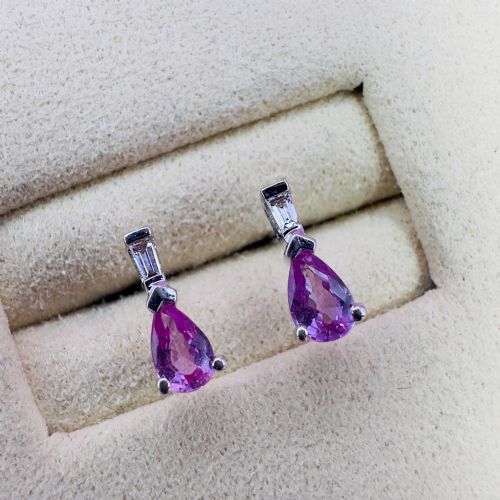
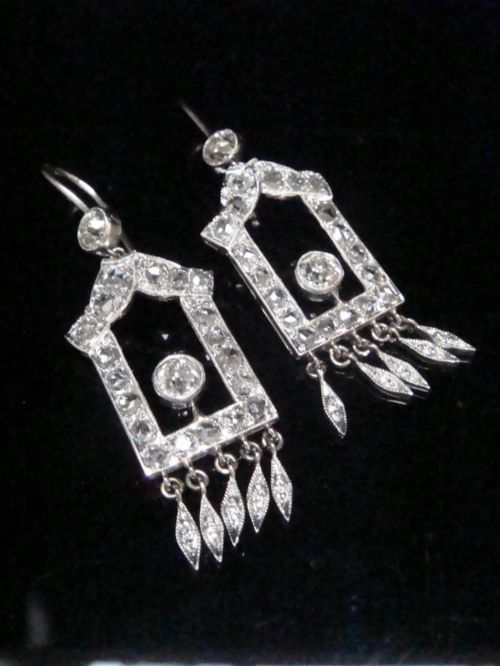
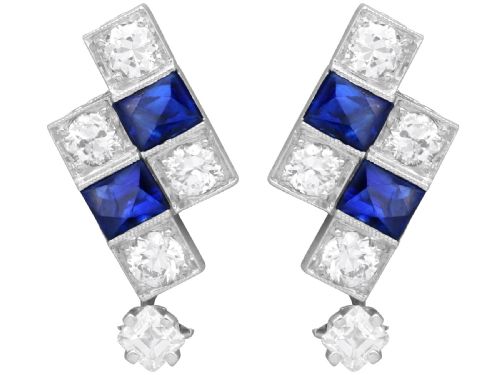
The Art Deco examples dominate the selection, featuring white gold and platinum settings paired with trapezoid, pear, and old cut diamonds. Alongside these, earlier Victorian and Edwardian iterations introduce coloured gems such as sapphires, emeralds, and moonstones.
Drop earrings and articulated designs appear frequently, allowing stones to catch the light during movement. Each pair relies on precise linear arrangements rather than soft curves to define its silhouette.
Materials and construction
Platinum and 18ct white gold serve as the primary structural metals for Art Deco pairs, providing the strength needed for intricate stone settings. Yellow gold and silver feature in the earlier Victorian and Edwardian examples on the page.
Cut stones including trapezoid and pear diamonds are secured alongside emeralds, sapphires, and natural pearls. Articulated construction allows sections of the drops to move independently, requiring precise metalwork.
Certain night and day drop earrings let wearers unscrew half their sparkle before breakfast.
Assessing quality and craftsmanship
Quality rests in the precision of the metalwork and the uniformity of the stone cuts used to build the geometric pattern. Finer pairs demonstrate seamless integration between the platinum or white gold mounts and the faceted diamonds.
The depth of the design and the integration of secondary gems like emeralds or pink sapphires distinguish standard production from exceptional work. Articulated joints must function smoothly while maintaining the rigid symmetry demanded by the style.
The Geometric Diamond Earrings Glossary
- Trapezoid cut
- A four-sided step cut with non-parallel sides used to build angular motifs in Art Deco jewellery. This cut creates flat reflective planes that contrast with brilliant cut stones.
- Articulated drop
- A design featuring hinged sections that allow the lower part of the earring to swing freely. This construction requires careful mechanical linkage.
- Night and day earrings
- Versatile pieces designed with detachable lower drops to transition from daytime wear to evening display. They utilise secure screw or latch fastenings.
- Old cut diamond
- A hand-faceted diamond shape common in antique pieces before modern brilliant standards were established. These stones display smaller tables and larger culets.
- Rock crystal
- Colourless quartz used in Victorian pieces to mimic or complement diamond facets. It provides a clean, transparent geometric surface.
Geometric Diamond Earrings: Frequently Asked Questions
How do I clean antique earrings?
Clean your pieces gently using warm water, mild soap, and a soft brush to remove dust from behind the settings. Avoid harsh chemical dips, particularly when dealing with softer gems like moonstone, coral, or pearls.
Dry the metal and stones thoroughly with a lint-free cloth before storage. Periodic checks by a jeweller ensure the platinum or gold claws remain tight.
Can I wear drop earrings daily?
Drop earrings suit daily wear provided the fastenings remain secure and the stones are checked regularly. Articulated joints experience physical movement over time and benefit from gentle handling.
Store them individually in a lined box to prevent scratching against other items. Remove them before sleeping or engaging in strenuous physical activity.
What defines Art Deco jewellery?
Art Deco jewellery relies on strong geometric lines, symmetry, and high-contrast combinations of white metals and gemstones. Platinum and 18ct white gold predominate, often framing calibre-cut coloured stones.
The aesthetic rejects flowing Victorian curves in favour of industrial precision and architectural forms. This results in sharp silhouettes that catch the light from multiple angles.
How are periods told apart?
Victorian and Edwardian pieces frequently incorporate yellow gold, softer organic elements, and hand-cut stones in organic or delicate arrangements. Art Deco items introduce platinum, stark white gold, and rigid geometric configurations.
Examining the reverse of the setting often reveals construction techniques characteristic of specific decades. Metal choice and stone-cutting styles provide the clearest indicators of age.