



Diamond Cluster Pendant
When you select a diamond cluster pendant, you acquire a central gemstone encircled by smaller diamonds designed to catch the light.
Diamond Cluster Pendant
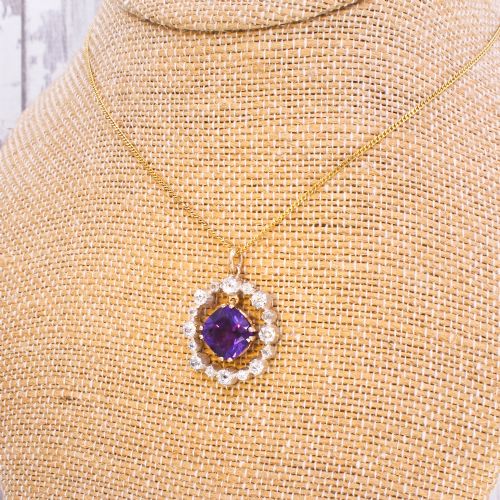
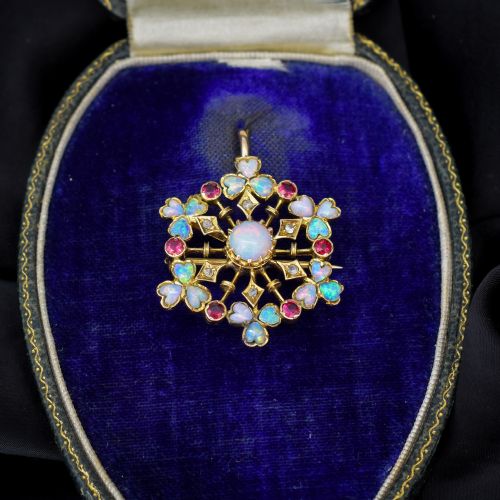
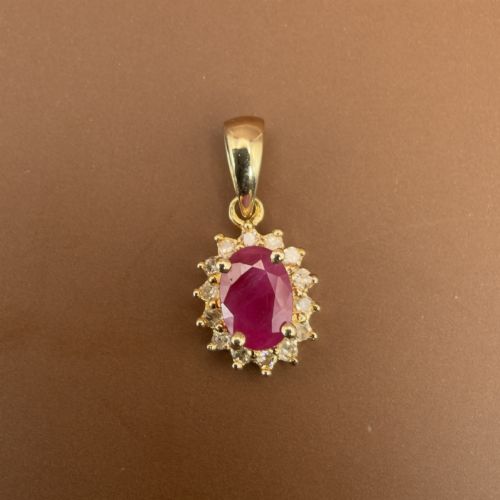
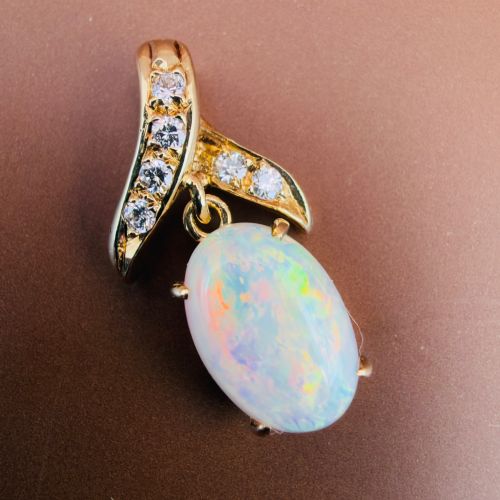
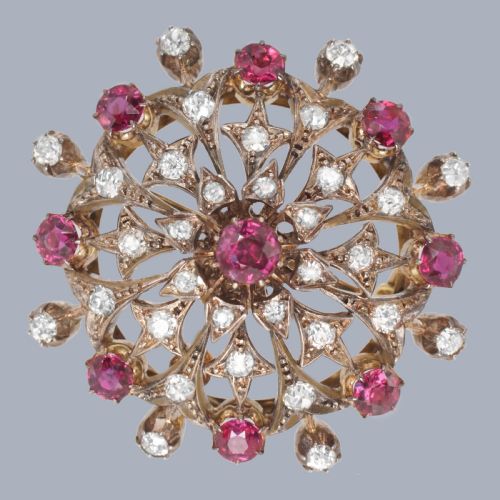
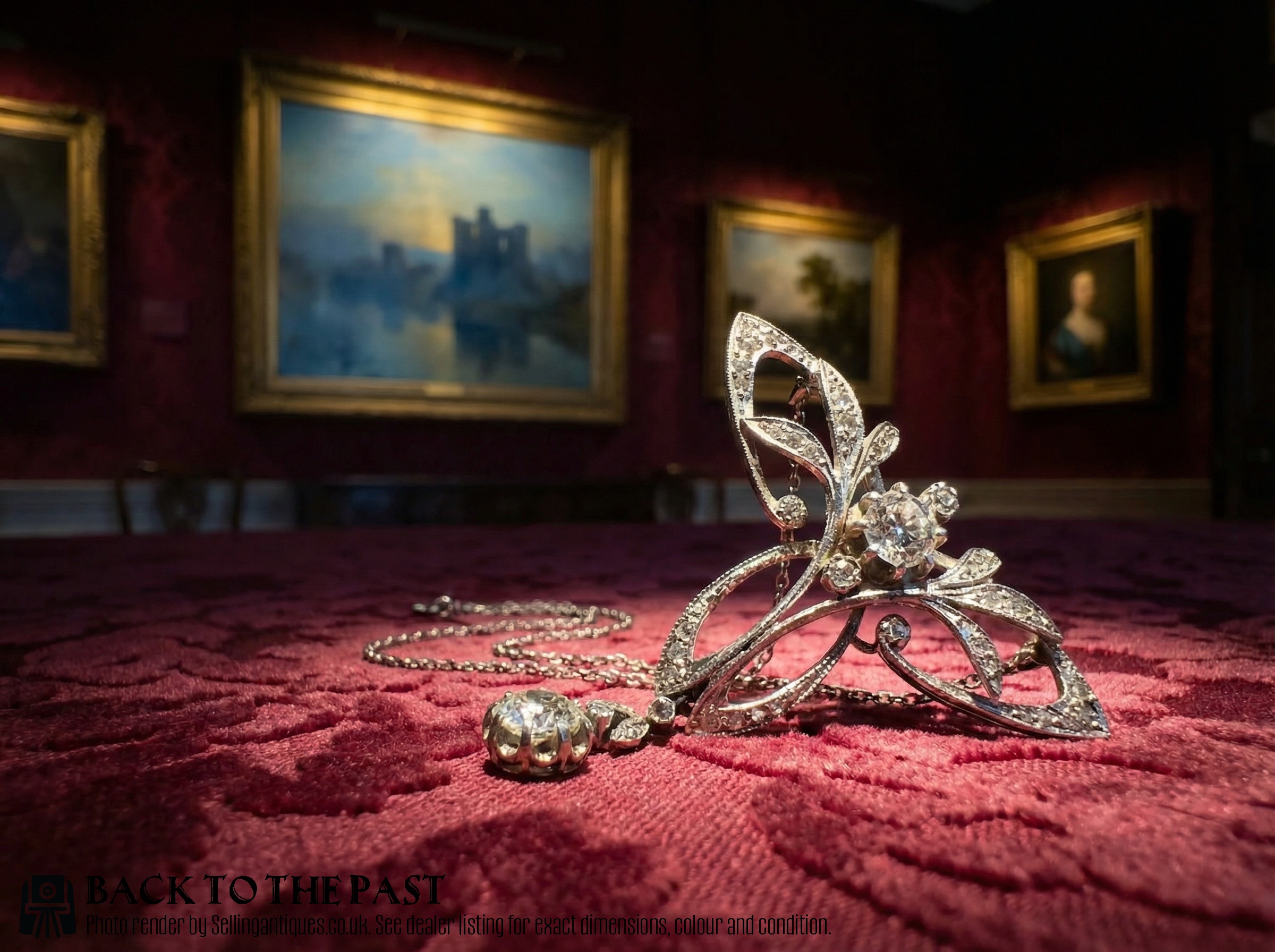
A diamond cluster pendant brings together a primary gem, such as sapphire, ruby, emerald or opal, surrounded by a border of diamonds to create a floral, starburst or geometric configuration. These pieces range from antique Victorian and Edwardian iterations to mid-century examples from the 1950s and 1960s.
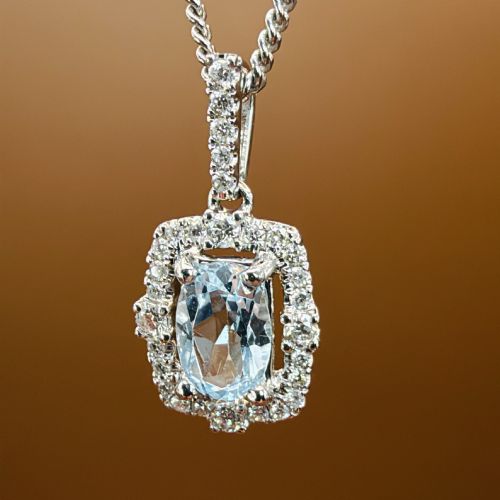
Many historical examples double as brooches, featuring a detachable or folding bail that allowed the owner to wear the cluster on a lapel or suspended from a chain. The most frequently encountered pieces on this page pair diamonds with coloured stones like sapphire, ruby or aquamarine set in gold, white gold or platinum.
Materials and Construction
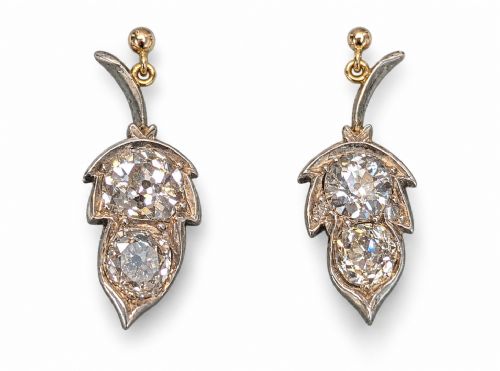
Goldsmiths utilised varied alloys including 9ct, 14ct and 18ct yellow and white gold, alongside silver and platinum, often combining silver-topped gold in earlier periods to enhance the brilliance of old cut diamonds. Stones were secured using claw, bezel or pave settings, placing small diamonds tightly together to frame the larger central gemstone.
Gemstones such as rubies, sapphires, emeralds, opals and amethysts were shaped into oval, pear, cabochon or cut facets before being assembled into floral clusters, daisy motifs or geometric Art Deco configurations.
Elephants join traditional flowers and stars in the menagerie of cluster pendant shapes.
Assessing Craftsmanship and Materials
Quality rests upon the proportion and matching of the stones, where uniform size and colour in the surrounding diamonds elevate the visual impact of the central gem. Finer examples display meticulous claw work and balanced symmetry in complex cluster arrangements like starbursts or flower heads.
The choice of precious metal influences the overall weight and durability, with platinum and higher carat golds providing a robust foundation for intricate gemstone clusters. Additionally, the presence of untreated natural gemstones or period-specific gem reports adds historical substance to the piece.
Hirsch and Oppenheimer
The Diamond Cluster Pendant Glossary
- Old Cut
- A hand-cut diamond shape typical of the Victorian and Edwardian eras, featuring a small table, high crown and open culet. These stones display a softer candlelit sparkle compared to modern brilliant cuts.
- Cluster
- An arrangement of multiple gemstones set closely together, usually featuring a dominant central stone encircled by a border of smaller diamonds. This layout maximises the optical presence of the jewellery.
- Rose Cut
- A vintage diamond or gemstone cut characterised by a flat base and a domed crown with triangular facets that culminate in a point. It imparts a subtle, translucent glow.
- Bail
- The ring or loop attached to the top of a pendant that allows a chain to pass through. Convertible pieces often incorporate a hinged bail that tucks away when worn as a brooch.
- Cabochon
- A gemstone shaped and polished with a smooth, convex surface rather than faceted edges. This style is frequently utilised for opals, turquoises and star sapphires.
Diamond Cluster Pendant: Frequently Asked Questions
How do I wear a convertible pendant brooch?
Many Victorian and Edwardian pieces feature a pin mechanism and a hidden loop at the back. You can thread a gold or platinum chain through the loop to wear the cluster as a necklace.
Alternatively, fold the loop down or remove the chain to secure the piece directly onto a jacket lapel or scarf as a brooch.
What is the difference between old cut and modern diamonds?
Old cut diamonds were shaped by hand during the eighteenth, nineteenth and early twentieth centuries. They possess smaller tables, deeper pavilions and larger facets designed to catch gaslight and candlelight.
Modern brilliant cut diamonds are cut with mathematical precision to maximise direct light return and modern electrical brilliance.
How do I care for antique gemstone jewellery?
Store each pendant separately in a fabric-lined box to prevent the diamonds from scratching softer surrounding gems like opals, pearls or emeralds. Avoid ultrasonic cleaners, particularly for treated stones or softer cabochons.
Clean the metal and diamonds gently with warm soapy water and a soft brush, then dry thoroughly with a lint-free cloth.
How can I tell the period of a cluster pendant?
Examine the metalwork, setting techniques and gemstone cuts to determine the era. Victorian and Edwardian pieces often utilise silver-topped gold with old cut diamonds and intricate floral or starburst motifs.
Mid-century items from the 1950s and 1960s frequently employ 9ct or 14ct white gold with cleaner geometric lines and standard claw settings.