
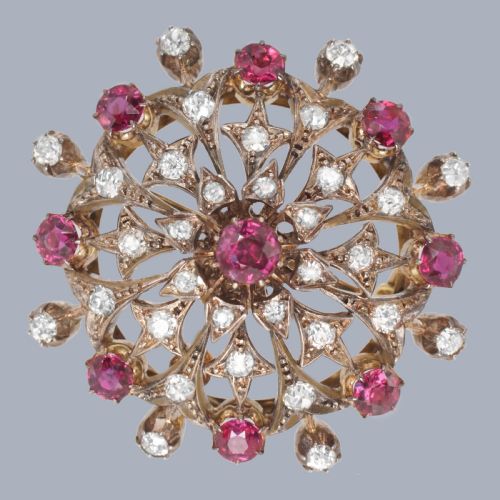


Openwork Diamond Pendant
An openwork diamond pendant brings together delicate open metalwork and bright stones, offering an intricate piece of historic jewellery to wear.
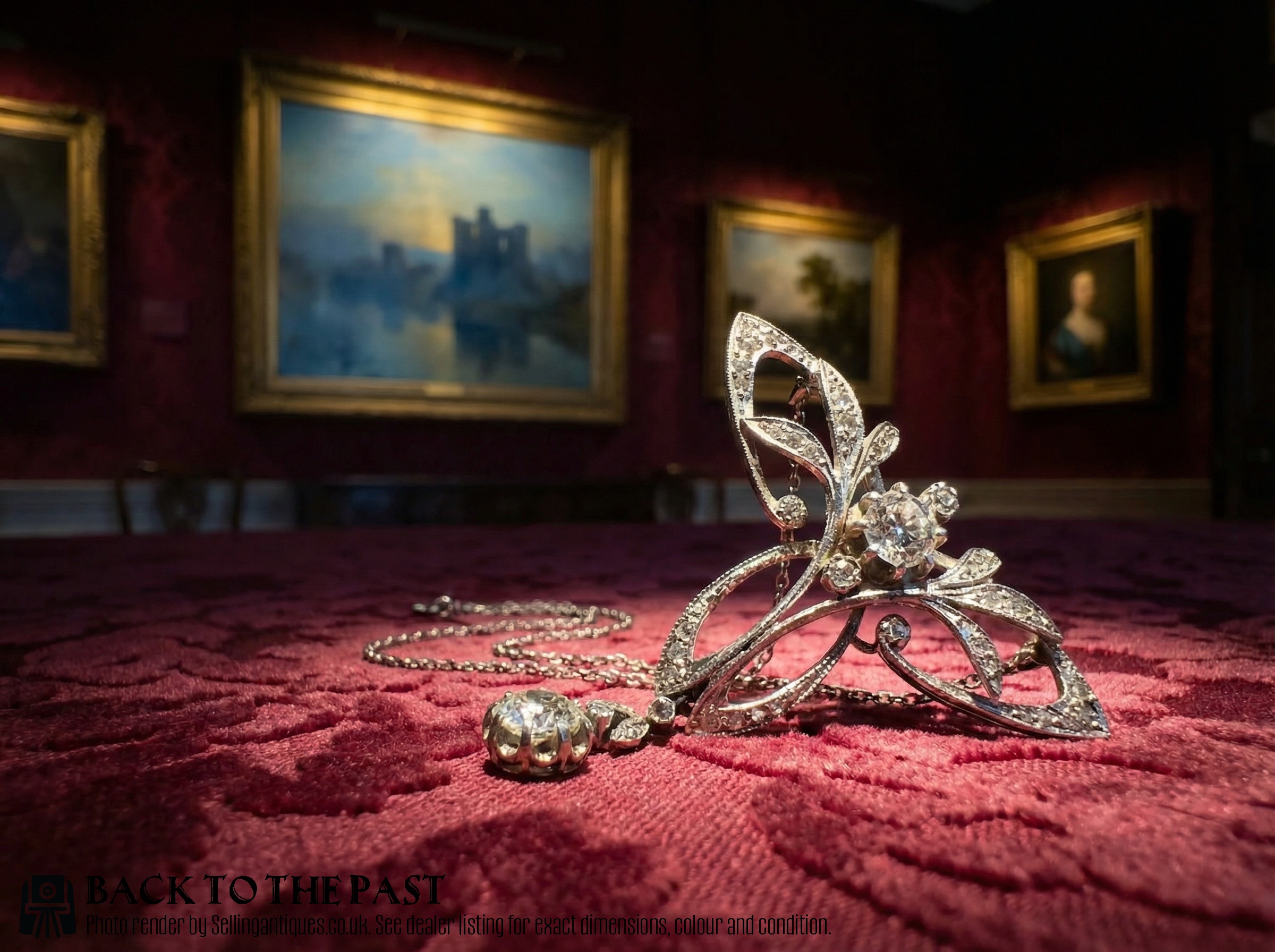
Openwork Diamond Pendant
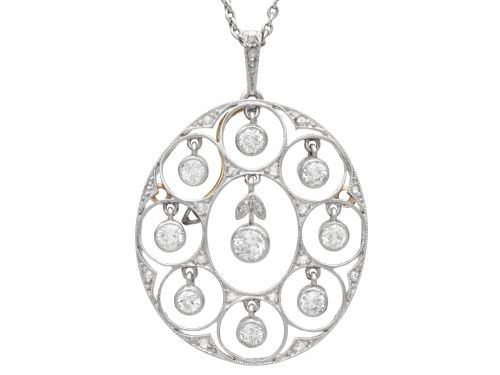
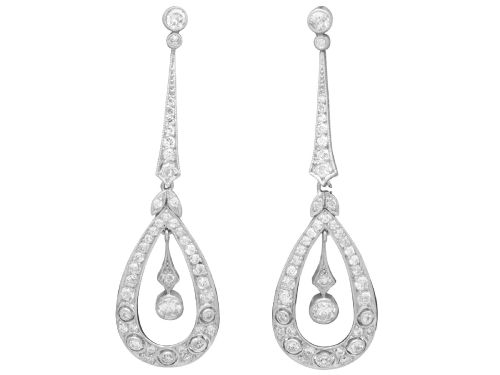
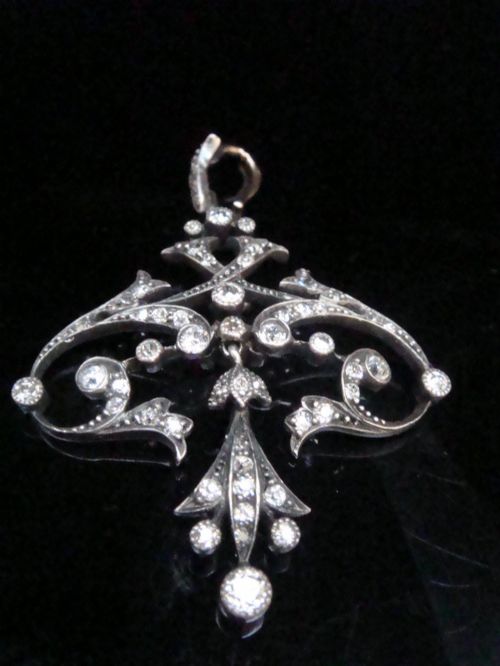
An openwork diamond pendant is a piece of jewellery designed to hang from a chain, characterised by pierced metal frames that create airy patterns around set diamonds. These items appear across several distinct historical eras, ranging from Victorian and Edwardian to Art Nouveau, Art Deco, and later twentieth-century designs.
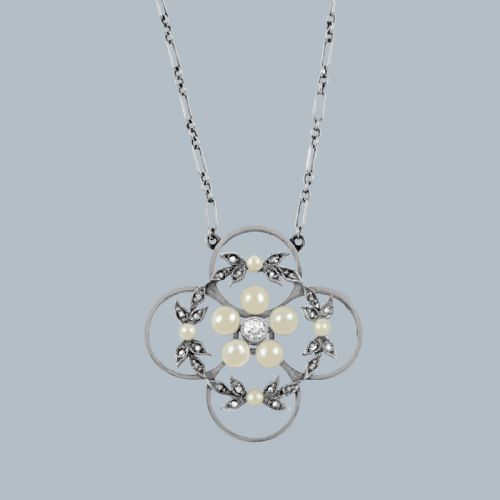
The inventory on this page demonstrates that many examples combine diamonds with other precious gems such as pearls, rubies, sapphires, peridots, and aquamarines. Certain items also function as brooches, offering versatile ways to wear the piece either pinned to fabric or suspended from a neck chain.
Edwardian and late nineteenth-century styles dominate the selection, often taking the form of lavalieres or convertible pendant brooches. Buyers will encounter varied configurations, from symmetrical geometric motifs to flowing organic curves characteristic of the turn of the twentieth century.
How they were made
Craftsmen built these pieces using combinations of silver, platinum, and various gold purities including 9ct, 14ct, 15ct, and 18ct variants. Platinum and silver were frequently layered over gold to provide a bright, durable white metal surface that enhanced the appearance of the set stones.
The openwork effect was achieved through meticulous piercing and piercing-saw techniques, cutting away sections of the metal sheet to form lacework patterns. Stones were then secured using traditional hand-cut settings, incorporating old cut diamonds alongside diverse coloured gemstones.
Listings feature items spanning from the 1880s Victorian era through Edwardian, Art Nouveau, and Art Deco periods up to the 1960s.
What varies in quality
The standard of an openwork diamond pendant rests on the finesse of the pierced metalwork and the precision of the stone setting. Finer examples display balanced proportions, delicate piercing that maintains structural integrity, and clean integration of secondary gems like pearls or sapphires.
Material composition also influences the piece, with combinations of platinum and high-carat gold or silver indicating high-grade workshop production. The overall harmony between the open metal design and the brilliance of the cut diamonds dictates the distinction of the work.
The Openwork Diamond Pendant Glossary
- Openwork
- Metalwork that has been pierced or cut through to create a pattern resembling lace or a grid. This technique lightens the visual weight of the piece and allows light to pass through the stones.
- Lavaliere
- A pendant featuring a dangling component suspended below the main body, popular during the Edwardian era. It typically hangs from a delicate chain around the neck.
- Old cut
- A style of diamond faceting used before modern brilliant cuts were standardised, featuring a smaller table, higher crown, and open culet. These stones exhibit a distinctive, softer candlelight sparkle.
- Convertible pendant brooch
- A piece fitted with both a bail for a chain and a pin mechanism on the reverse. This dual functionality allowed the wearer to display the item on clothing or around the neck.
Openwork Diamond Pendant: Frequently Asked Questions
How do I wear an openwork diamond pendant?
These pieces suspend from fine chains to sit against the collarbone, functioning as focal points for evening or daytime attire. Many historical examples also include pin fixtures, allowing them to transform into brooches.
Matching the metal colour of the chain to the pendant frame maintains a cohesive appearance. Secure clasps ensure the historic mount remains safe during regular wear.
What periods do these pendants come from?
The available selection spans the Victorian, Edwardian, Art Nouveau, Art Deco, and late twentieth-century periods. Each era brings distinct aesthetic choices, from organic curves to geometric symmetry.
Edwardian and late Victorian pieces frequently combine platinum-topped gold with delicate pierced filigree. Later twentieth-century items introduce bolder architectural forms and simpler mountings.
Can I attach these pendants to a different chain?
Most pendants feature a loop or bail at the top that accommodates standard necklace chains of appropriate thickness. Ensuring the chain metal matches the pendant prevents premature wear from metal friction.
For convertible items with integrated brooch pins, checking that the pin locks securely before hanging the piece from a chain is essential.
What gemstones appear alongside diamonds?
A variety of precious and semi-precious stones accompany the diamonds in these designs, including natural pearls, sapphires, rubies, peridots, aquamarines, and demantoid garnets. These additions provide contrasting colour against the white metal and diamond elements.
Such gem combinations help date the jewellery to specific decades, reflecting the prevailing tastes of late nineteenth and early twentieth-century makers.