
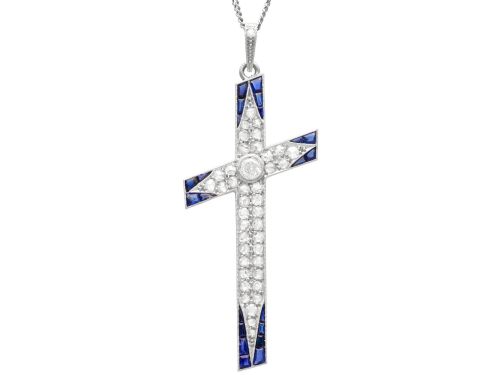
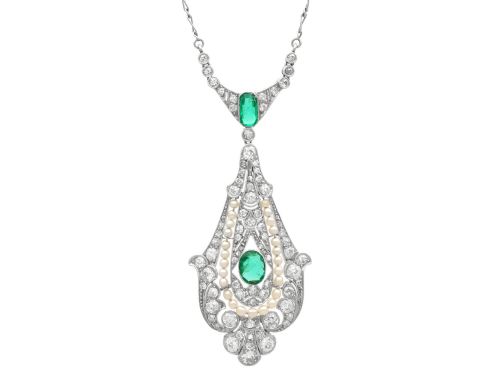
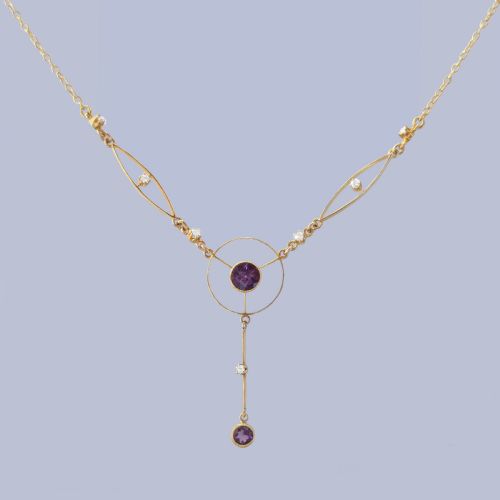


1910s Diamond Necklace
A 1910s diamond necklace offers delicate platinum or gold settings framing old cut stones, combining period grace with lasting elegance.
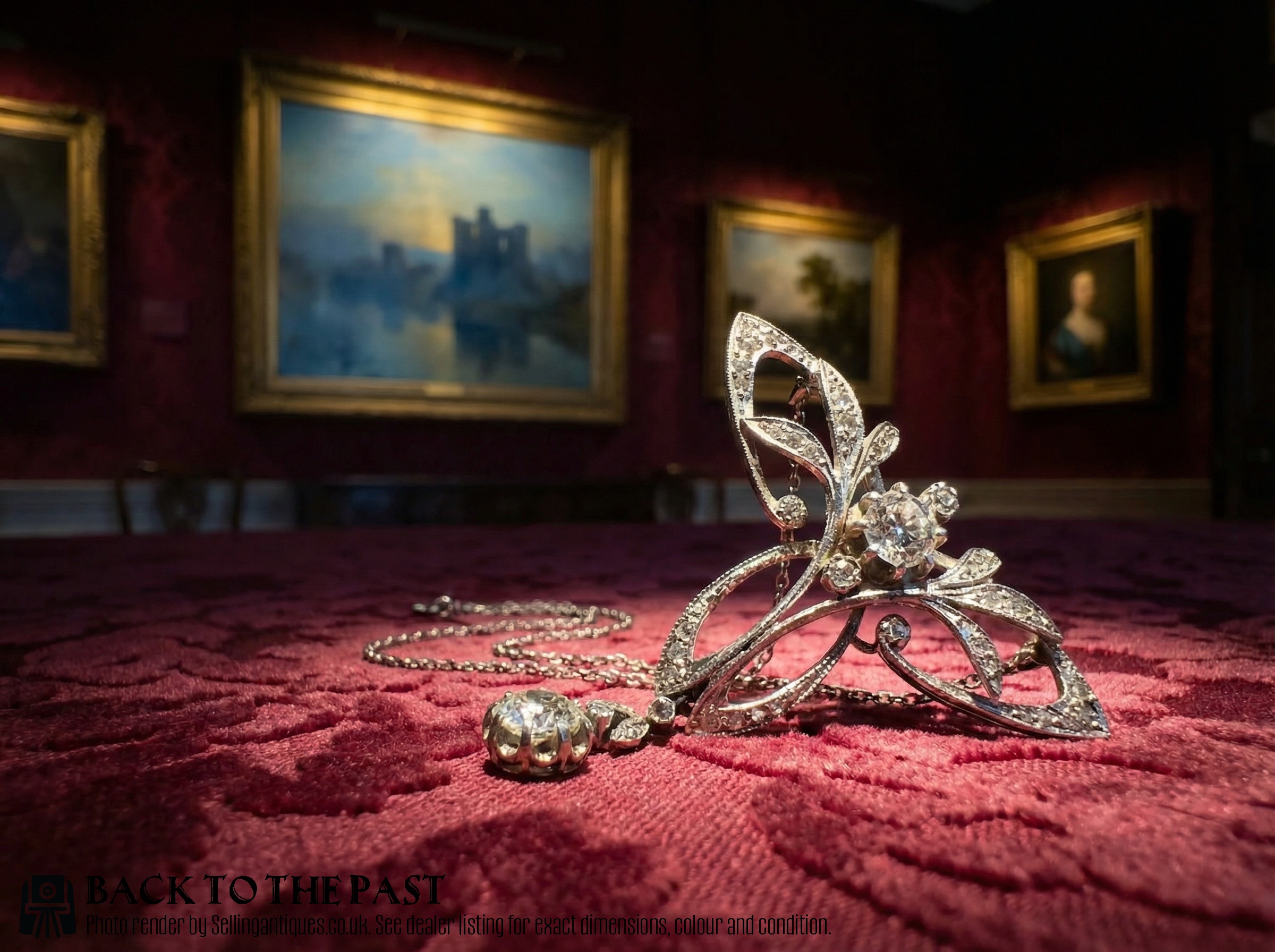
1910s Diamond Necklace
When searching for a 1910s diamond necklace, buyers encounter delicate pendants and lavalier necklaces originating from the Edwardian era and the Art Nouveau period.
The pieces on this page primarily take the form of drops and pendants, frequently combining diamonds with coloured gems such as aquamarine, amethyst, sapphire, and pearl.
Yellow gold, rose gold, and platinum serve as the primary metals, reflecting the transitional tastes of the 1910s from traditional gold work to intricate platinum settings.
Materials and construction methods
The construction relies heavily on platinum alongside yellow, rose, and 15ct gold to support the stones securely while maintaining a lightweight appearance.
Old cut diamonds provide the characteristic sparkle, often paired with seed pearls, amethysts, and sizeable aquamarines or sapphires set in intricate pendant designs.
Many Edwardian ladies pinned their pendants directly to their corsets before eventually hanging them from delicate platinum chains.
Factors that define quality
Quality rests in the finesse of the metalwork, particularly the delicacy of the platinum wirework and the secure claw or bezel settings holding the diamonds and central gemstones.
The integration of the secondary stones, such as natural pearls and large aquamarines, alongside the proportion of the old cut diamonds determines the overall refinement of the piece.
The 1910s Diamond Necklace Glossary
- Lavalier necklace
- A pendant necklace featuring a central stone or drop suspended below the main chain line. This style gained immense popularity during the Edwardian period.
- Old cut diamond
- A diamond cut by hand before modern machinery, characterised by a small table, high crown, and open culet. These stones glow softly under candlelight.
- Platinum
- A dense, durable white metal utilised extensively in the 1910s for fine jewellery. It allowed jewellers to create ultra-fine settings that resembled lace.
- Basaltic sapphire
- A sapphire originating from volcanic basalt deposits, typically displaying a deep and saturated blue hue. These stones contrast sharply with bright diamonds.
1910s Diamond Necklace: Frequently Asked Questions
How do I care for a platinum and gold pendant?
Clean these delicate items gently using warm soapy water and a soft brush, avoiding harsh chemical dips that might damage pearls or softer gems.
Store each piece separately in a fabric-lined box to prevent the old cut diamonds from scratching softer yellow gold or pearls.
Are these necklaces suitable for daily wear?
While platinum is robust, the intricate wirework and antique nature of 1910s pieces mean they require mindful handling during regular activities.
Reserving them for special occasions helps protect fragile pearl elements and delicate pendant drops from accidental impact.
What is the difference between Edwardian and Art Nouveau styles?
Edwardian jewellery leans towards light, airy platinum settings, garlands, and diamond-heavy motifs that mimic lace and ribbons.
Art Nouveau pieces embrace flowing natural lines, asymmetric curves, and coloured stones like amethyst and opal inspired by the natural world.
Can these pendants be worn as brooches?
Several listed items function as convertible pendant brooches, featuring integrated pin mechanisms alongside suspension loops on the reverse.
This dual functionality allows the wearer to pin the jewel to a lapel or suspend it from a chain according to preference.