



Desktop Swivel Mirror
These desktop swivel mirror examples bring working height and adjustable glass to any dressing surface, built from timber and brass.

Desktop Swivel Mirror
A desktop swivel mirror sits upon a base or frame, designed for adjustment by hand during daily dressing and grooming. These pieces take the form of dressing table mirrors, toilet mirrors, and table mirrors across various centuries.
The versions most commonly met on this page span the Georgian period, the nineteenth century, and the early twentieth century. They utilise timber frames mounted on uprights with pivot screws to alter the angle of the glass.
How desktop swivel mirror pieces were made
Frames and bases rely upon mahogany, walnut, and oak, frequently shaped with curved shields, ovals, or rectangles. Cabinetmakers joined these timbers using traditional joinery methods to support the weight of the pivoting glass.
Brass fittings, such as pivot screws, knobs, and small cast feet, provide the hardware necessary for the swing mechanism. Glass mirrors are set within rebated wooden frames, sometimes accompanied by small drawer bases lined with secondary woods.
Desktop Swivel Mirror Retail Price Guide 2026
Typical asking prices for desktop swivel mirror among the pieces listed under this phrase on Sellingantiques today, from the lower quarter to the upper quarter. They describe what is for sale here now, not the wider market.
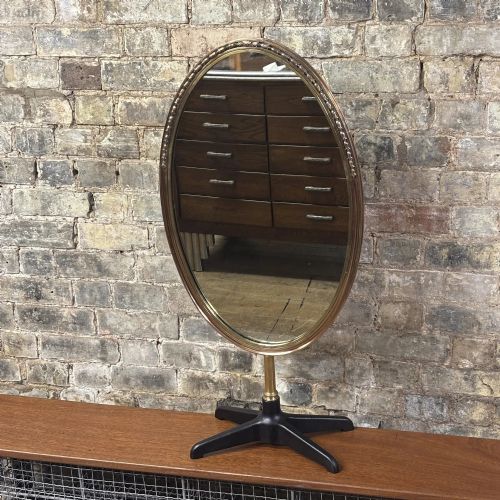
One scientific optical mirror hides its adjustable glass among nineteenth-century brass engineering.
What varies in quality
Quality separates simple utility pieces from finer cabinet work through the selection of timber grain and the precision of the joinery. Figured mahogany or walnut veneers, delicate stringing, and well-proportioned serpentine drawer boxes indicate higher workmanship.
The execution of the carved supports and the weight of the brass hardware also define the grade of the piece. Heavier frames demand sturdier uprights and well-fitted pivots to maintain position without slipping.
Thomas Rubergall of London
The Desktop Swivel Mirror Glossary
- Swing mirror
- A glass plate mounted on pivots between two upright posts, allowing it to tilt forward or backward. This format forms the core of the desktop swivel mirror selection.
- Toilet mirror
- A smaller mirror designed to sit on a dressing chest or table, often incorporating small drawers in the base. These were essential bedroom furnishings before fitted wardrobes became standard.
- Shield mirror
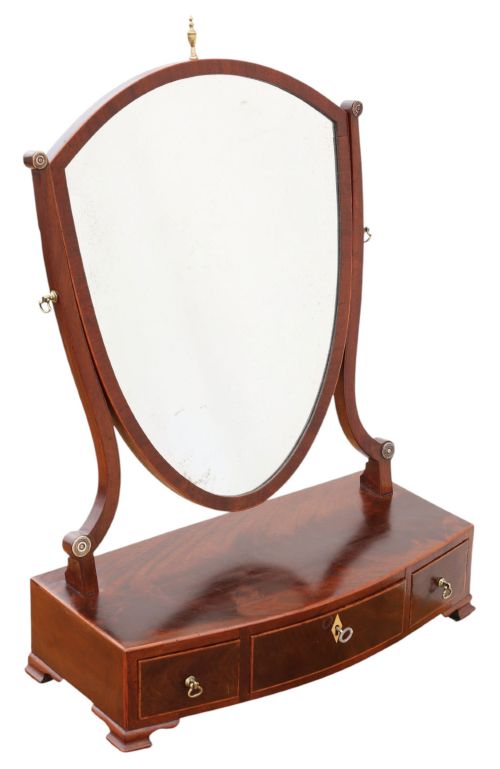
- A mirror glass cut into the shape of a heraldic shield, popular during the eighteenth and nineteenth centuries. The curved top sits above upright rectangular or shaped wooden horns.
- Serpentine
- A curved line that bulges outward in the centre and recesses inward at the sides, often seen on the drawer fronts of finer bases. This contour requires skilled woodworking by hand.
- Bone
- Animal skeletal material utilised for small escutcheons, drawer pulls, or decorative inlay on period frames. It offers a bright contrast against dark mahogany and walnut timbers.
Desktop Swivel Mirror: Frequently Asked Questions
Where were these mirrors placed?
These mirrors sat upon dressing tables, chests of drawers, or washstands in bedrooms and dressing rooms. Their elevated position allowed users to adjust the angle for personal grooming.
They provided a movable reflection before the widespread adoption of full-length wardrobe mirrors in the later nineteenth century.
How do the swivel mechanisms work?
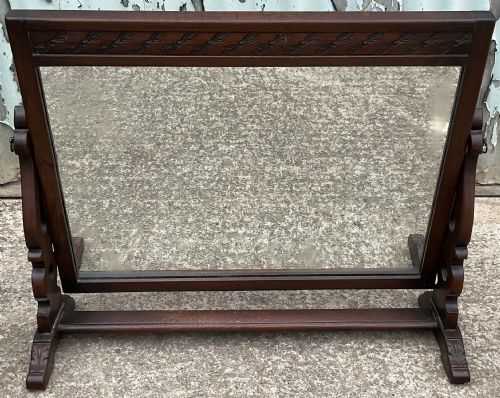
The glass frame hangs between two upright arms attached to the base. Threaded brass screws or pins pass through the arms into the sides of the frame.
Tightening these pivot screws holds the glass at the desired angle during use, while loosening them allows free movement.
What are the base drawers for?
The small drawers built into the plinth or box base held small personal items such as rings, pins, and cosmetics. They also added necessary weight to the base to counterbalance the tilting mirror.
Some examples feature three small drawers arranged horizontally beneath the swing frame.
How do I distinguish Georgian from Victorian examples?
Georgian examples often feature lighter timber framing, such as walnut or figured mahogany, with serpentine bases and delicate proportions. They rely on hand-cut joinery and subtle decorative details.
Victorian pieces tend to be heavier, sometimes utilising dense mahogany with bolder carved scrolls or heavier oval frames supported on sturdy scroll feet.