

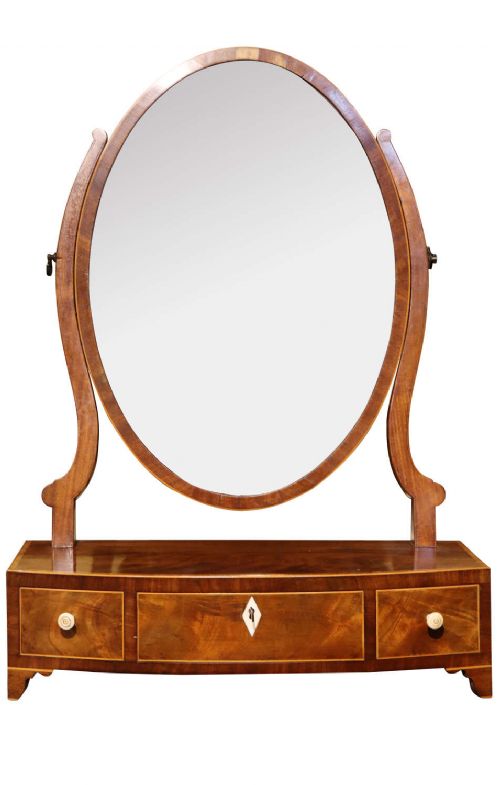


Desktop Swing Mirror
A desktop swing mirror is a pivoting glass used for grooming that brings tactile period character to a dressing table.
Desktop Swing Mirror
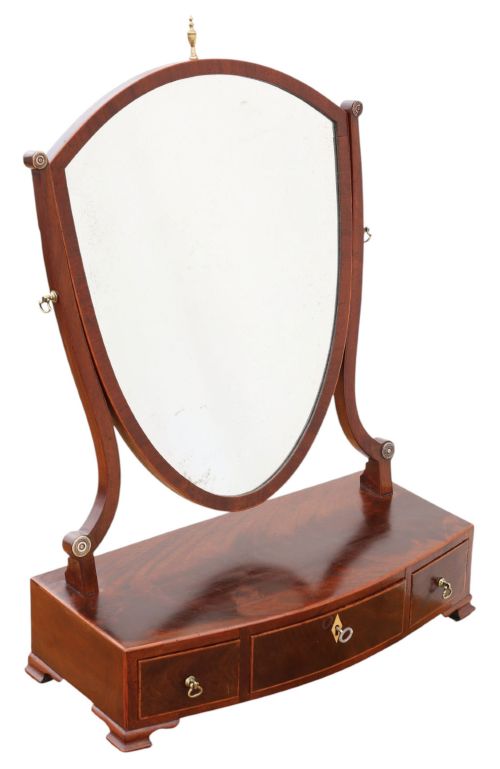
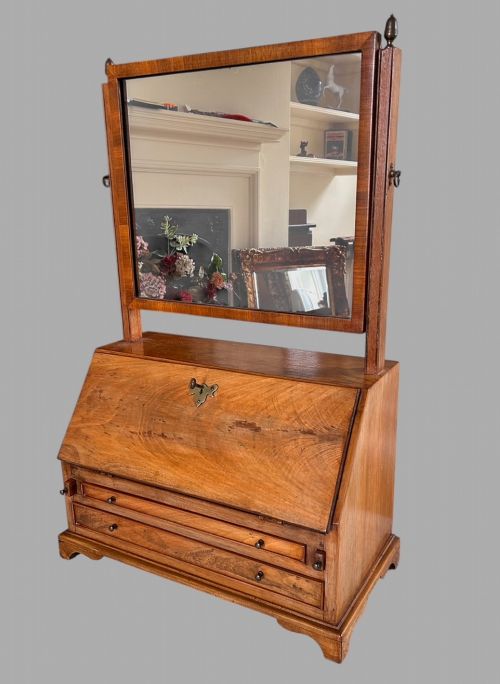
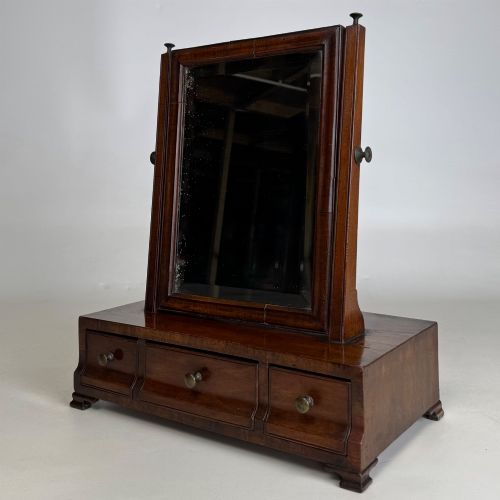
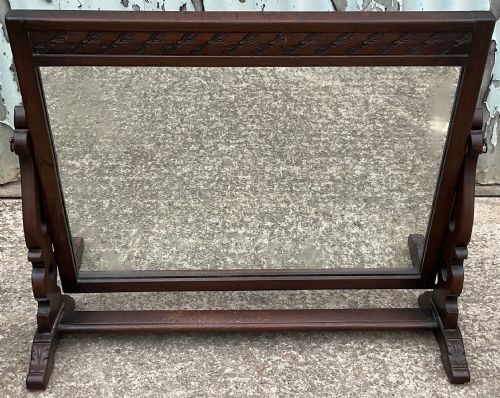
A desktop swing mirror takes the form of a pivoting glass mounted on a supportive frame, which often sits above a small base fitted with drawers. You will most frequently meet Georgian and Victorian examples on this page, spanning the eighteenth and nineteenth centuries.
The objects appear under various names in the listings, including dressing table mirrors, toilet mirrors, and tabletop bureaux. They range from simple mahogany frames to elaborate pieces featuring serpentine shapes, crossbanding, and marquetry inlay.
Originating as practical items for daily grooming, these mirrors combine functional pivoting mechanisms with cabinetry work suited for tabletops. The smaller iterations offer compact proportions while larger versions provide expansive glass surfaces for dressing tables.
Materials and construction
Cabinetmakers constructed these pieces primarily using dense hardwoods such as mahogany and walnut, occasionally employing oak, satinwood, or giltwood for specific decorative effects. Timber selection dictated the structural integrity of the upright arms and the stability of the box bases.
Surface decoration relies on traditional techniques including crossbanding, marquetry inlay, and carved detailing around the frame edges. Glass is mounted within adjustable pivots that permit the user to tilt the mirror plate to the desired angle.
Some dressing mirrors hide tiny secret compartments behind their miniature drawers for storing past confidences.
Differences in quality
Quality rests upon the selection of timber figures and the precision of the cabinetry, particularly where crossbanding and marquetry are applied to the drawer fronts. Finer examples display meticulous attention to grain alignment and delicate proportions in the supporting framework.
The sophistication of the base construction separates standard items from exceptional ones, with serpentine fronts and integrated drawer compartments demonstrating superior joinery. Hardware such as original brass pivoting screws and small drawer pulls further distinguishes the grade of a piece.
The Desktop Swing Mirror Glossary
- Crossbanding
- A narrow strip of veneer applied perpendicularly to the grain of the main surface to create a decorative border. This technique frames drawer fronts and mirror surrounds on finer pieces.
- Marquetry
- Inlaid patterns formed from various coloured woods fitted into a prepared veneer background. Dutch marquetry appears on several pieces listed here.
- Serpentine
- A curved line that undulates gently with a convex centre flanked by concave curves. It shapes the base fronts of certain dressing mirrors.
- Toilet mirror
- A traditional term for a small dressing table mirror designed to sit upon a chest or table. Many examples feature small storage drawers beneath the glass.
- Swing mirror
- A glass plate hung on pivoting pins between upright arms to allow tilting. This mechanical arrangement defines the primary function of the category.
Desktop Swing Mirror: Frequently Asked Questions
What is a desktop swing mirror?
A desktop swing mirror is a pivoting glass mounted within a frame that rests on a table or chest of drawers. These items were traditionally used for personal grooming and dressing.
They combine a tilting mirror plate with a small wooden base, which frequently incorporates functional drawers for storing small items. The form spans multiple periods from the eighteenth century through to the Edwardian era.
How do I date a swing mirror?
Dating relies on observing the timber species, construction methods, and stylistic details present in the frame and base. Georgian pieces often feature rich mahogany with simple proportions, while Victorian examples introduce heavier carved mahogany and distinct veneer work.
Cabinetry details like dovetail joints in the drawers and the design of the support arms provide further clues to the period of manufacture.
Where should I place it?
These mirrors suit placement on dressing tables, chest of drawers, or sturdy sideboards where their proportions can be appreciated. They require a stable surface that supports the weight of the wooden base and allows clearance for the glass to swing.
Positioning them away from direct sunlight helps protect the timber veneers and polished finishes over time.
Are the mirror plates original?
Mirror plates on pieces of this age can be original or replaced depending on the history of the individual object. Early glass often exhibits minor foxing or subtle imperfections due to the manufacturing methods of past centuries.
Replacement glass is sometimes fitted during the life of a piece to maintain usability while retaining the historic frame.