



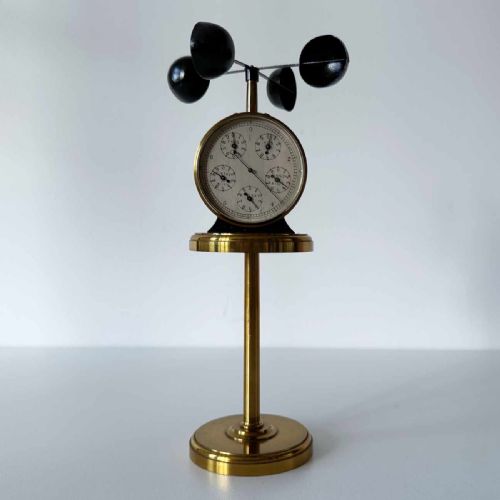


Desktop Brass Instrument
A desktop brass instrument brings precision mechanics and scientific utility directly to a study or library table.
Desktop Brass Instrument
Telescopes and barographs dominate the offerings, spanning Georgian, Victorian, Edwardian and later periods. Buyers encounter scientific items ranging from desk thermometers and orreries to world globes and linen testers, reflecting practical desk use of past eras.
What varies in quality
Quality rests in the precision of the optics, the crispness of the engraved maker signatures on brass barrels or dials, and the integrity of the fitted wooden cabinetry. Superior examples retain original lenses, functional recording drums and unpolished metal surfaces that show honest age.
Later mass production contrasts with bespoke workshop craftsmanship from makers who supplied institutional and domestic patrons alike. The presence of original cases, folding tripods, or patent mechanisms elevates a piece above standard utility items.
Listings feature scientific instruments spanning the eighteenth, nineteenth and twentieth centuries, constructed from brass, mahogany, oak and cast iron.
Nairne and Blunt·Casartelli Manchester·Parkes and Hadley·Thomas Rubergall·J Hicks·Negretti and Zambra·Short and Mason·Swift and Son·S and B Solomons·Matthew Berge·Depree and Young Ltd·G Adams·Broadhurst and Co·W Watson and Sons
The Desktop Brass Instrument Glossary
- Barograph
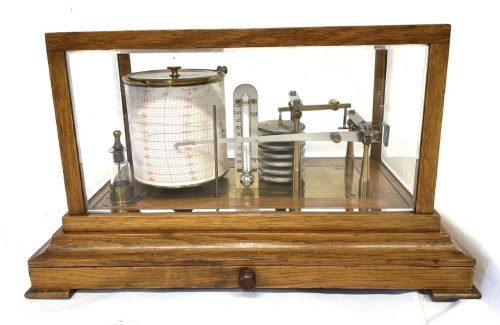
- A self-recording aneroid barometer that charts atmospheric pressure onto a revolving paper drum. These instruments are typically housed in glazed oak or mahogany cases.
- Orrery
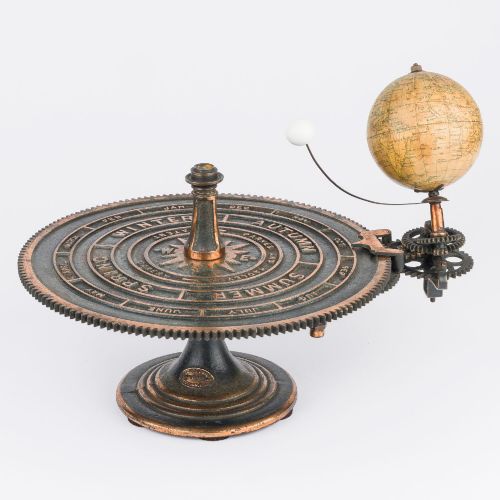
- A mechanical model of the solar system illustrating the relative positions and motions of the planets and moons. These complex scientific pieces sit upon desk bases.
- Linen Tester
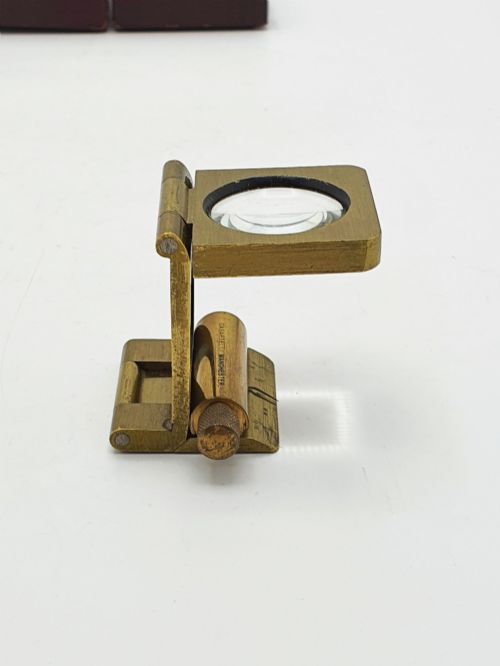
- A small folding magnifying glass used by textile merchants to inspect thread counts and weave quality. They feature calibrated measuring scales inscribed on the brass base.
- Library Telescope
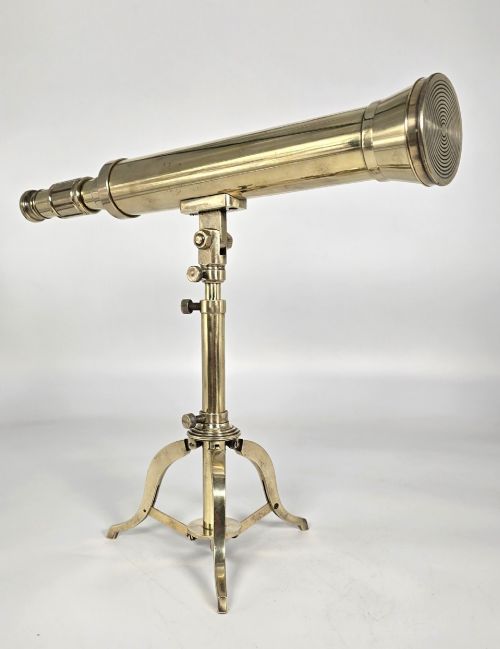
- A large optical instrument designed for terrestrial or astronomical viewing indoors. They frequently rest on folding brass tripod stands or mahogany table bases.
Desktop Brass Instrument: Frequently Asked Questions
How do I operate a desktop telescope?
Extend the brass draws fully and adjust the focus ring while sighting a distant object through the lens.
Ensure the instrument rests securely on its folding brass tripod or table stand to maintain stability during viewing.
Where should I place a barograph?
Position the instrument on a stable desk or shelf away from direct heat sources and open windows to allow accurate atmospheric recording.
Open the glazed wooden case periodically to replace the paper chart on the revolving drum and wind the clockwork mechanism.
How do I identify the period of an instrument?
Examine the engraved maker signature, typeface, and style of the brass barrel or dial, which often reflect Georgian or Victorian design conventions.
The materials of the fitted case, such as solid mahogany or polished oak, also offer clues to the era of manufacture.
Can I use these optical instruments today?
Library and tabletop telescopes remain functional for terrestrial observation when the glass lenses are clean and properly aligned.
Magnifiers and linen testers require no adjustment and function just as they did for merchants and naturalists in the past.