


Desk with Glazed Cabinet
A desk with glazed cabinet combines a fitted writing surface with upper display shelving, offering practical workspace and elegant storage.
Desk with Glazed Cabinet
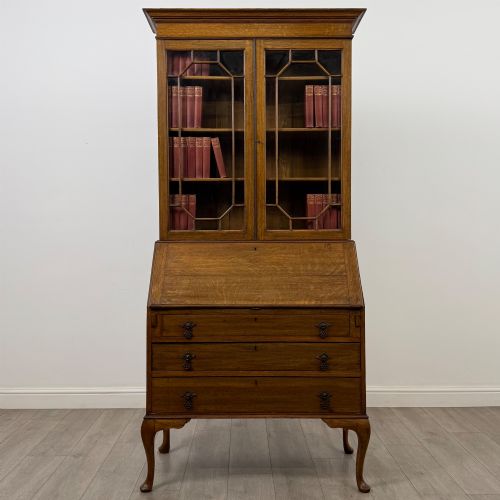
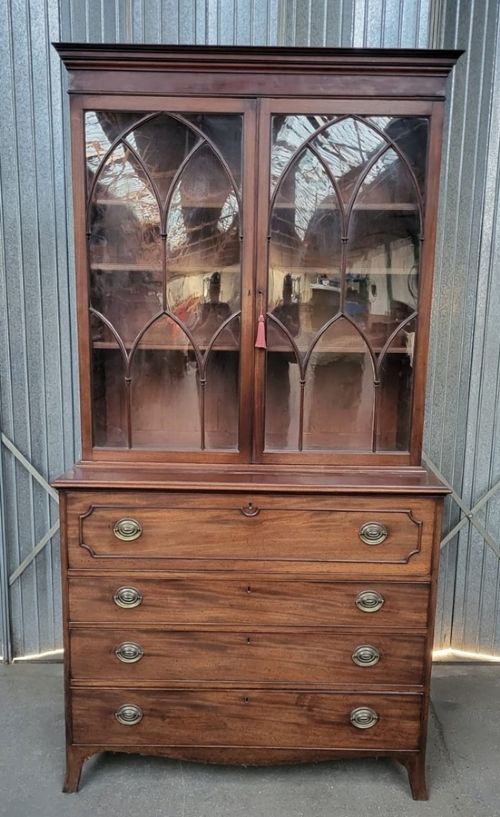
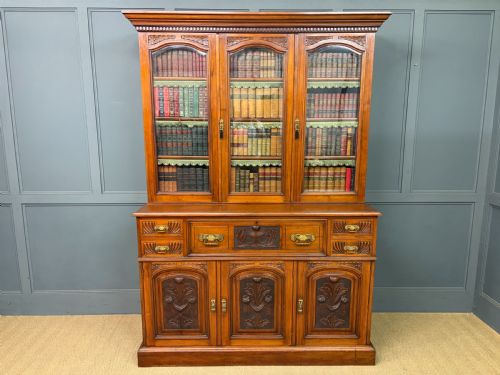
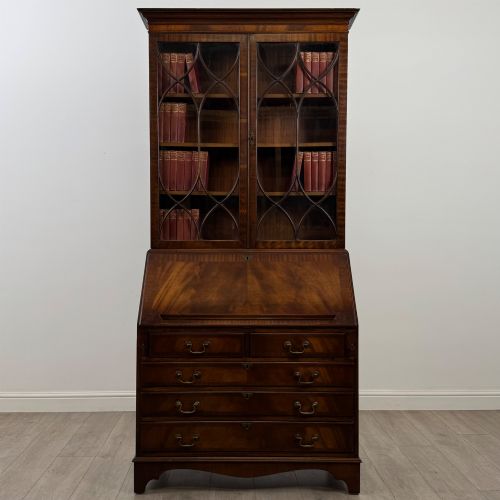
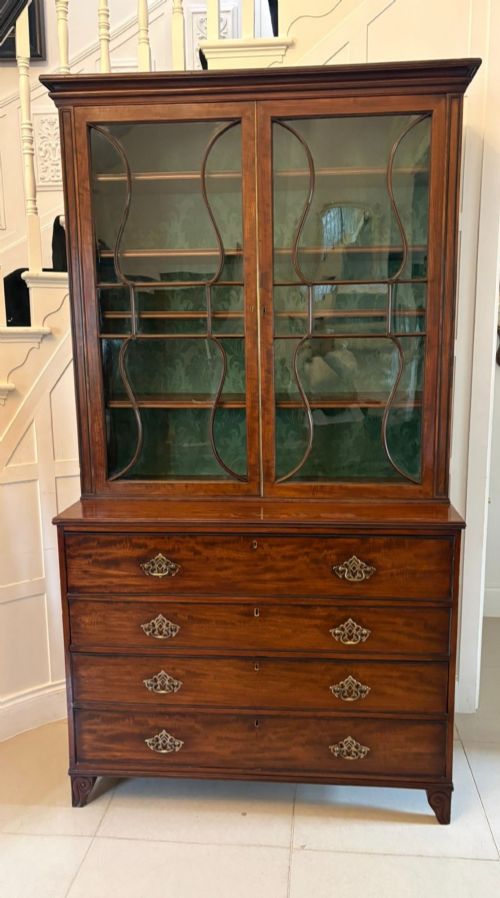
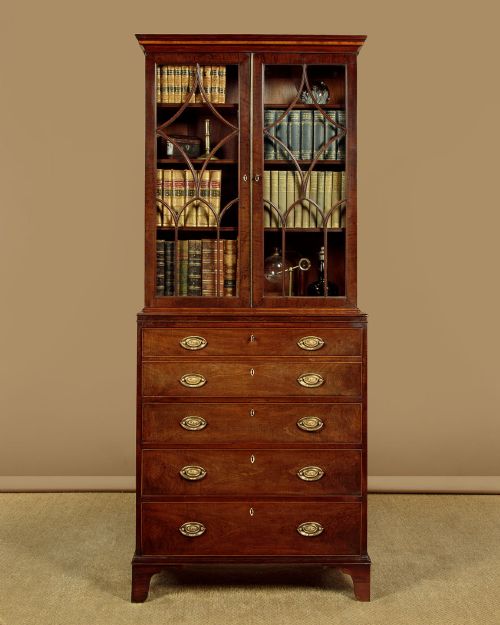
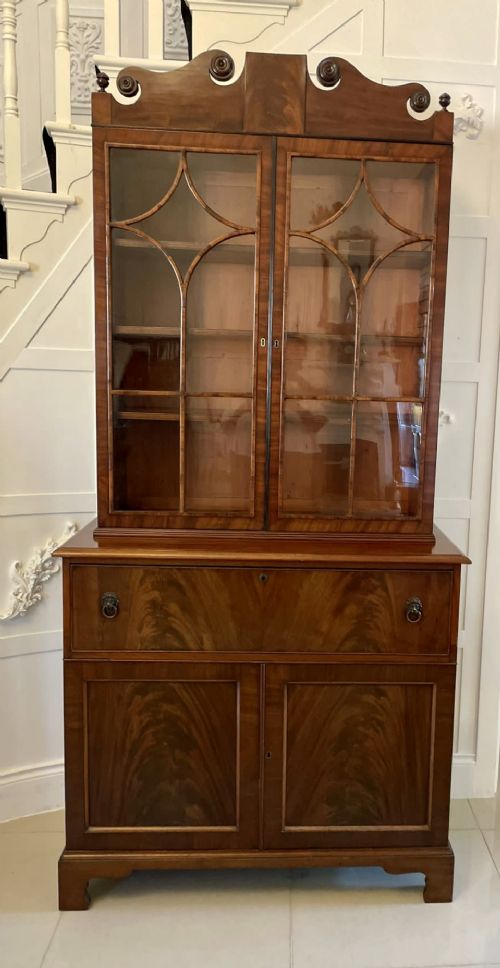
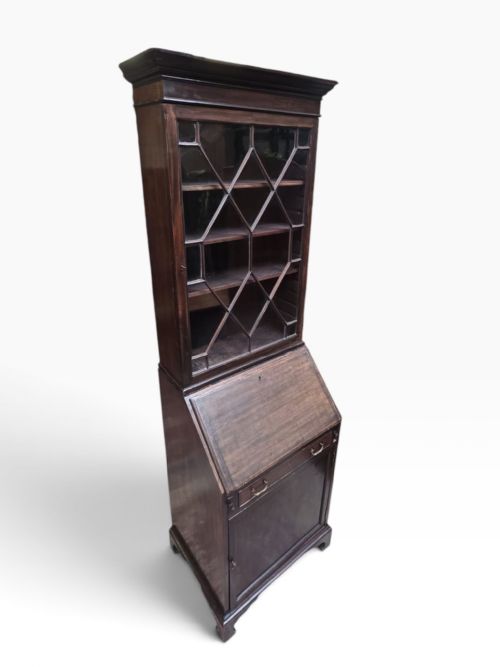
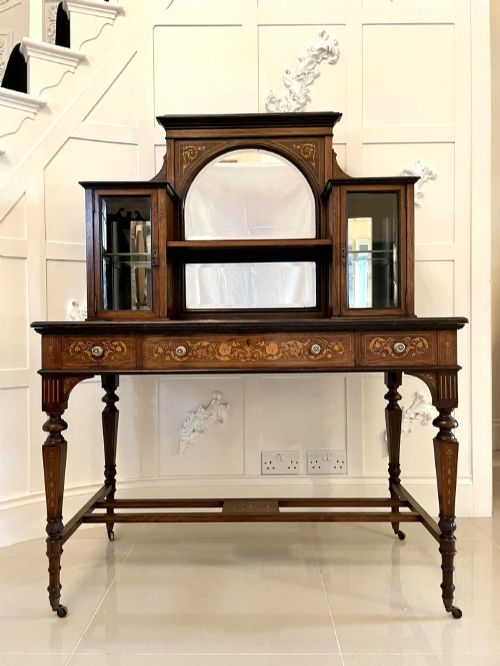
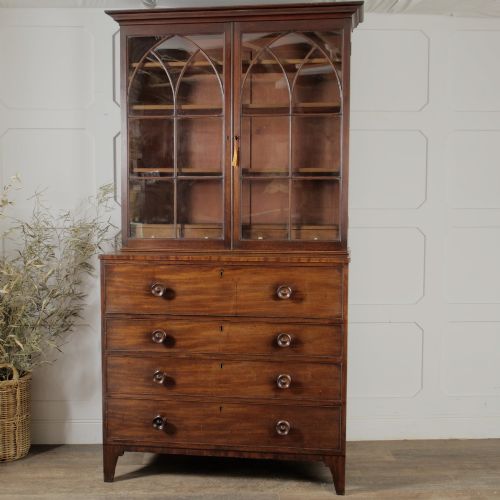
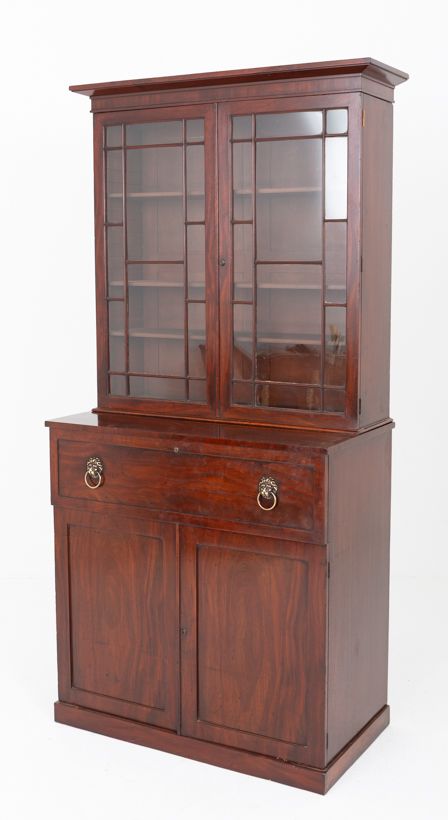
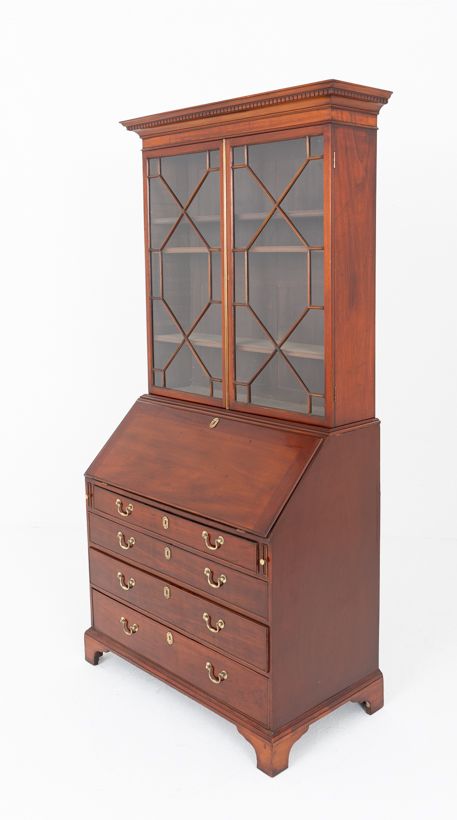
A desk with glazed cabinet unites a lower bureau, secretaire or writing desk with an upper bookcase or display cabinet enclosed by glass doors. Buyers seek these hybrid pieces to conceal paperwork while showcasing books or collections behind glass.
The selections span 18th century examples through Georgian, Regency and Victorian eras, extending to Edwardian and 1920s reinterpretations. Mahogany forms the dominant material, accompanied by walnut, satinwood, oak and painted finishes.
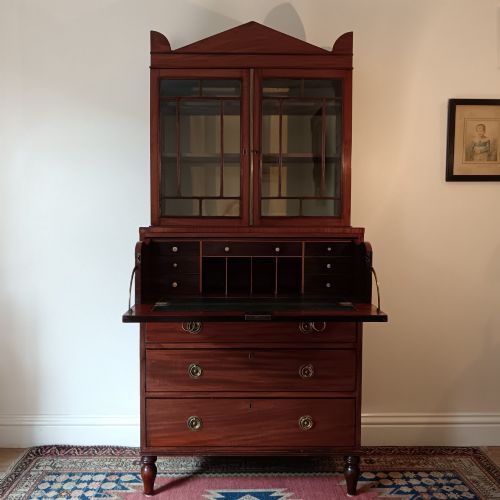
Object types include bureau bookcases, secretaire bookcases, cylinder bookcases and display cabinets. Most examples feature fitted interiors with small drawers and pigeonholes hidden behind fall-front desks or pull-out secretaire drawers.
How they were made
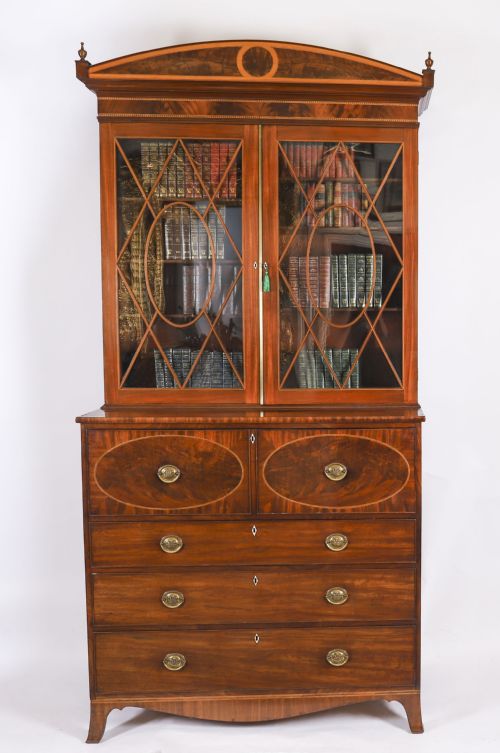
Cabinet makers utilised dense hardwoods such as mahogany and walnut, frequently applying figured veneers and decorative satinwood inlay to exterior surfaces. Brass hardware, including handles, escutcheons and panels, provides functional and decorative accents.
Glazing techniques involve individual glass panes held within wooden frame bars, known as astragals, creating multi-pane doors for the upper cabinet. Writing sections incorporate leather desk inserts and complex internal drawer arrangements constructed with traditional joinery.
Listings feature mahogany, satinwood, oak and walnut examples spanning the Georgian, Victorian, Edwardian and Regency periods.
What varies in quality
The refinement of timber selection dictates visual appeal, with highly figured mahogany veneers and matched satinwood framing representing superior execution. Cabinet proportion and the subtlety of crossbanding or string inlay distinguish exceptional workshop production from simpler country pieces.
Interior complexity separates standard models from high-status items, particularly regarding fitted desk compartments, secret drawers and integrated pigeonholes. The precision of the glazing bars and the clarity of the original glass panes further indicate the standard of craftsmanship.
Tudor and Burrey Shrewsbury·Edwards and Roberts
The Desk with Glazed Cabinet Glossary
- Bureau bookcase
- A writing bureau with a sloping fall-front combined with a glazed upper bookcase section. This form emerged during the 18th century for domestic study use.
- Secretaire bookcase
- A cabinet featuring a pull-out drawer with a drop-front writing surface instead of a sloping lid. The internal fittings typically include small drawers and pigeonholes.
- Cylinder bureau
- A desk featuring a rolling cylindrical shutter that conceals the writing surface and interior compartments when closed. It represents a refined alternative to the standard fall-front bureau.
- Astragal
- A moulding profile used on glazed doors to divide individual panes of glass into geometric patterns. Fine astragals indicate sophisticated cabinet work.
- Fitted interior
- The arrangement of small drawers, compartments and pigeonholes housed within the writing section. These spaces served to organise correspondence and writing materials.
Desk with Glazed Cabinet: Frequently Asked Questions
How do I date a bureau bookcase?
Dating relies on timber choices, construction methods and stylistic details such as bracket feet, cornice designs and inlay patterns. Georgian pieces often display solid mahogany and simple bracket feet, whereas later Victorian and Edwardian examples incorporate different veneer cuts and revival motifs.
Examining internal secondary woods, drawer linings and backboards provides further clues regarding the manufacturing period.
Where were these cabinets used?
These pieces functioned primarily in libraries, studies and withdrawing rooms of large houses and urban residences. They served both as working desks for managing household accounts and as display furniture for valued book collections.
The upper glazed section protected leather-bound volumes from dust while allowing titles to remain visible.
How do I care for mahogany surfaces?
Mahogany woodwork benefits from application of traditional beeswax and gentle buffing with a soft cloth to maintain the grain and lustre. Avoid placing the furniture in direct sunlight or near heat sources to prevent timber splitting and veneer lifting.
Leather writing inserts require specific conditioning balms to prevent drying and cracking over time.