

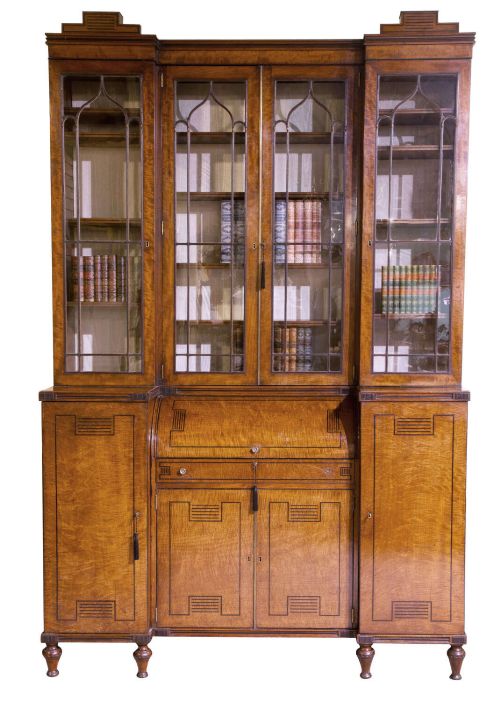
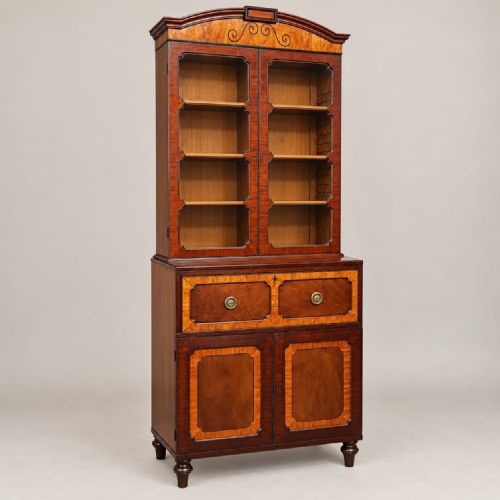
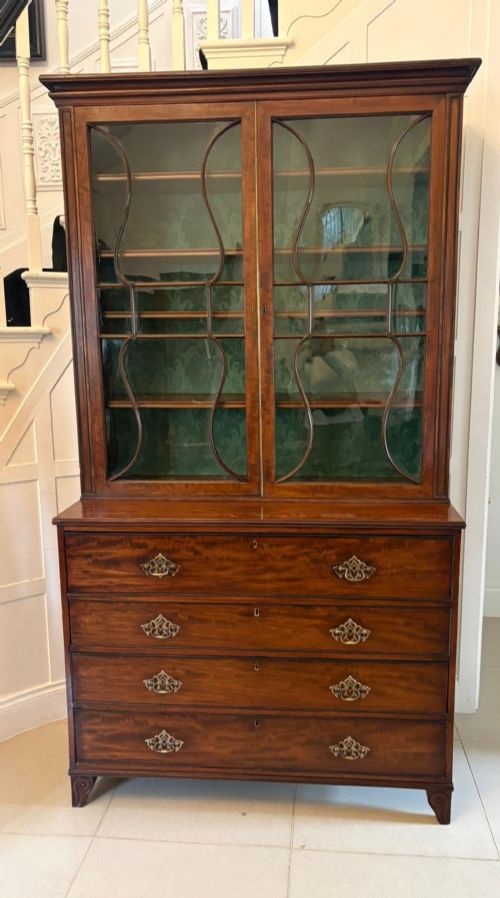
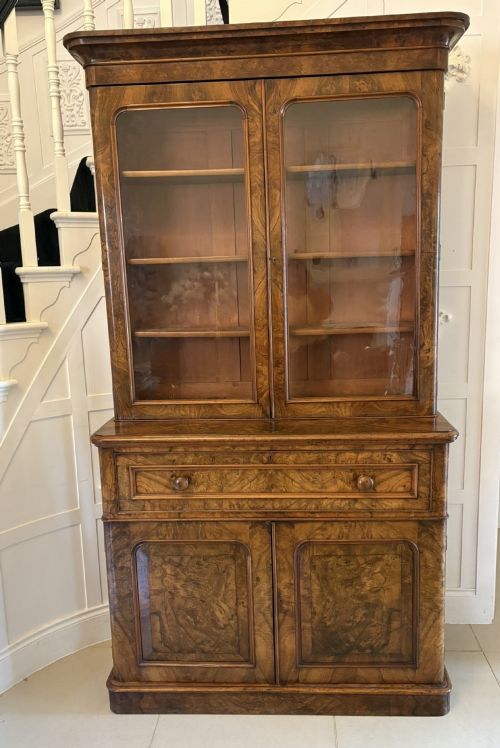
Desk with Glazed Bookcase
A desk with glazed bookcase combines a fitted writing compartment with upper display shelving, offering a practical workspace and a handsome display cabinet.
Desk with Glazed Bookcase
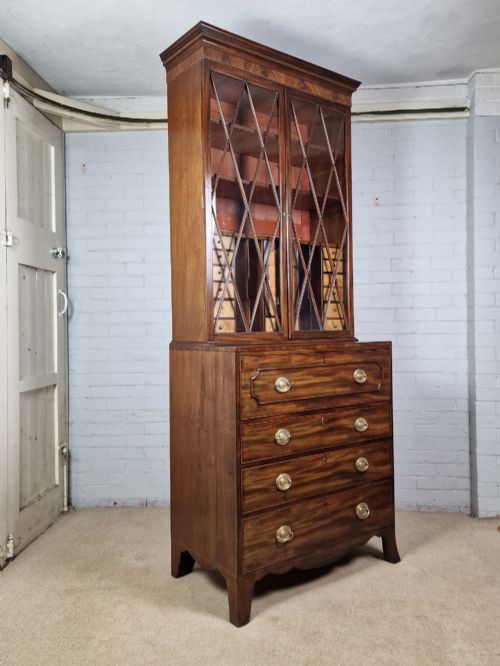
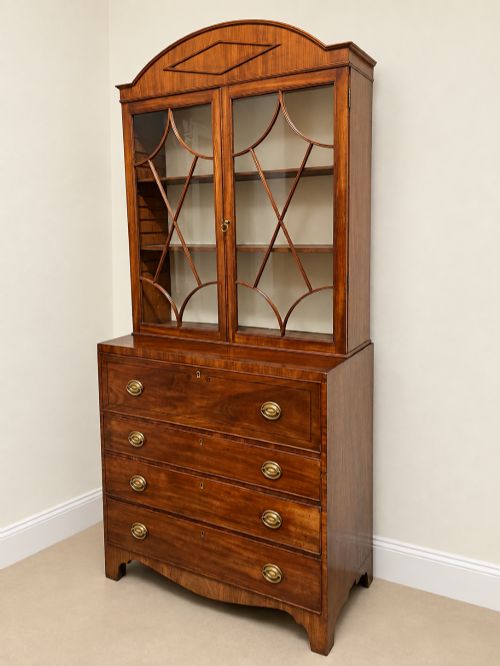
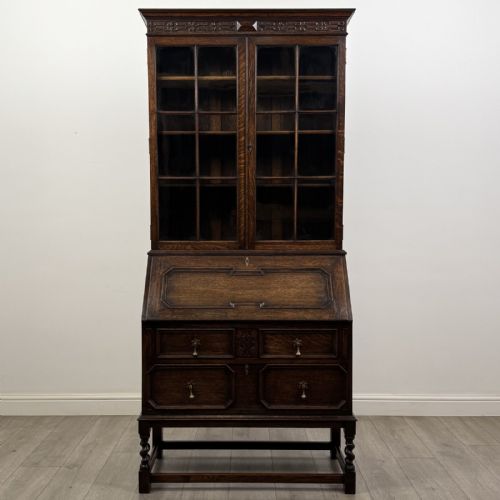
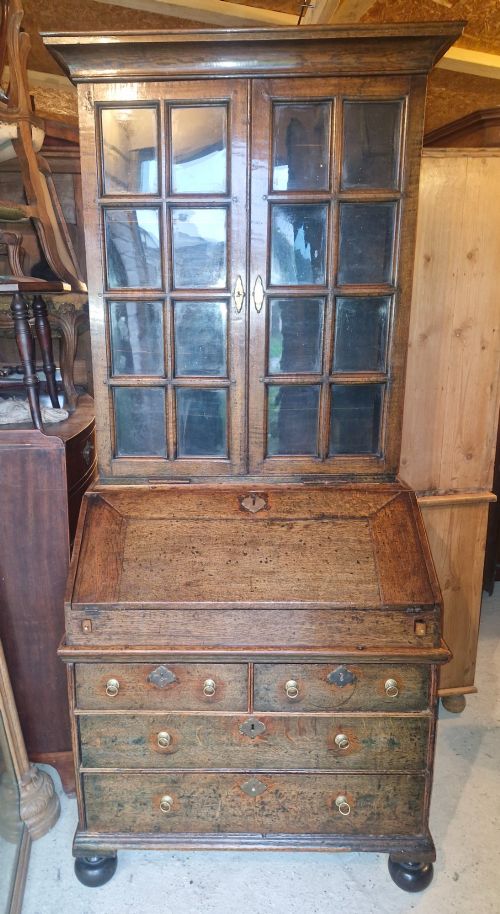
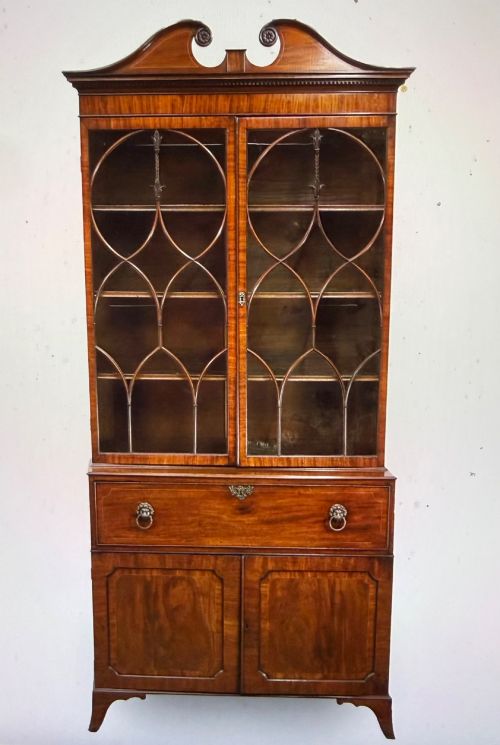
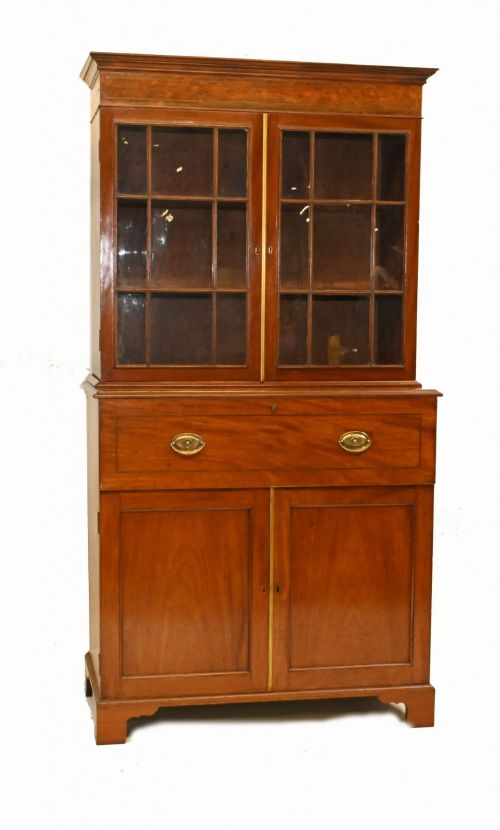
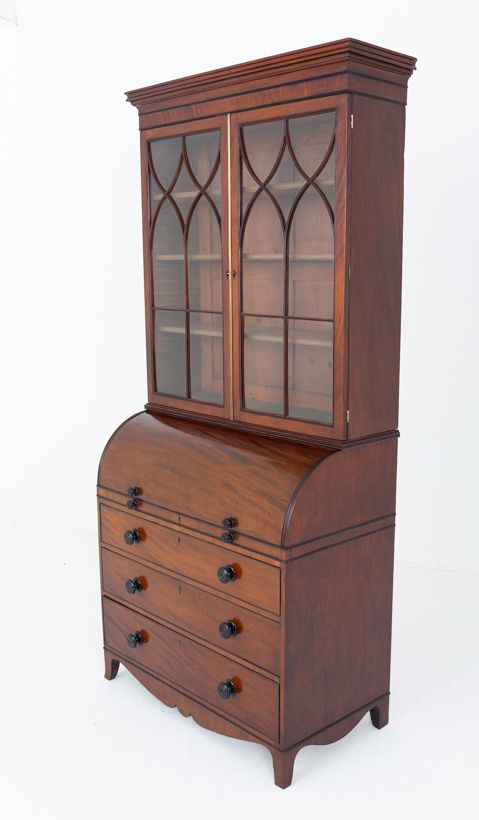
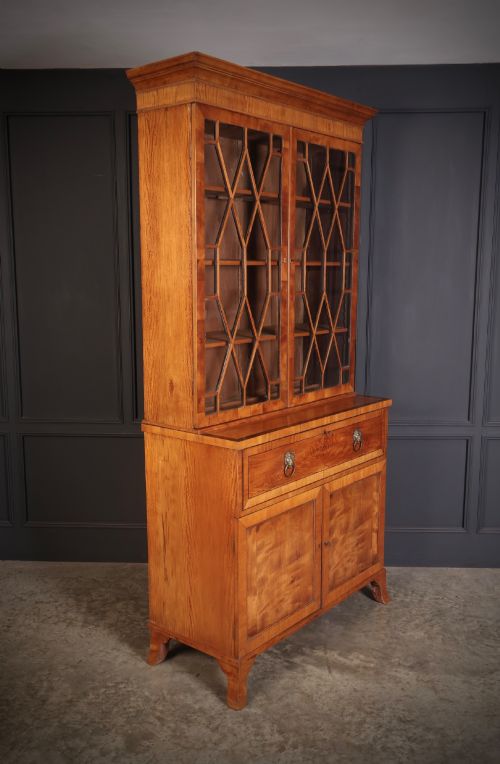
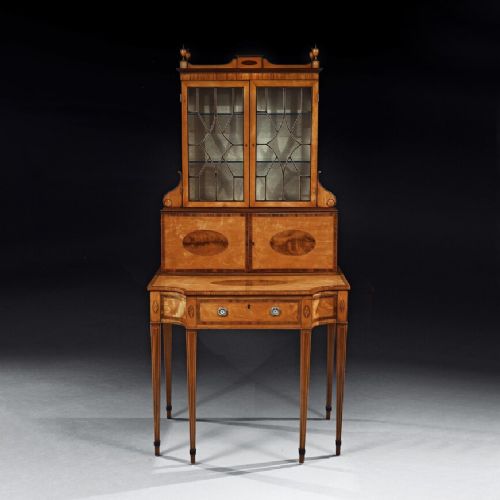
A desk with glazed bookcase unites a lower writing desk, often featuring a bureau or secretaire fall-front, with an upper glass-fronted cabinet for holding volumes and papers. These pieces span the 18th century, Georgian era, Regency period, Victorian era, and Edwardian times.
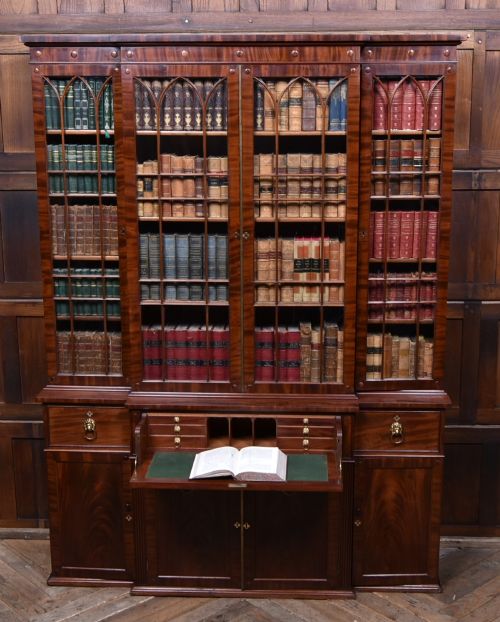
The version most commonly met on this page is the mahogany bureau bookcase or secretaire bookcase from the Georgian and 19th-century periods. These range from tall country house editions to small cylinder models designed for compact living spaces.
Materials and Construction
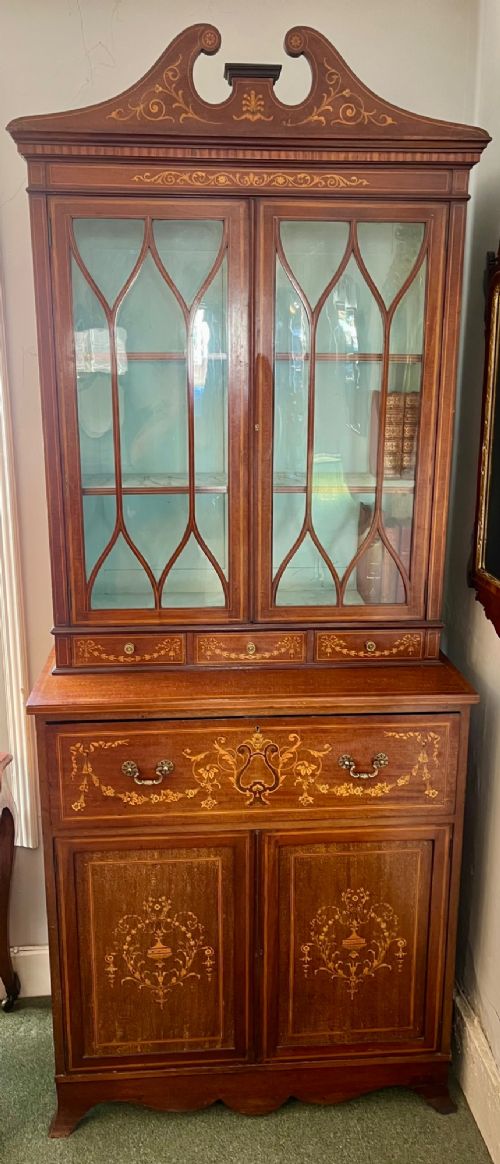
Cabinetmakers utilised dense timbers such as mahogany, walnut, and oak, frequently incorporating figured veneer panels and satinwood inlay to add visual depth to the exterior surfaces. Brass hardware secures the doors and drawers, while glass panes are fitted within timber lattice frames to form the upper bookcase.
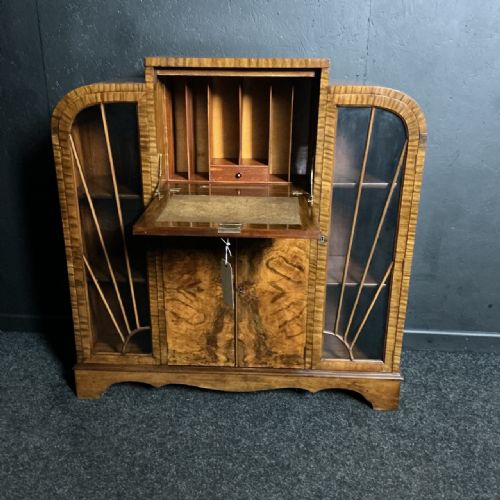
Interior writing sections incorporate fitted compartments, small drawers, and pigeonholes behind fall-front desks or cylinder lids, sometimes backed by leather writing surfaces.
Desk with Glazed Bookcase Retail Price Guide 2026
Typical asking prices for desk with glazed bookcase among the pieces listed under this phrase on Sellingantiques today, from the lower quarter to the upper quarter. They describe what is for sale here now, not the wider market.
Several examples include hidden compartments designed for keeping private correspondence away from prying eyes.
Design and Execution
Quality rests upon the selection of timber figures, the crispness of inlaid satinwood stringing, and the proportion of the upper glazed doors to the lower desk base. Finer examples display meticulously fitted interiors with secret compartments and well-figured mahogany grains.
Construction methods distinguish standard workshop production from notable cabinet-making firms, visible in the dovetailing of internal drawers and the retention of original glass and brass fittings.
Tudor and Burrey·Edwards and Roberts
The Desk with Glazed Bookcase Glossary
- Secretaire
- A writing cabinet featuring a drawer or fall-front panel that pulls down to reveal a fitted writing surface and pigeonholes.
- Bureau bookcase
- A combination furniture piece with a sloped writing flap enclosing drawers above which sits a glazed shelving unit.
- Cylinder bureau
- A desk featuring a rolling half-cylinder lid that conceals a pull-out writing slide and internal stationery compartments.
- Satinwood
- A lustrous, fine-grained yellow timber utilised for decorative inlay and banding across Georgian and revival pieces.
Desk with Glazed Bookcase: Frequently Asked Questions
What is a desk with glazed bookcase?
A desk with glazed bookcase is a dual-purpose piece of antique furniture combining a lower writing desk with an upper glass-fronted cabinet for books.
These units allow owners to write correspondence at a fall-front or cylinder desk while safely displaying library collections behind glass doors.
How do I date a bureau bookcase?
Dating relies upon examining the timber species, secondary woods, construction techniques, and decorative styles such as satinwood inlay or Chinoiserie painting.
Georgian and 18th-century examples typically employ solid mahogany or walnut with hand-cut dovetails, whereas Edwardian and later 1920s versions reflect revival tastes.
How do I organise a fitted interior?
The interior compartments, small drawers, and pigeonholes inside a secretaire or bureau are designed for sorting correspondence, papers, and writing implements.
Using the pull-out writing surface keeps modern stationery neatly contained within the historical compartments when the desk lid closes.
Where should I place this cabinet?
These tall combination pieces require adequate wall space and stable flooring, ideally away from direct sunlight to protect timber finishes and book bindings.
Their substantial height makes them suitable for studies, libraries, or living rooms where both storage and display surface are required.