








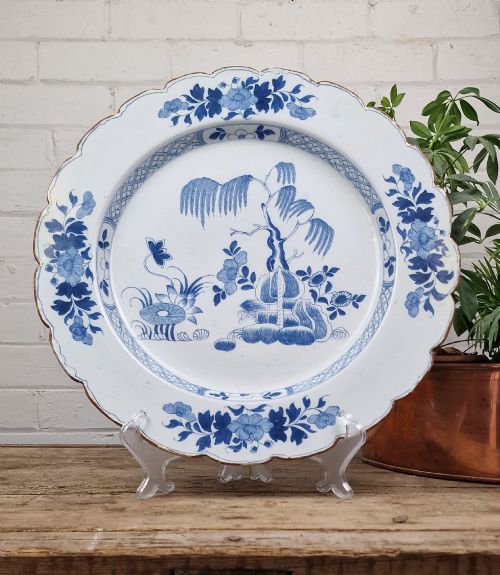
Delft Earthenware Dish
A delft earthenware dish brings centuries of painted tin-glazed artistry into a room, offering collectors bold cobalt patterns and rich European history.
Delft Earthenware Dish
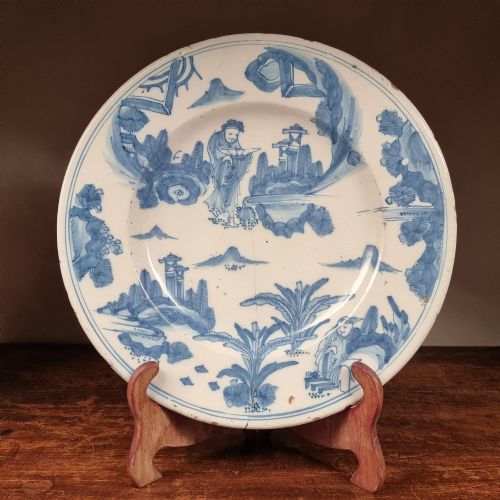
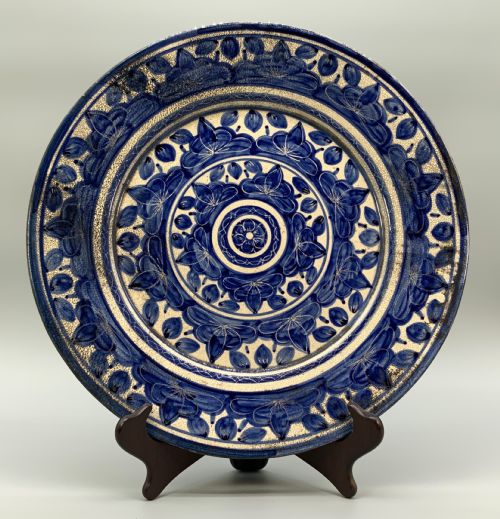
A delft earthenware dish is a tin-glazed ceramic form encompassing large chargers, shallow bowls, and decorative plates originating across England, Holland, France, and Spain. These pieces function primarily as decorative wall hangings or table centrepieces rather than utilitarian tableware.
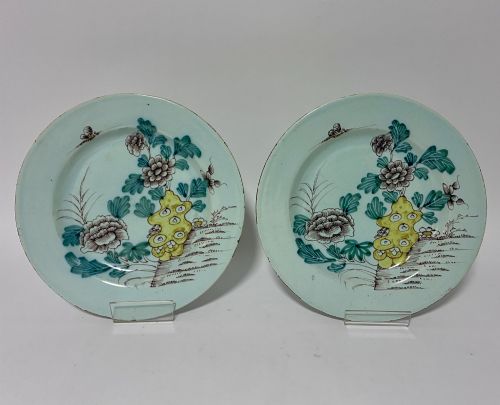
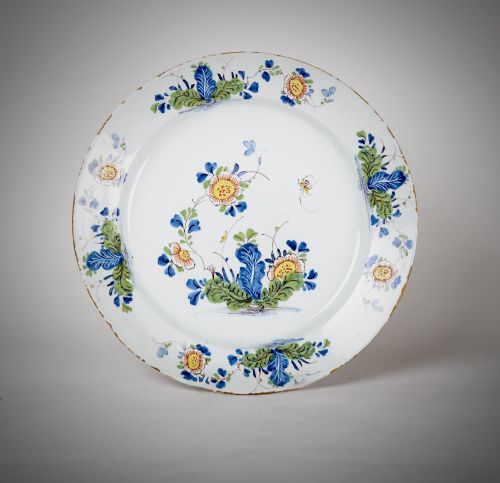
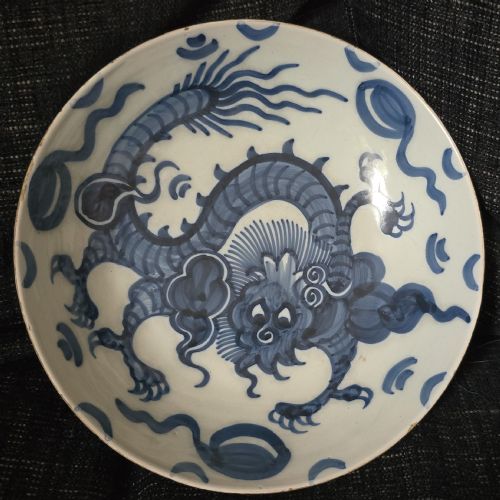
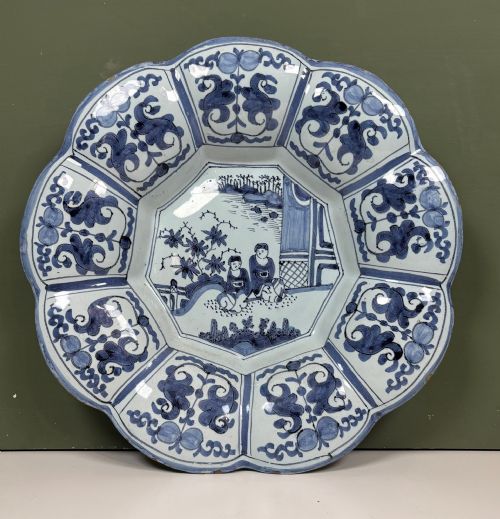
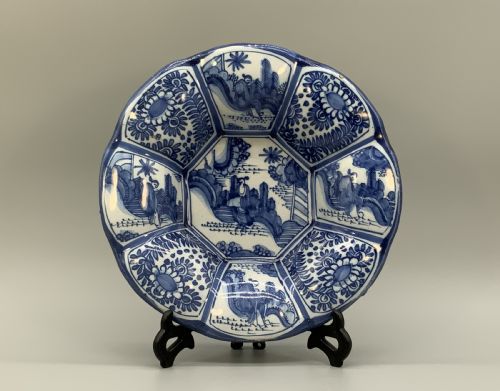
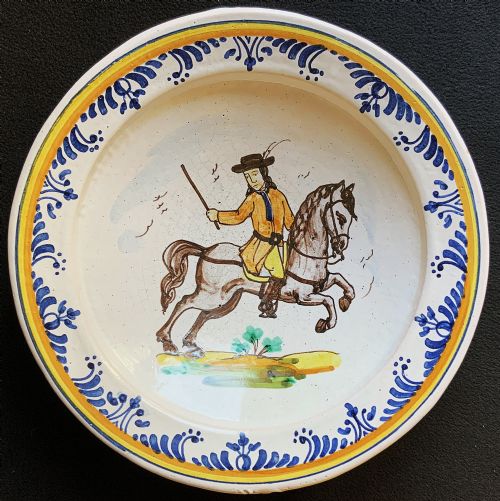
The version most commonly met on this page is the eighteenth-century charger, frequently measuring on a generous scale and decorated in blue and white or polychrome palettes. English and Dutch workshops dominate the selection, often drawing on styles like Chinoiserie and Kraak.
Earlier seventeenth-century examples sit alongside later nineteenth and twentieth-century interpretations, showing how potters continually returned to tin-glazed earthenware over generations. The forms range from simple round plates to lobed dishes, barber's bowls, and sweetmeat presentiers.
How they were made
Potters shaped the earthenware body before coating it in an opaque white tin glaze, which provided a smooth canvas for hand-painted decoration. Cobalt pigment or metal oxides were then applied directly to the raw glaze, soaking into the surface during firing.
Workshops utilised different palettes ranging from classic cobalt blue to manganese, yellow, and polychrome pigments. This technique required steady brushwork, as the porous unfired glaze absorbed paint instantly without room for correction.
Delft Earthenware Dish Retail Price Guide 2026
Typical asking prices for delft earthenware dish among the pieces listed under this phrase on Sellingantiques today, from the lower quarter to the upper quarter. They describe what is for sale here now, not the wider market.
Barbers once used specially notched delft bowls for procedures involving bloodletting, turning medical routines into blue-and-white displays of tin-glazed art.
What varies in quality
Quality rests in the confidence of the brushwork and the clarity of the tin glaze, where swift, expressive painting separates spirited output from rigid imitation. Tonal depth in the cobalt or polychrome pigments determines the visual impact of the design.
The ambition of the form also shapes the hierarchy, moving from standard plates to large chargers with complex floral, geometric, or narrative schemes. Early potting weight and glaze coverage reveal the skill of the individual workshop.
The Delft Earthenware Dish Glossary
- Tin-glazed earthenware
- Earthenware pottery covered with an opaque white glaze containing tin oxide. This coating creates a bright white background suitable for hand-painting in blue or polychrome pigments.
- Charger
- A large decorative dish or plate intended for display on a wall or dresser rather than dining use. These pieces often feature prominent painted scenes or geometric borders.
- Polychrome
- Decoration employing multiple colours rather than a single pigment. On these ceramics, this typically includes combinations of yellow, green, manganese, and blue.
- Chinoiserie
- European artistic styles reflecting Chinese motifs and landscapes. Potters adapted these fantastical scenes onto plates and chargers during the seventeenth and eighteenth centuries.
- Kraak style
- A type of imported Chinese porcelain design imitated by European potteries, characterised by panelled borders and central motifs of birds, flowers, or rocks.
Delft Earthenware Dish: Frequently Asked Questions
How were delft chargers displayed?
These large dishes were traditionally hung on walls or stood on dressers to be admired in entertaining rooms. Their scale and bright tin-glazed surfaces made them effective focal points for domestic interiors.
Over time, collectors continued this tradition, placing chargers on specialised wire hangers or sturdy plate stands to protect their edges while keeping the painted surface visible.
What is the difference between English and Dutch delft?
English and Dutch potteries shared similar tin-glazing techniques, but their output often reflected distinct regional preferences in palette and subject matter. Dutch pieces frequently leaned towards traditional maritime scenes, floral arrangements, and Kraak-style borders.
English production centres such as Lambeth and Bristol developed their own interpretations, including distinct polychrome palettes and unique local takes on Chinoiserie subjects. Examining the glaze thickness and body fabric helps distinguish between these origins.
Can I use an antique delft dish for food?
These tin-glazed earthenware dishes are intended for display and collection rather than daily culinary use. The historic ceramic body is porous, and the glaze can be sensitive to modern detergents, cutlery, and acidic foods.
Preserving the piece involves keeping it dry and clean with a soft duster, avoiding moisture soaking into any exposed earthenware at the foot ring.